
The Battle of Life

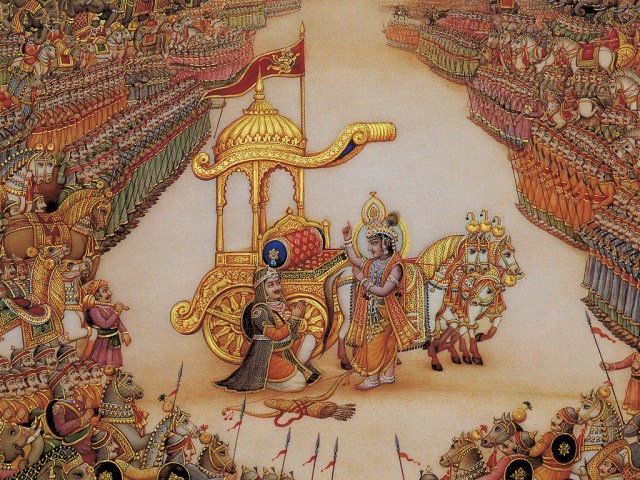
BG Krishna instructs Arjuna 2

I have been thinking, lately, about how despite all the inner work one does, the battle with the limited self must continue throughout life.  Presumably, this is because what we call the “ego” or the “nafs” (in Sufi terminology) is necessary to our experience on the earth plane.  As I understand it, it works as a sort of anchor to hold us to this plane of materiality, and the overcoming of its limitations seems to be the primary vehicle for learning what we come here to learn.  The Prophet Muhammad, peace be upon Him, said in a Hadith that the human being is actually higher than the angels, because in coming here for the earth experience, the soul has the opportunity to actualize the God-self, while the angels remain caught in contemplation of God.  The descent of the soul out of the unity of divine Being into humanity is the ultimate descent, its limitation being symbolized by the crucifixion of Christ.

Inayat Khan, in The Unity of Religious Ideals, illuminates the battle with the limited self by telling the story of Krishna and Arjuna in the Bhagavad-Gita, which metaphorically describes the inner battle with the limited self in the war that Arjuna must fight.  In his fear and anguish, caught between two sides, he consults his charioteer, Krishna, and gradually Krishna helps him to see what the battle really means, and how to win it.  It is a good way to describe the battle of the soul with the ego, because in reality, the inner battle can only be fought through outer circumstances.   Inayat Khan writes:

 . . . the latter part of Krishna’s life has two very important aspects. One aspect teaches us that life is a continual battle and the earth is the battlefield where every soul has to struggle, and the one who wants to own the kingdom of the earth must be well acquainted with the law of warfare. S/He must learn the secret of an offensive, the mystery of defense, how to hold her or his position, how to retreat, how to advance, and how to change position; how to protect and control all that has been won, how to abandon that which must be given up, the manner of sending an ultimatum, the way of making an armistice, and the method by which peace is made. In the battle of life man’s position is most difficult. S/He has to fight on two fronts at the same time: one enemy is himself, and the other is before him. If s/he is successful on one front and fails on the other front, then his or her success is not complete.  (Inayat Khan, Volume IX, The Unity of Religious Ideals)

A well-known aphorism comes to mind here:  Choose your battles, as the saying goes.  Recently, I found myself in conflict with some colleagues, and this whole idea was brought home to me quite thoroughly:  those colleagues got the jump on me in a situation where they ought to have shown more ethical and professional discretion, and I found myself powerless to do much of anything about it when I realized what had happened.  How to deal with this, I wondered, and as someone with a strong inner life, I was frustrated to find myself ready to “spit nails.”  On an outer level, I did what I could do:  there were three people with whom I found myself in this situation, and one of them was fairly innocent, because he was on the outside and was used to accomplish the ends of the other two.  Another of these colleagues was someone I had long ago realized was going to do what she would do without any thought for ethical protocol or what the Sufis call adab, or fineness of manner.  Such a person cannot be fought, except within.  More on that later.   The third of these people was someone who is mostly just a bit inexperienced, and was probably just thoughtless in this situation.  In pain and suffering, I confronted her, as wisely and compassionately as I could, and endured her rage, remembering that I was once exactly where she was, and knowing that she would eventually grow through her hypersensitivity.

But the one in the middle, the one who had proven herself unbeatable without resorting to her own machinations in order to “win.”  What about her?  Vanquishing an enemy such as this is fairly impossible in outer circumstances, because one demeans oneself if one resorts to the tactics the other person is willing to use in order to attain her ends.  Thus, it occurred to me that first, I needed to look inside to find out why this person had such power over me.  The answer came immediately, in identifying the bodily sensations that arose at the thought of this person’s treachery:  I realized that she invoked the fear and powerlessness that came over me as a small child with an older sibling who later was revealed to have clear antisocial tendencies, and who tormented me, as the “baby of the family,” throughout my childhood.  This kind of family dynamic is fairly common in dysfunctional, alcoholic families, as mine was; and while I would like to say I overcame my fear and frustration, I think that in the continued appearance of similar people in my life, I still have a ways to go.  So there I am:  Arjuna on the battlefield of the soul.

What is to be done when one cannot fight outwardly without making a fool of oneself, to say nothing of making public one’s fear and frustration?  How do we deal with behavior it would demean us to even recognize, let alone fight?

The battle of each individual has a different character; it depends upon a man’s particular grade of evolution. Therefore every person’s battle in life is different, and of a peculiar character. No one in the world is exempt from that battle; only, one is more prepared for it while the other is perhaps ignorant of the law of warfare. And in the success of this battle lies the fulfillment of life. The Bhagavad-Gita, the Song Celestial, from the beginning to end is a teaching on the law of life’s warfare. (Inayat Khan)

When Inayat Khan came to the West, an Indian in what was then a very strange and alien culture, he came with a purpose:  to spread the Message of the unity of all religions, to teach his own understanding of Sufism, a philosophy that superceded differences and distinctions, one that went beyond dogmas, theologies and philosophies:  simply, love, harmony and beauty.  To those who met him, he seemed to be a simply astounding presence, the true embodiment of spiritual realization.  Yet in a sense, he was somewhat of an innocent in the culture of a war-torn Europe.  It didn’t take long for a sizeable group of students to be attracted to him and his Message, but they were very human beings, and the constant battle of politics and personalities became more and more discouraging to him.  One of my life’s teachers, Shamcher (one of his early students) said to me that “the Sufi has two points of view:  his own and that of the other.”  Murshid (the name his students called Inayat Khan, meaning “teacher”) was beset on either side with students complaining about other students, power battles, battles with the outer world, constant poverty while he tried to do his spiritual work and still support his family; at one point, when a student kept coming to complain about another, he simply said, “Well, that’s what he did today.  Let us see what he will do tomorrow.”  How does such a being–or any being–maintain equanimity in the face of this kind of constant negativity?   And the battles continue today, as they seem to in every church, spiritual and secular organization, all of which seem to exist in order to facilitate opportunities for the soul to fight its battle with its ego.  Shamcher humorously said, “God wanted to create Hell, so he created the committee.”

Arjuna speaks:

 Drive my chariot, Krishna immortal, and place it between the two armies.

That I may see those warriors who stand there eager for battle, with whom I must now fight at the beginning of this war.

That I may see those who have come here eager and ready to fight, in their desire to do the will of the evil son of Dhrita-Rashtra.  (From the Bhagavad Gita)

If you are reading this and it evokes similar situations you have had to fight, and you are hoping I am going to offer you some solution, I hate to disappoint you, because I don’t have any easy solutions for you.  I fight this battle every day of my life, and I have come to realize that I am not alone in this battle.  

Krishna, of course, represents the God-ideal, and it is God who is both sides of the battle, the war, and Arjuna.  It strikes me, here, that the important idea in this brief verse is in seeing:  put me in the middle, the passage says.  Let me see both sides equally, both good and bad.  Pir Vilayat Inayat Khan, the son and successor of Inayat Khan, often told his students, of which I am one, that we ought not just learn to see with the eyes of God, but to BECOME the divine glance.  How else do we learn to fight if we cannot not only see, but become that Glance?  While I–or you–may need to become aware of my personal issues, the impressions I have retained in the battle of life, the wounds that have not yet completely healed, the “ego-trips” I put myself through, it seems to me that I cannot win my battles–or my ultimate Battle–until I learn to see the entire battlefield with the eyes of God.

When Krishna heard the words of Arjuna he drove their glorious chariot and placed it between the two armies.

And facing Bhishma and Drona and other royal rulers he said:  ‘See, Arjuna, the armies of the Kurus, gathered here on this field of battle.’

Then Arjuna saw in both armies fathers, grandfathers, sons, grandsons; fathers of wives, uncles, masters; brothers, companions and friends.

When Arjuna thus saw his kinsmen face to face in both lines of battle, he was overcome by grief and despair, and thus he spoke with a sinking heart.  (Bhagavad Gita)

Arjuna is overcome with despair:  Lord Krishna has enabled him to see through His eyes, and he now sees both sides.  How can he fight?  How can he take sides?  He weeps at the idea of killing anyone, because no one is an enemy, they are all parts of himself.  Lord Krishna,however, lets him see that on this occasion, the fight must be fought, and that on another level, it makes sense to fight it, and it is okay to fight.  There is a reality beyond the apparent battle:

Krishna speaks:

Thy tears are for those beyond tears; and are they words words of wisdom?  The wise grieve not for those who live; and they grieve not for those who die; for life and death shall pass away.

Because we all have been for all time:  I, and thou, and these kings of men.  And we all shall be for all time, we all for ever and ever.  (Bhagavad Gita)

Arjuna is catapulted beyond the apparent and into the real.  He sees that, whatever this battle is about, there is a greater reality that is beyond it that must be kept in mind if he is to win.  He sees beyond the veil, from the apparent to the real.  Then why is the battle taking place?  And why must it be won?  Must it even be fought?

Many people today ask why, if there is a God, should wars and disasters take place. And many give up their belief when they think more about it. The image of Krishna with a sword, going to war, shows that God who is in heaven, and who is most kind, is yet the same God who stands with a sword in his hand; that there is no name, no form, no place, no occupation, which is devoid of God. It is a lesson that we should recognize God in all, instead of limiting Him only to the good and keeping Him away from what we call evil; for this contradicts the saying: ‘In God we live and move and have our being.’  (Inayat Khan)

Rumi said,”If I told what I knew, the world would be in flames.”  How do we know what is transpiring beyond that which occurs?  How do we get beyond the petty grievances and frustrations, the battles of everyday living?  By learning to see.  It seems to this person that no matter what we call our ideal, whether to us it is a God ideal or an idea or a concept or a theology or philosophy, it is is truly our own, it will lead us to reality.  In time, we learn to see which battles must be fought and which must be given up.  We see who the enemy really is, and we learn to see ourselves in that enemy.  Gandhi said that we can only win over our enemy if we love her or him more than ourselves.

There is always more work to do.

Krishna_Splits_the_Double_Arjuna_Tree

Illuminations

20-499I never really intended to write book reviews when I started this blog…  In fact, I wasn’t sure what I intended to do, and so it has turned out to contain a bit of everything.  And I wouldn’t be very good at writing just book reviews, because my reading tastes are so broad, and I am prone to read what falls off a shelf in a bookstore and bonks me on the head, or a good novel I’ve read numerous times before… or just about anything.  I was a grad student for so long that I’ve avoided anything too scholarly for quite some years, although I suppose that could change eventually.  Yet there are some books that I read specifically for inspiration, and Illuminations by Mary Sharratt comes under that heading.

Many years ago, my dear friend and university professor, Allan Combs,  gave me a book of Hildegard von Bingen’s writings and illuminations, and it could have been a comic book for all the notice I gave it:  do you find, as I do, that it has to be the right time to read a book, otherwise it’s a waste?  Evidently I simply was not ready for Hildegard to come into my life at that point.  But I thought of the book–and my old friend Allan–when I read Illuminations, because now it is the right time, and I was deeply inspired by Hildegard’s life and words on so many levels.  One could find use in her work for so many reasons:  she was a feminist–for her time–and a scholar, a composer  and an artist.  She was, of course, first and foremost, a mystic–and this book, while clearly a novelized version of her life, purports to have stayed as close to what is actually known about her as possible, and the writer subtly explores her tendency toward visions and mystical prophecy, although I was unable to avoid the impression that she did not take them seriously.

I, the fiery life of divine wisdom,

I ignite the beauty of the plains,

I sparkle the waters,

I burn in the sun, and the moon, and the stars.

The book is a love story, too, perhaps first and foremost:  but having said that, I suppose what it is about most of all is the life of a woman.  Just that.  A woman in a time when women were little more than property in a man’s world, yet a Catholic woman who was not only in a man’s world, but a world that worshipped the Christian image of the mother of its Christ, Mary.  I suppose it is for this reason that her mystical visions of God, depicting God in the image of a woman, were tolerated…and if the author’s research is accurate, she knew her place in the world in which she lived, which was that of the lowest of the low, inherently unclean from the flow of menstrual blood, inferior, and incapable of competing with any man, at any level.  How interesting that most of the male figures around her are long forgotten by the centuries, while she herself has continued to shine the light of her realization on the past, the present and, no doubt, the future.

O Holy Wisdom, Soaring Power,

encompass us with wings unfurled, and carry us,

encircling all,

above, below, and through the world.–O Holy Spirit, Root of Life

The book begins with some description of life in the 12th century in Germany, a time when women were first the property of their families and then of whatever man they were given to (or in her case, of the Church to which she was given, as was common in that time).  Hers was a family of some status, and it was typical to “tithe” at least one child to the Church, if not more.  Her father and older brothers, at the time she entered postulancy, were off fighting the Crusades, so for her mother, it was probably a time of some personal power.  However, the family was all, and if it was impossible to make a suitable marriage for her daughter, then the Church was the next choice, and so Hildegard was given as handmaiden to the daughter of the family to which Hildegard’s family gave fealty:  Jutta von Sponheim, either a saint or a madwoman, depending on perspective.  Both were then given as postulants to the monastery at Disibodenberg, a monastery that had no nuns, only monks.  Therefore, Hildegard and Jutta were given as Anchorites so that, in theory, their prayers and meditations would support the monks in their work.  Hildegard only realized what this actually meant when her own mother pushed her face-down into the dirt of the two tiny rooms into which they were to be walled off from the world permanently–that to be an Anchorite meant just that:  she was to spend her life with Jutta and no other person, in that space where there was only one small room and a tiny courtyard to which no other human being had access, and which neither she nor Jutta could ever leave.  She was eight years old at the time, and she would only be allowed to leave her living tomb when Jutta died from her saintly ambitions, having fasted, prayed and physically tormented herself into an early death years later.

Underneath all the texts,

all the sacred psalms and canticles,

these watery varieties of sounds and silences,

terrifying, mysterious, whirling and sometimes gestating and gentle must somehow be felt in the pulse, ebb, and flow of the music that sings in me.

My new song must float like a feather on the breath of God.

It was at this time of utter loneliness and deprivation that Hildegard’s visions began in earnest, and during the time in which she was incarcerated, she became a scholar, an artist and a healer, raising the herb cuttings provided by the kindly young monk, Brother Volmar, who became her lifelong champion.  He intervened in the sparse diet and the wearing of a hairshirt upon which Jutta insisted, providing the child with a habit and increased rations, as well as education and emotional support, all through the small turnstyle allowed the nuns for food and provisions.  Jutta, determined to achieve sainthood and the worship of the monks, tormented herself increasingly, fasting and praying and flagellating herself… but Hildegard, somehow, managed to keep her personhood and grew into a relatively healthy woman until, when Jutta finally died, the wall quite literally came down out of necessity.  Hildegard was able to negotiate the freedom not just of herself but of the other two postulants Hildegard had been raising in that tiny space, Jutta having taken in and subsequently rejected them.

God has arranged all things in the world in consideration of everything else.

The story after that is about Hildegard’s rise to the position of much famed and well-loved abbess, despite the constant opposition of the largely male Church, and about her development as an artist, writer, composer and mystic.  It also outlines her very human struggles with herself, particularly her desperate need for human love in the relationships around her.  One wonders how much of it is true to her actual life and personhood, but perhaps, given the words and music she left behind, the essence of the life of this remarkable woman that persists to this day continues and even grows as an inspiration to those who come across her in their inner searches.  It is interesting, too, that while the ambitious male figures of the Church who surrounded her are largely forgotten, she not only continues to be a beacon of guidance and inspiration, but one that grows brighter as the years pass.

O Eternal God, now may it please you

to burn in love

so that we become the limbs

fashioned in the love you felt

when you begot your Son

at the first dawn

before all creation.

And consider this need which falls upon us,

take it from us for the sake of your Son,and lead us to the joy of your salvation.

DOWA

boston-marathon-lives-saved.jpeg-1280x960

Save me, my Lord, from the earthly passions and the attachments which blind mankind. Save me, my Lord, from the temptations of power, fame, and wealth, which keep man away from Thy Glorious Vision. Save me, my Lord, from the souls who are constantly

occupied in hurting and harming their fellow-man, and

who take pleasure in the pain of another. Save me, my Lord, from the evil eye of envy and jealousy,

which falleth upon Thy bountiful Gifts.

Save me, my Lord, from falling into the hands of the playful children of earth, lest they might use me in their games; they might play with me and then break me in the end, as children destroy their toys.

Save me, my Lord, from all manner of injury that cometh from the bitterness of my adversaries and from the ignorance of my loving friends.

 Amen.  –Hazrat Inayat Khan

The Wisdom of Cypresses

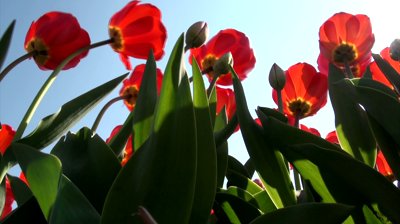
stock-footage-sun-shines-through-red-tulips

Spring.

The wind blows, sweeping across the grass that is greening up, producing multitudinous dandelions at an alarming rate .

The tulips and paper-whites sway in the breeze, standing up to reason.

Big, fat, velvet bumblebees buzz up and down and around, chasing each other up and down the length of the porch, seeming to play some unknown game that makes the dogs snap at them and try to catch them until, for their own safety and this one’s sanity, they are escorted inside, where they stand at the screen, wistful, panting.

christmas_trees_9-2-7_015_op_599x397The row of Ent-friend Cypresses on the edge of the yard stands shoulder to shoulder, holding hands, swaying in the breeze.

They know where they stand, and are thus a fine example of unconditional friendship.

This silver-haired crone sits in the white-painted rocking chair that has held her for several years now, containing her practice, embracing arthritic bones…

iPod earbud cords trailing.

“The Zen Master’s Diary” is the music of the day that is apparent, but the breeze and the bees and the dogs and the creaking of the shed door are accompaniment,

and thus complete the symphony of the apparent, leading into the concert of the music beyond music.

Suddenly, this one opens her eyes for no good reason:  Look!  The first hummingbird, slugging down the carefully concocted nectar made ready, content in its entitlement.  What a metabolism!  These friends seem drawn to meditation, flying close for a look into the face of this one, lost in absorption.

It is all You, my love.

Oh, my love.

It is all love.

That’s all.

That is enough.

Goddesses Unaware

IMG_4105We succeeded in getting away to the beach for a few days this week, something that doesn’t happen nearly as often as I’d like, given our different schedules.  Here where we live in the Piedmont of  North Carolina, we are not actually very far from the ocean: three to five hours at most, depending on where one goes on this Graveyard of the Atlantic shoreline.  This time, given our lack of time, we went to Topsail Island, which bills itself, these days, as being on the Outer Banks, an inclusion I do not recall from the days when my family-of-origin went yearly to the “real” Outer Banks, where we had a cottage, one of those funky little flat-roofed-cinder-block-post-modern affairs that had no modern conveniences whatsoever, even for those times.  I loved it.  My family-of-origin was a perpetually stressed and miserable group of people, and those summers at the beach were my healing from each winter of cold rage and cabin fever in the mountain town where we lived.  My kinship with the ocean remains to this day, although it has become an internalized seascape that makes theses trips less necessary than before, a seascape that is far more perfect and creatively changeable than those landscapes I was exposed to throughout my life, the ones that began that internalization process.  I have tried to live on or near the sea most of my life:  our family has lived in such places as Cape Cod, Chesapeake Bay, and even on Lake Superior, which was a great lesson to me in terms of the archetypal “inland sea.”  We lived, for two years, in an Aleut fishing village on the Alaskan Peninsula, too, in a cove off the Pacific Ocean, and that, of course, was the most amazingly beautiful and stark landscape I have ever loved and been daily overwhelmed by.  Topsail Beach, with it’s overbuilt series of coastal towns and ticky-tacky houses built within such proximity to each other that residents could have little real privacy, with its mom-and-pop restauratns and dives, and its overall honky-tonk atmosphere, is a poor comparison; but my beloved ocean continues to resist all attempts to turn her into an offshoot of such desecrations of her shores, although those are sorrowful enough…  Yet even then, the winds and the sand, the weather that brooks no denial, and the constant change wrought by all these continues to hold a mystical pull on those who walk her beaches, whether they do so with a beer can in their hands, a surfboard or a pail and shovel, running shoes on their feet. . . or whether, as I did, they huddle in a beach chair wrapped up against the cold and intone sacred sounds that weave their way in and out of the howling winds and the constant pounding of the surf.  There is something about proximity to the sea that is an ongoing mystic pull toward the absolute loneliness of God.  Perhaps there is no difference.
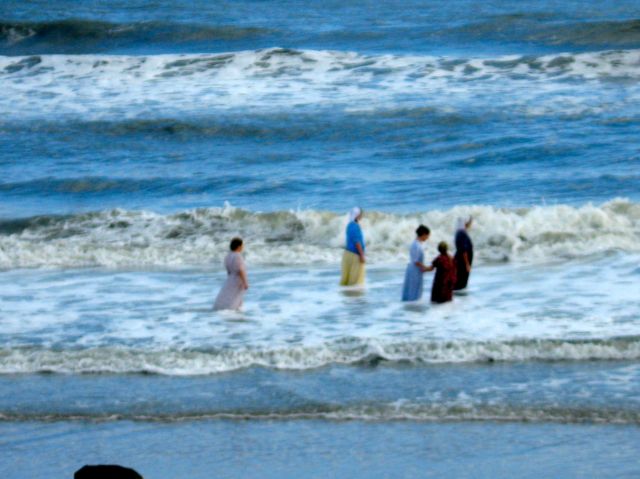
One never knows which individual or what group will be drawn to the sea outside the usual vacationers, surfers, artists, fisher people and others.  This time, the day we arrived, we were charmed to see a group of what appeared to be conservative Mennonites, IMG_4091the little girls and boys and their mothers playing joyfully in the surf, while the men of the group stood around on the beach with their shoes still on, seeming to show little interest in that seascape of seascapes, perhaps discussing the manly things men usually discuss.  We lived in Amish and Mennonite environs at several points in our lives, and we were aware that these are a very private people who do not like to have their pictures taken and would be highly unlikely to put on bathing suits and actually get into the water, even if it were not still too cold to.  But the women and children, wearing their lovely, long cotten dresses with Peter Pan collars, their bonnet strings dangling, made a lovely work of art there in the  surf, leaning into the wind and the the inexorable crashing waves.  We couldn’t resist a few surreptitious pictures, and hope that we have not intruded too much on their privacy by putting them up here.  IMG_4087What an endless variety of life lives itself in the least expected places!  God is constantly writing in one book or another, and we were delighted with this particular one.
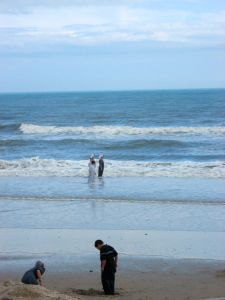

When it was time to find some lunch, we ended up at “Buddy’s, one of the most traditional of the aforementioned “mom-and-pops,” a beach bar on the dune, which affords the opportunity to eat in view of the roaring surf, and we were amused to be able to order Alaskan Pollack there on the Atlantic; nothing unusual, of course, and no doubt a lot cleaner than what I grew up on, on this side of the country.  Just below us on the dune, there was a memorial to a surfer who had lost his life in those treacherous waves.  The young woman who served us told us he had been well-known there for years.  The cross, IMG_4116draped with various memorabilia, reminded me of those leaning at intervals on the dunes of the Bering Sea where I used to go to work monthly up in Alaska: cross after cross in memory of those who had lost their life at sea.  We come and we go.
For most of my life, I have had a longing to be near the sea, and in these last years, I have taken it inside me and made it–her–live within.  I know her sounds, I know her rhythms, I no longer need to see her or hear her outwardly.  She is mine and I am hers.  Perhaps the end of all love-longing is this:  the beloved becomes too real to live outside the lover, and there is nothing the beloved can do that will cause the lover to flee…ever again.

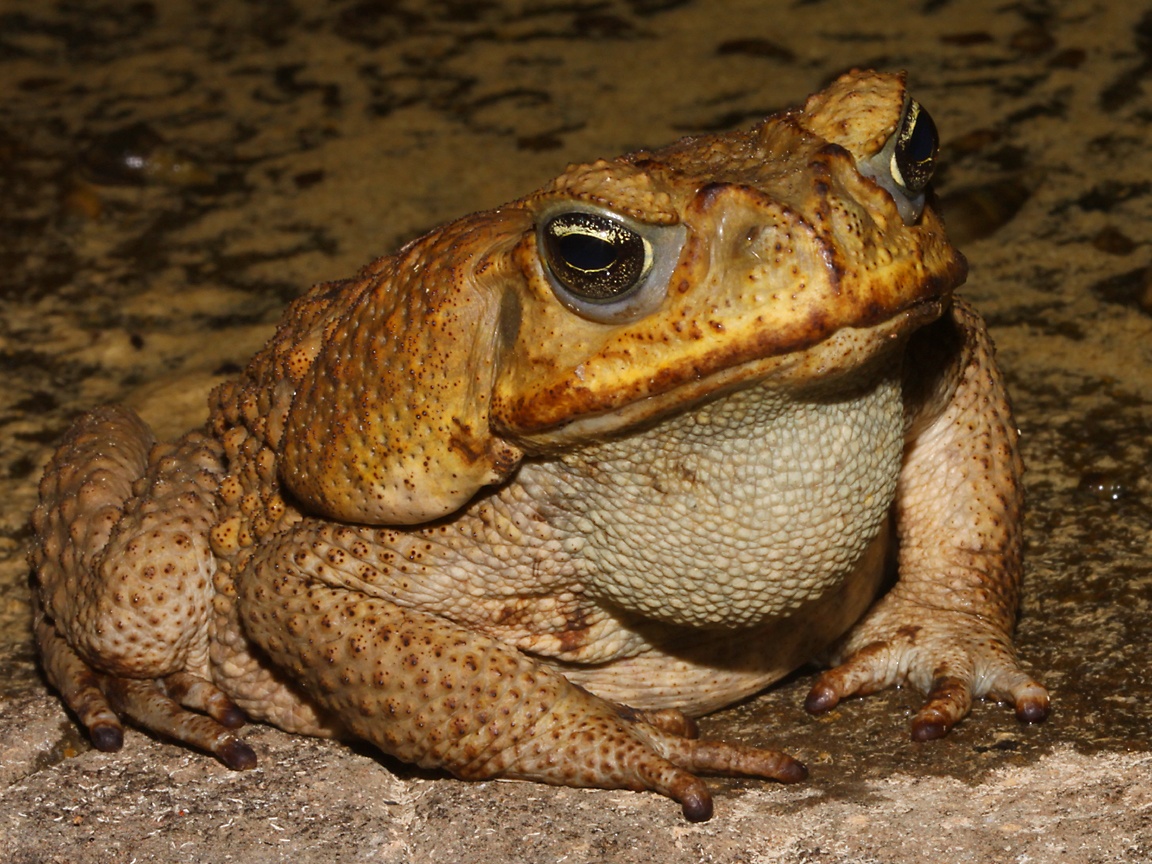
Kissing the Toad by Galway Kinnell

Somewhere this duskwww.richard-seaman.com

a girl puckers her mouth

and considers kissing the toad a boy has plucked

from the cornfield and hands

her with both hands;

rough and lichenous but for the immense ivory belly,

like those old entrepreneurs

sprawling on Mediterranean beaches,

with popped eyes,

it watches the girl who might kiss it,

pisses, quakes, tries

to make its smile wider:

to love on, oh yes, to love on.  –Galway Kinnell

Praying

praying-goodnight-to-the-moon-vallee-johnsonI used to pray all the time:

Give me this.

Do that.

Why?

How dare You?

Yadda yadda yadda

Blah blah blah…

Eventually, when my back was really to the wall,

I learned to narrow it down a bit:

Thy will be done.

That one pushed me down the road a ways,

Into the Whiteness

The Pure Land

The Fire

Up

Out

Down

In

Yet as I fell harder and harder in love,

That one became too much.

Eventually:

Oh, my love…

Just that.

What else?

Like a weary, devout Chassid breathing “Oy…” into his clasped hands.

Oh, my love.

But who says “Oh?”

And who loves back…

And forth…

Who says “I love you?”

Who prays?

There is no one home.

There is no one to pray.

But there is being in love.

That’s all.

Washed Up

Times I think I have it all together, I swim and swim and the water is beautifully wet and it holds me up until there is that moment when I am suddenly washed up on that shore.  Oh yes, I know what shoreline this is, this island,  I know it is the one where the tower is, and I thought I might just for once emerge from the water of Life with some kind of dignity, and walk tall toward that Keep.  It’s not like I haven’t been there, I know where to go to find that bower where the endless, empty dance takes place, that dance with no one and no thing, that dance of emptiness, the one with all that is and has never been…

Washed-Up-1024x819But no.  I am half in and half out of the water, knees, belly and palms grinding into the rocky shoreline, vomiting water and sand, gasping for air, weighed down by time and rage and want and resentment and guilt, oh, all those ones that cling, afraid to be known.

I slide down, flat out, and let the shoreline hold me.  I breathe it in and out and wait while the water takes away the  false constructs and the toxins of living….  And eventually I’m able to stand up and begin that slow walk, that slow but sure walk toward the Keep and that rocky climb up to the bower, up to that dance with no one and no thing.  It always comes if I’m not too big a fool and retreat.  And because I am a soul, a she, He is always waiting.

What It Means to See

Ich lebe grad, da das Jahrhundert geht

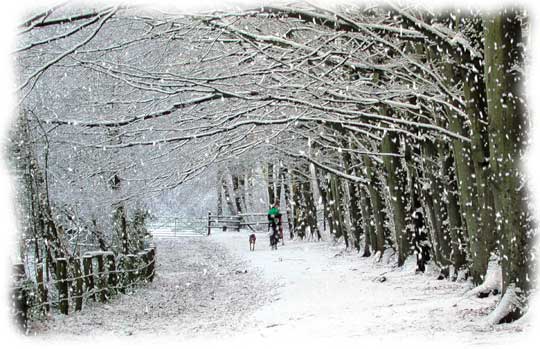
I’m living just as the century ends.snow-scene-finish11

A great leaf, that God and you and I have covered with writing

turns now, overhead, in strange hands.

We feel the sweep of it like a wind.

We see the brightness of a new page where everything yet can happen.

Unmoved by us, the fates take its measure

and look at one another, saying nothing.

–Rilke

Yesterday–New Year’s Eve for us in this culture–I got up from my practice and intended to write this very piece, and found that I, who had plenty of words while trying to let go of the words, had none.  But I love this poem, and a century is always ending, and I love this picture, so I’d better just put them both up and promise to add a few more of the words that want to come through this person when…they come.

Oh, and one other thing:  the title to this one:  I don’t have the slightest idea what it means in this context, but I’m going to leave it up there any way.

Peace, peace, peace………….

Rays

Electronic circuitry has so wired the planet that within twenty years–a few hundred months–just about everything that the human race is doing or has ever thought about will be available at its fingertips.  The human spirit is now coming in waves at us through computer, TV, CD player and joystick.  The electronic revolution is returning us to a tribal world of instantaneous information and dialogue.

–Jean Houston, A Mythic Life

I have several times reminded my children that in the course of my lifetime, I have progressed from the manual typewriter and a sheaf of carbon paper to the electric typewriter, the electric typewriter that is self-correcting, to the “mag card” I remember during my days as a legal secretary, and eventually to the computer, one that interfaces with the entire world through the Internet.  What a life!  How much more intelligent we humans must be becoming, with an increasing body of knowledge at our fingertips that eventually will include all the knowledge there is, as if the Akashic Records have become manifest.  But that isn’t the most important part of the electronic revolution, I think:  what is most important is, as Houston points out, that we are fast becoming a world village through Facebook and its ilk.  I have made so many wonderful friends online, and I’m sure I wouldn’t have made them otherwise, if only because I have never been inclined toward snailmail, possibly through sheer laziness (or lack of postage).  Most of us these days–if we wish to–have friends all over the world and  information about places we’ve never been and may never go is right at our fingertips.  I tend to bemoan not having been able to travel more in my life, even though I’ve traveled a fair amount…but now, all I have to do is Google anything I want to see, any place I want to know more about.  What does this mean for us as a collective being?  Surely any answer to that becomes an obsolete one almost the moment it is spoken.

One of the friends I have met online is a man who lives in in Utah, a man who grew up a Mormon and a farmer who is becoming increasingly self-actualized through his own intuitive process.  He is a fascinating combination of wisdom and pragmatism, and strikes me as one of the people I have met on this planet who genuinely enjoys being here.  He mentioned this when we were talking recently, commenting that it seems that so many people become involved in what we used to call–in my hippie days–the “spiritual trip,” are people who have lived lives of misery and limitation of one kind and another, people who began to search for a higher meaning in life because they did not find sufficient meaning in their current experience to be content with the world as it is.  He is, he says, not one of these:  he finds life endlessly fascinating and meaningful, and his interest in expanded consciousness is an outgrowth of that, rather than a reaction to misery and limitation.

Well, I suppose he’s right.  When he said this, the only thing I could reply was “Yeah, you’re right, I hate this life and I want to die.”  He didn’t seem to have much to say to that, and I don’t blame him.  It occurred to me later that I must have sounded like a profoundly depressed and hopeless person, but that isn’t it at all.  Recently, toward the end of one of my meditations, I found myself saying over and over again to the God of my understanding, “Let me die, let me die, let me die…”

Now, there is no doubt that I am one of the people in the group this man mentioned:  I have not particularly enjoyed the earthly experience, although I have a great love of nature, the joy of relationship  and many of the sublime aspects of life on this planet.  But that isn’t the source of my misery or of my search for a higher existence:  it is nostalgia.  Inayat Khan and the other teachers who have formed the foundation of my spiritual tutelage teach of the path of the soul as one that takes Being through world after world, level after level of the unfoldment of God in God’s creatures, and the soul picks up and carries impressions from each place it passes through in its descent and ascent away from and back to its Totality.  And it is my understanding that depending on the route taken by each ray of that Sun, each soul takes on and carries impressions from the different realms it passes through.  Over and over, the soul is born to parents in each plane, passes through worlds of that realm, lives and dies and passes on to the next. And the next.  One soul may carry a primordial impression of the celestial planes, where angels of fire or light carry out the work that they are drawn to.  Another soul may carry the impression of the astral planes, or the mind-world of djinns.  Still another may be most deeply impressed by the earth plane, where the soul passes through the realms of animal, vegetable, mineral influences.  And for some souls, their abiding attunement is in their memory of the Absolute, the silence and solitude of God beyond becoming.  Thus, a feeling of strangeness and even alienation with one’s current experience may be motivated by the soul’s longing, its nostalgia for its true home, not a dislike of this one.

If I wish to become self-actualized, I will at some point be drawn to and recover my memory of all the worlds I have passed through on the way into and out of God, and it seems that, based on my current experience, I may carry the memory of one more than others.  In my case, I have a strong angelic attunement:  I am drawn to the pure, pristine world beyond earthly emotions and inclinations, and have needed to guard myself, as all souls do, in an earthly guise that might seem to preclude such an impression.  It is natural that I would find myself often unable to tolerate the present moment and locale I find myself in:  I remember too well those worlds beyond physical limitation and ugly emotions.  The planet earth, of course, contains many reminders of where I come from:  a fresh snowfall, a great painting, a Tallis Mass, a beautiful emotion that seems beyond what I consider to be ordinary emotion….all of these remind me of where I come from, and on my journey I meet souls who embody the reality of the realms they have descended from.  Do we speak here of parallel universes, quantum reality….or of the Divine Sun unfurling its rays and drawing them back in?  One’s interpretation of what one perceives seems to depend on the knowledge of other realities that it carries.

What does this existence, then, mean?  Well, speaking of Facebook and our growing global village, I saw  the following this morning, from a page called  Where Angels and Lightworkers Meet:

A bit simplistic, perhaps, but…it’s all true, I’m pretty sure.  This is what it’s all about, and my path of love shows me this in some way nearly every day.

So I do want to die.  I want to go home.

I also want to follow the path of True Love.  The Prophet, peace be upon Him, said in some Hadith I’ve forgotten the source of, that to be human is to be higher than the angels, because traditionally, the angel is caught in the contemplation of God, while the human experience allows for the full realization of God.   In other words, I love to look at God, but I have a feeling that my highest happiness is in becoming the Divine Glance.  So I suppose I’ll just have to continue to put up with this mess, Republicans and all.

The Emptiness Whose Name is Love

The supreme goal of the teachings is the

emptiness whose nature is compassion.

~ Atisha ~

Lately I have been feeling very blue, very backwards….as if this quest of mine was nothing, a failure, none of what I thought had happened had happened.  I knew that this feeling was nothing unusual and that I was in good company in what I was going through, but still I grumbled about it to God:  “Isn’t it time for another peak experience?  It’s been so long!”  But there was nowhere to go, nothing to be done….after all, I had gone too far to go back now.  What else could I do but continue to free-fall backwards into Those arms?

Then last night I sat on my porch listening, listening to the steady thrum of the crickets and the soft sound of my rocking, and . . .  nothing. No-thing, as the Buddhists say.   And after awhile,  I gradually, peacefully, slowly realized that there was no me.  I did not/do not exist.  No being.  No God, either.  It didn’t even particularly concern me that there was no one there to have these thoughts.

Only…love.  No peak experience.  Nothing dramatic.  Just…  “Ah.  This is how it is.”  Home now.  The veil lifted, and I knew that now things would be different.  Perfectly natural.  “Oh.  I got it.”  It was also interesting that this ego here didn’t engage in its usual clamoring,  just accepted its own nonexistence, relaxed, turned over and went to sleep.   Love was alone.  And in that aloneness is perfect happiness.  It occurs to me to look back over the years when I was hoping for illumination that I panicked at the very idea of this kind of thing.  Until…I didn’t.  Until…it was time.

And yet…there is no time.  There is no space.  There is only emptiness, and that emptiness is made from love, from which all these things  spring.  We are thoughts in the mind of God.

And so the journey continues….  Your heart takes you to places that do not exist, where the snow falls gently and the wind comes from behind the clouds.  And here, in this land, you can forget everything, even your own existence.  There is no mirror to reflect you, no open door to walk through,  just an endless landscape of love that knows no boundaries.  And the wind is real and the snow continues to fall and the love continues, and will always continue.  So you can leave behind those old worn clothes that you called your existence, those ways you used to walk when you thought you were alive.  Because here in this place that is like no other there is the freedom you always knew, a freedom that belongs to love.

Do not be discouraged, do not ever be discouraged, even when you feel so lost and misunderstood, when the wheels of existence carry you always along roads you would rather not travel.  There is this other land, this landscape that belongs to love.  This is the place where the two seas meet, where existence reveals its secrets, where time uncovers what always was, even if you have never seen it before.

So why do we wait, feeling stranded, expecting something, when we are already at the place where the two seas meet, where the journey we call our self has already ended?

Do not worry.  There is nothing to find or lose—the moon will always rise, the wind will blow apart the clouds and time will take you where you need to go.  You are the place where the two seas meet, where love is uncovered, where silence is mirrored into sound.  And yet we are conditioned to worry, to dream in a language that causes misunderstandings, to seek meanings where there is only the moon reflected in the water.  We mistake our self again and again, looking for what cannot be answered.  And yet there is always this other place, this vastness that calls to us, that draws us out of our existence.  Remember it is always here.  It cannot be anywhere else, just as love can never be somewhere else, because that would deny the very nature of love.  –Llewellyn Vauhan-Lee, Fragments of a Love Story:  Reflections on the Life of a Mystic

 

Dream House

This morning, toward the end of my sleep, I dreamed that my family was looking for a beach house to buy, and we were taken through this wonderful, sprawling dream of a beach house built on undulating golden dunes overlooking the ocean.  I seem to remember a deck built on the dune, with stairs to a lower deck on a lower dune, leading down to the beach and the roaring ocean.  We sat with the owners in  a room that was all windows overlooking the sea, with a sectional couch built around the walls the windows were in.  Outside, toward the road, there was a double garage.  The owners, or at least the ones we met, a woman and a young man (her son, I assumed), very much wanted us to buy the house.  I didn’t feel quite worthy of it, and such a house didn’t seem possible to me.  I told her that we’d like to lease the house for the winter (we had done this in beach communities when we were younger), and at first she said “no.”  We talked some more and I evidently said something that pleased her, and then the answer was “yes.”  I could tell from the start I had a connection with this woman, but I was surprised and humbled by that.  Then she said “You’re going to make a wonderful daughter.”

I suddenly seem to have taken my blog in the direction of dream analysis, although there are a few here already, ones that seem important.  But “analysis” isn’t quite the right word, because if I analyze my dreams, I’m limiting them.  It seems better to just write them down as the imagery comes to me, and ask that to tell its tale.

My Mother’s House

Thomas Hart Benton

Last night, or rather this morning (Jung says that the last dream of the night is the most important, the one that WANTS to be remembered), I dreamed that I was preparing to leave the house my parents owned, the one that, in the dream, I thought of particularly as “my mother’s house.”  I had taken quite some time to come to this decision, and everything contained in the house was gone.  The house was empty.  I assume that I had sold or auctioned off the contents.  I remember that I was scared about leaving, and was not at all sure where I was going . . . but I was also kind of excited about it, too.

Pema Chodron often uses a Buddhist term that translates as groundlessness, in particular, “positive groundlessness.”  We don’t have a leg to stand on:  not a single one of us really knows what is going to happen in life.  We don’t know whether we’re safe, we dont’ know whether our needs will be provided for, we don’t know what may happen at any given moment.  We are, it appears, powerless.  Her recommendation is to learn to relax into this state, to enjoy the free-fall that is life.  If we can go from “negative” groundlessness (i.e., a chronic state of fear and anxiety) to “positive” groundlessness, she says, we find ourselves opening up to life, opening our hearts and minds and awakening to a state of all-possibility.  Life is suffering, as Lord Buddha said.  But Pema points out that it is not what actually happens that causes the suffering, but our attitudes toward it, the stories we tell ourselves about what takes place, the decisions we make about what happens.

This dream of mine seems to indicate my perception of a new chapter.  I wonder if I can write that chapter without actually attaching a story to it.

Purposeful Loneliness

Among lonely people there is not a single one who can be sure that in his suffering he might not yet console someone else and that the gestures of his most personal helplessness, like so many cues and signals, might not serve as signs guiding the way in the realm of the unfathomable.  — Rilke, Letters on Life

About Solitude

Recently, a male friend of mine told me how he had created the money for a trip to India so he could do a 40-day retreat with a prominent Sufi Pir.  I thought about it, off and on, for several days afterward, wondering why the whole idea kind of….puzzled me.  I felt a slight annoyance, too, probably because I have yet to make it to India, and wouldn’t mind going at all, although I doubt that I’d spend my time there doing forty days on retreat.  I believe in retreats, don’t get me wrong.  In fact, I too have been on retreat for about a year and a half now, a fact which surprises me.  It surprised me when I first felt drawn into my retreat, and it surprises me now.  I am a “certified retreat guide” in the Sufi Order International.  That means I am supposed to be capable of guiding people on silent retreats, intuitively.  It’s been awhile since I did so, but I felt reasonably prepared for my own long retreat, and I have had a wonderful long-distance guide to see me through it, largely via email.  I must insert a disclaimer here:  don’t try this at home, folks.  Well, unless you do.  Generally speaking, the retreat process is an extremely difficult one, and the retreatant ought to be ready for it.  It’s possible I may have been more prepared than some, having done many group and individual retreats, and guided some, as well.   There are “retreats” and retreats, of course.  I am not speaking of the “retreat” you take if you are an executive for a huge corporation and your “team” retires to the beach for a weekend of mind-games and rest, led by a psychologist.  I am speaking of the kinds of retreats taken by the dervishes, the yogis, the desert fathers, the monastics of the various esoteric schools.  I am speaking of drawing away from everything, becoming silent, and sitting for long hours every day, practicing intense and difficult meditation practices, eating little, speaking not at all, and working very, very hard.  In the Sufi Order, it is called an “alchemical” retreat, the concept based on the work of Pir Vilayat Inayat Khan, who staged the process around the phases of the classical medieval alchemical process.  The Sufis I know go on retreat as often as they’re able, and they do retreats of three, six, ten and sometimes even 40 days.  And I’m sure that a chance to go and be guided by someone who is steeped in the teachings of one of the traditional Sufi Orders in the East is particularly attractive.  The retreat process is a difficult, intensive, and even dangerous one, if the retreatant is not ready for it, and if there is not a guide.  Esoteric practice can strengthen the ego, not subjugate it, unless one knows what one is doing.  But back to my friend and his retreat in India.  Why, I wondered, does one have to go somewhere spiritually impressive (which India obviously is) and be guided by someone who is well-known?  Is the retreat better?  Are they more enlightened afterward?  Why would someone need this?

My own retreat has been quite a humble one:  having gone through six surgeries that left me debilitated and depressed, I was looking around, trying to figure out what I was supposed to do next, when I felt myself drawn, inexorably, into an intense meditative process.  I will admit, my back was to the wall at that time, I had come to the end of all my devices, and I wasn’t sure what to do with myself next.  Everything had changed.  I had changed.  I didn’t know who I was or why I was here.  I didn’t know why I was alive, and in all honesty, I didn’t even know if I wanted to be alive.  And I was pretty sure that none of my other remedies for this kind of state were going to work.  And this time, I wasn’t going to try to make myself feel better.  I was going to go for broke.  I suppose I decided to put this Sufi path of mine to the test.  If I could be healed and made whole, I knew of no other way that I wanted to do it.

I didn’t go to India.

I didn’t pay a lot of money to some notable spiritual teacher to guide me.

I didn’t go away to a well-known monastery or ashram.

I sat down in my rocking chair on my porch.  And I practiced.  And I practiced.  And I practiced.  For long hours every day.  I read holy books.  I corresponded with my guide via email.  I listened to incredible music.  I listened to the birds chirp and the trees rustle.  When my husband came home in the evening, we were together as usual, and when my daughter came home from college for the weekend, we were a family.

I ate carefully, but well.  I slept at night.  When I could.  I did not wear a robe or sleep on a cement floor, as I once did when I went on retreat in the French Alps and made a retreat in a shepherd’s hut.

It worked.  The Divine Being blessed me endlessly.  I am convinced that I could not possibly be any happier with the results than I would have been if I had traveled to India.  I cannot speak of these results here, but if someone reads this who knows…they WILL know, and that’s all I can say.  But perhaps I can say that the sky and the earth are meeting right inside here.

I really hope I get to India sooner or later.  I hope I get to a lot of places.  But God is right HERE. and given that this is the case, I am carrying all the rest anyway.

If you are a male, you may not like what I’m going to speak of now.  Unless, of course, you are a male who is in touch with his animus and has the ability to laugh at the absurdity of being human.  Just be warned . . . and “don’t shoot the messenger.”

I was speaking of my friend’s trip to India with a woman friend, and I asked her, “what is it that makes someone think they MUST go and seek God under the auspices of some famous and well-known person in a spiritually impressive place?”  She chuckled.  “Well,” she said mischievously, “he’s a man.”  And yes, we laughed….wickedly.  So sue me.  Yet I do believe there is a bit of truth in the idea that it is the more asssertive, outward part of a person’s nature that causes them to need something outside to bring them to the place of finding that their heart’s desire was available right inside all along.

It’s very convenient.

<Gasho>

At the end of a crazy-moon night
the love of God rose.
I said, “It’s me, Lalla.”

The Beloved woke. We became That,
and the lake is crystal-clear.

Lalla Ded, c. 14th century

Al Ghaffar


There is a memorable hadith where a Bedouin says to the Prophet, “What if I do this really bad thing?  And the answer is, “Allah forgives.”  But what if I do it again and again and again?”  “Allah continues to forgive.”  Then the Bedouin says, “Doesn’t Allah ever get tired of forgiving?”  And the Prophet Muhammad says, “No, but you might get tired of doing that same thing over and over again.”

 Physicians of the Heart (see below), p. 127.

Life Being Lived

CLF - Olmstead Parks

And yet, though we strain

against the deadening grip

of daily necessity, I sense there is this mystery:

All life is being lived.

Who is living it, then?

Is it the things themselves,

or something waiting inside them,

like an unplanned melody in a flute?

Is it the winds blowing over the waters?

Is it the branches that signal to each other?

Is it flowers

interweaving their fragrances,

or streets, as they wind through time?  — Rilke

Recently I received, from a well-known academic and Muslim here in Chapel Hill, a blanket criticism of American Sufis, pointing out that “we” do not understand the true meaning of Sufism, but veil our understanding within the bias of  “our” Western capitalistic world view.  He gave, as an example, Deepak Chopra who, he says, charges $5,000 for a weekend seminar.  The implication is that real Sufis are not materialistic, and do not practice the kind of engaged spirituality he believes is the correct way of life for a true Sufi.

Well.  Where do I start?

First of all, I wasn’t aware that Deepak Chopra bills himself as a Sufi.  Second, I was not aware that he is an American, but I will admit I do not know, because his words do not attract me, nor does his being.  Third, I object to blanket statements about any group, particularly from a noted academic who ought to be capable of more critical thinking.  Finally, I am not aware that the practice of Sufism means that one is “this” or “that” or holds a particular world view . . . and I find it astonishing that someone who is supposed to be an “expert” on such matters would make such an irresponsible statement.

As for me, I just sit on my porch and watch the birds and listen to the trees.  It seems to me that the trees know where they stand, and the birds refuse to favor one position over another, and thus they demonstrate, for me, the meaning of the word Allah.  I will say one thing about “we” American Sufis:  sometimes we can be rather naive and uninformed about the Islamic framework in which Sufism has become known to the Western world, but it seems to me that such constructs are really only the “basket that carries the flowers,” and I think the essence is available to us all, regardless of our station in life or our political views or our geographic location in space and time.  I was reminded, recently, by my new favorite book, Physicians of the Heart (see below) that the word Allah is derived from the Arabic verb waliha, which means to love passionately, intensely, totally:   “crazy love.”

That’s it.

The teacher who brought me up told stories about the rishis in the Himalayas, the Desert Fathers, the Yogis and the Madzubs, the Chassids, the contemplatives of all the varied ways to illumination  who refuse to “join the club (or the “old boys’ network”),” those ones who refuse to believe the lies, those ones who hold the world up in space, who keep it spinning, wobbling, staggering along because they say Allah . . . and leave “them” to their devices.  And Allah is a name that can be called in many, many ways . . .

Let us not forget:  in the Al and La of Allah are the words yes and no.  The rest is just excuses.


The highest good is like water.

Water gives life to the ten thousand things and does not strive.
It flows in places men reject and so is like the Tao.
In dwelling, be close to the land.
In meditation, go deep in the heart.
In dealing with others, be gentle and kind.
In speech, be true.
In ruling, be just.
In daily life, be competent.
In action, be aware of the time and the season.

No fight: No blame.  

Tao te Ching

American Dervish

As I was reading this book, I kept thinking about similar books of its kind, particularly THE CHOSEN, by Chaim Potok.  Another coming-of-age story about a young man living in a culture that would be unfamiliar to many of us of the “Leave it to Beaver” generation, and even the ones that come after, but the comparison ends there.  THE CHOSEN (and its successors) was a rich, dense, intelligent and extremely moving book that illustrated exquisitely the profundity of pain and joy in growing up in a very specific culture….and AMERICAN DERVISH…wasn’t.  A pretty good first book.  And an important book for mainstream post-911 Americans.  But not good enough to truly do service to its topic.

I happen to be that rarity, an American Sufi.  I am well aware that the very concept is ridiculous to most of the more traditional, Eastern Sufis and/or Muslims, but I claim my heritage nonetheless, after some forty years of study with an authentic Sufi teacher.  I read through a number of the reviews on Amazon, and it is interesting to me that very few of the readers zero in on this very important aspect of the writer’s illustration of Islam, Sufism:  generally thought to be an outgrowth of Islam, typically understood as something like Islamic mysticism.  In my experience, it is much more than that, but my purpose here is not to argue these issues, it is to point out that the author tried very hard to wade through his conditioning as a Muslim–or not–at the hands of his family and community, his heritage and his life as an American boy….and in some way, found in his aunt’s understanding of Sufism, a deep answer to his pain, an answer he still didn’t entirely understand, even at the end of his story; or at least, the character didn’t.  Given the few referrals to the Sufis in the book, it is certainly easy to miss this nuance, but for me, it is the only thing that eventually causes the book to make as much sense as it does.  Unfortunately, the author’s seeming lack of understanding–or his failure to subtly lead the reader to his possibly real understanding–fails.  Most of the book is so gritty and so tragic and so painful and fraught with such melodrama that the culmination of the story left me, at least, thinking that the author himself didn’t “get it.”

But who are these people the author writes about?  With the possible exception of Mina, and perhaps the boy’s mother and father, the other characters seem rather one-dimensional.  I found myself adding to them with my own imagination, trying to flesh-out the incomplete illustrations of them.  The most frustrating one was Nathan, and it occurs to me that perhaps the reader doesn’t really come to understand someone like Nathan–a Jewish American, the child of Holocaust survivors–simply because such people were truly foreign to his world.  He could only see what was in front of him, it would seem.

Ultimately, though, the frustrating thing about this book was the unanswered questions, the biggest of which was supposedly answered by Mina before her death, explained by some “Sufi-speak” that might make sense to someone like me, and that in this context was supposed to explain her understanding of why she remained in a simply dreadful, violent relationship that nearly killed her and probably damaged her children irreparably because of her refusal to take action, a refusal that made no sense for a woman of her intelligence, a woman who had already been through so much trauma, a woman who was as strong as she was said to be.  It seemed to me that the author was attempting a sort of Zen-like “figure it out for yourself” culmination, the answer to a life’s koan. . . but in my opinion, it was a cop-out at best, and at worst shows the author’s misunderstanding of the philosophy his story hinges on.

In his epilogue, the author announces that out of the whole experience, “I finally discovered myself not only as a man, but as an American.”  The final scene, which takes place after this pronouncement, offers no explanation of either, as it takes place at the Cafe Algiers in Harvard Square, about as un-American a setting as there could possibly be within these borders.  Yet another unanswered question.  One isn’t allowed to see much evidence of either his growth as a man OR an American.

Perhaps what I am struggling to say, here, is that this writer doesn’t yet understand his own subject. I do appreciate his willingness to let me see what it is like to grow up in a very different culture from my own, although having come from the “Bible Belt” of the American South, I find fewer differences than I do similarities.  And having studied Sufism for so many years, experientially and academically both, it is tempting to say that I have a better understanding of both than he does.  But after all, I’m possibly twice his age, and if I were to attempt to describe Christianity and/or Pentacostalism to you, I would probably be just about as inept, because what he’s describing, here, and what I would be describing, is not a religion, but the painful and horrific impressions that are forced on children in the name of that religion through the so-called “scriptures” that evolve to reinforce those misinterpretations.

All in all,  I hope Akhtar keeps writing:  perhaps he will grow into his perceptions, so that he can articulate them fully.

Physicians of the Heart

Heal my soul by the all-sufficient power that comes from the glance of Thy Messiah. –Inayat Khan

Wali Ali Meyer and friends have written a book for the ages:  Physicians of the Heart:  a Sufi View of the Ninety-Nine Names of Allah.  Awhile back I wrote a post here on the psychological effects of the Divine Names (https://eklutna.wordpress.com/2011/08/16/the-beautiful-names/), but this wonderful and HUGE book blows that out of the water, and also shows that I am not alone in my perception that the ultimate healing is, as my beloved Pir Vilayat would say, when “God creates and recreates God’s own self in and through us, in the measure that we reverse our vantage point and grasp the divine operation in us.”  A tall order to those of us who have emerged from the “quick fix” generation, still needing to be fixed and still feeling the pain of that.  I myself certainly have been and still am an example of that way of doing things, but I have learned, and so can anyone who is ready to acquiesce to the reality, as Al Hallaj says, that  “I have been invited to the divine banquet and the divine host has offered me to drink of the wine, the poison, that is His beverage. How can I refuse?  It is the beverage that gives eternal life.”  Not quite the same as sitting in the office of some sympathetic person who just keeps saying “you’re okay.”  How okay do we want to be? This is why Inayat Khan said that “the message is a call to awakening for those who are meant to awaken, and a lullabye for those who are still meant to sleep.”  In my case, I found that I could not transcend my personal suffering without that ultimate Cure, and in the end nothing else was worthwhile.

Many of us American Sufis, I think, grasped the essence of Sufism, but took a longer time to understand the framework and the context of that framework.  This is only partly to be found in traditional Islam, although the teachers I have had have stressed this more and less, depending on what they saw as the need of their time.  Hazrat Pir-o-Murshid Inayat Khan, for instance, was directed to take the Message of spiritual unity from his native India to the West in 1910 by his teacher, and he came to a world that didn’t understand his music and its deeper meaning at all, and he had to learn the words that would convey the essence of his teaching to a world that was only just beginning to get ready for it; and therefore he placed his message within the context of his own spiritual upbringing, but he focused on conveying the Message of spiritual liberty to his audiences, and while he taught the traditional practices to his students, he gave them in a fairly traditional, classic methodology, and in the simplest and most practical form.  His successor and my lifelong teacher, Pir Vilayat Inayat Khan, was a poet and a visionary. He inherited us, the hippie generation, the “tune in, turn on and drop out” generation, and we were ready for his visionary grasp of that essence, which he framed in the poetry engendered by his visions.  Others of his close followers stressed different aspects of the Message:  “Sufi Sam,” the one who was designated by God, he said, to be “teacher to the hippies,” to some extent superceded the intellectual framework by teaching his followers a direct musical transmission of the essence of the message, in the form of  Sacred Dance.  It was in that context that I first met Wali Ali, at a time when we were all united in our spiritual work, and it was Sam’s “kids” who brought me up in my early years as a Sufi, even though my teacher was Pir Vilayat.  But it didn’t matter, and it doesn’t matter:  it is all the same teaching, and as Murshid S.A.M. (Sufi Ahmed Murad) said, “Sufism can’t be taught; it has to be caught.”  And so we have done our best to field those ecstatic flies that have come at us through the years.  And we have grown, and the teaching has grown, as has the “unity without uniformity” that Murshid taught.

S.A.M. once said “my secret is controlled schizophrenia.”  As for me, my life is an endless digression.  I return to Physicians of the Heart, wherein is a most marvelous explication of the Divine Names, both in terms of their origins, pronunciations, and a deeply lyrical interweaving of the spiritual and the psychological, and the psychology of the spirit.  Wali Ali takes the reader far beyond the surface understandings of the divine qualities:  when I first began to learn them, I learned that al Jamil, for instance, was about Beauty, and al Majid  as about majesty, and al Haqq meant truth, and on and on. . .  yet one finds, if one gives oneself deeply to recitation of these names, that each is in itself a dhikr, an open door to an aspect of the Divine Being that precludes one’s personal wishes and projections, and aids in remembrance of one’s divine heritage, in that the practitioner must symbolically die to the quality that is being invoked in order that one might come to individual understanding through the Divine understanding as compared to one’s personal constructs.  Each is different, the 99 and then some, and each invokes the proliferation of the flowering of God’s unfoldment in the person, in an alchemical process of awakening. . . but it is not the person who awakes, it is God, whatever God is.  In his book Wali Ali invokes this precious, fragrant flowering of divinity in humanity through the divine qualities.  He explicates the deeper meanings of the Names, he tells stories and weaves webs of possibilities and potentials.  He takes the student into the deepest heart of each, yet conversely demonstrates their efficacy in daily life.  Through the many years of work he and his colleagues have done with students, he shows how the Names heal and awaken both psyche and spirit.

In my own inner work, I have been astounded, again and again, with how each name becomes a sort of homeopathic remedy, in that if the right one at the right time is prescribed, and to the extent to which I am able to surrender to its reality, the places where I am wounded are healed, in the areas where I am stuck become unstuck, and even more:  I am afforded the opportunity to become the instrument of the Divine Voice, if I am dedicated enough to put aside my ideas and surrender to the true reality of the Name I invoke.  And it all goes back to the casual suggestion of the Prophet, peace be upon Him, that the disciple ought to recite the Names in order to know God’s qualities.  A simple instruction which became a Divine Science.

When you feel full of worth and value, because you have identified your self with the eternal reality of the soul, strength arises spontaneously from within.  It is something to be cherished and it gives you the courage to be, the strength and dignity to protect the divine quality within, and to honor it throughout your life.  When you let down your ego defenses, you are able to see that you don’t personally have the power to do what needs to be done in order to heal the wound of being disconnected from God.  The dawning of this light of self-value comes when you truly surrender the healing into God’s hands.  (Wali Ali Meyer, et al., p. 15)

Once I was a Grandmother


WordPress provides me with these “stats,” daily, weekly and monthly, that give me some idea of how many people are reading this blog, who they might possibly be, how they get here, etc., etc. . . . It also tells me what I write that people tend to read most, and although I suppose this is a “Sufi blog,” I post some personal observations here as well, and the most popular one is the one I wrote when I became a grandmother.  Clearly there are lots of people out there who have become grandmothers and want to hear how it is for other grandmothers.  I remember it well, although currently, I suppose I’m not a grandmother.

I wrote two posts here called “Always Endings” (https://eklutna.wordpress.com/2011/01/28/always-endings/) and “Living Forgiveness” (https://eklutna.wordpress.com/2011/02/08/living-forgiveness/) and I imagine it was fairly obvious that the persons they were about were my oldest daughter and my first grandchild.  Recently someone read them and commented to me that they had the tones of a “Greek tragedy,” and I suppose that could be a valid statement, but to me they were terribly important, because they were about the most profound and painful spiritual lesson I’ve ever had to learn, the one called “accepting the unacceptable.”  It happens to most of us sooner or later:  someone dies unexpectedly and possibly violently, someone terribly important to us leaves us, we are traumatized in some way…any or all of the above.  And there is nothing we can do about it.  Nothing.  If you read the definition of “posttraumatic stress disorder” in the DSM-IV-TR of the American Psychiatric Association, you will note that the most prominent features of such an event are their unexpectedness and the fact they are completely uncontrollable.  We like to believe, in this world, that we have control over what happens to us:  if I get enough exercise, eat enough flaxseed, meditate daily, save enough money, etc., etc., etc. . . . all will be well.  But it isn’t always, is it?  Sometimes things happen that are so unexpected, so uncontrollable, so utterly unacceptable. . . and they just are.  We are backed into the corner.  Don’t have a leg to stand on.  Can’t do nuthin’ about it.  All we can do is to try to make something of the pain.  To make friends with it.  To let it stand for something.  Hopefully, to let it make us great.

Well, that’s what happened when I “broke up” with my oldest daughter and my first grandchild.  After 33 years of trying to rain on the desert . . . I stopped.  I truly believed it was my only choice, and I still believe that.  When I made the decision, I’m sure my daughter will never understand this, but I made it because I felt that she would never be able to become the person she really wants to become as long as she continued to hold me in a death grip, alternately tearing away piece by piece of my heart and clutching me to her in overwhelming waves of rage and love-hatred.  The first book I read about what have been called borderline personalities was that classic “I Hate You:  Don’t Leave me!” by Kreisman.  The first time I saw it, I sensed that the title said it all, and after those years with my daughter, I still think so.  I was a sitting duck for the experience I had:  I was raised by two personality-disordered parents, and my first husband–the father of this girl–had the same diagnosis she eventually did, so I was probably the worst possible parent she could have had.  I was the classic codependent.  And she never forgave me for it, nor let me forget it for a moment.  I’m sure she feels the same about me.  And I’m sure that, on some deep level, because we bonded like a real mother and child when she was young, neither of us will ever get over it.  Yet finally, it was time to leave, and so I did.  I had this granddaughter by then, too, and our whole family loved her dearly, for which her mother could not forgive us, because she continued all the years I knew her to believe that none of us loved her, because none of us could ever give her what she thought she wanted, something that I’m not sure she ever figured out.

Breaking up didn’t solve much, of course, although I continue to hope and pray that it will help her draw herself together and love her child well.  As for us, her “family of origin,” I don’t think any of us expects ever to truly resolve this, although I am grateful for the first time I’ve ever had to myself to live and grow and heal:  the first time in my life, really.  I had, during the “terrible years,” married a wonderful man, and we had a second lovely, wonderful daughter who was kind enough to show me that I could love and be loved normally and wholey, and who, to this day, is my best friend.  The break-up affected my husband and that daughter profoundly too, of course:  my second daughter has had time to find herself as a person without the constant message of “Mom loves you best, you’re the one who caused all these problems by being born, etc., etc., etc.,” the messages she needed to send her little sister’s way in order to bear herself during those years.  None of it was my daughter’s fault, truly:  she simply isn’t “wired” in what is considered to be a normal fashion, and her pain is much worse than any of ours; I truly believe that.  This is what I mean by “accepting the unacceptable.”  It is what it is, and it was what it was.  My good husband ran interference, and my second daughter and I did our best to survive.  I’m pretty sure that daughter will survive:  she has largely recovered, although it took her some time to learn to trust others; and she goes from strength to strength.  As for me, well, I too will and have survived, in the way that I can:  I have used these lessons I have learned, and my body bears the marks of the ongoing stress and trauma of raining 24 hours a day on the desert:  my immune system is compromised, and I have rheumatoid arthritis and fibromyalgia.  Nothing new there.

And. . . I’ve used this tragedy.  I won’t say what I said above, that I’ve “let it make me great.”  The results aren’t in on that one.  But there is much to be said for having one’s heart broken repeatedly and thoroughly.  There is much to be said for having no choice but to accept the unacceptable.  In this case, what that means is not only walking away from an adult daughter, but walking away from an innocent child who loved me and her aunt and her grandpa.  I didn’t know whether her mother would be able to care for her adequately.  Her marriage had already broken up, and I didn’t have much respect for the father, either.  And they, in turn, had demonized me quite thoroughly.  It is all my fault.

Accepting the unacceptable.  Accepting being misunderstood, over and over again.  Accepting being hated by someone who was my first experience of the Divine Child, when I held her in my arms at birth and got up with her at night and walked her to school and mothered her endlessly, to no avail.  Living with having to walk away from a child I adored, not knowing whether she would survive her upbringing at the hands of someone with such profound problems.

Saying goodbye.

It’s been over a year now, and yesterday I was in her old neighborhood for the first time in those months.  We had avoided all the places that bore such poignant memories for us, but yesterday we drove by the house.  We didn’t know if she still lived there.  The father had sent us a blank email with the subject line “she’s moved,” because for awhile we tried to send cards and little gifts to our grandchild, and I guess they couldn’t allow us even that small pleasure.  I knew that there would come a time when we would run into them, and I knew it would be unbearable, but I hoped it wouldn’t happen before I could bear it.

But yesterday, when we drove by, the yard was neat.  Everything looked pleasant and lived-in, instead of that certain disarray that always illustrated the only atmosphere this young woman could seem to live in.

Except for one thing:  in the backyard, I could see my grandchild’s little “turtle sandbox.”  You’ve seen them.  In fact, I had bought one just like it for her mother when her mother was little.

So I have been suffering quietly since then, and suffering is good.  It is possible that good may eventually come from this tragedy.  It is possible that this little girl will grow up happy and whole.  It is possible that some day her mother will find herself.  And I can use this experience:

Out of the shell of the broken heart emerges the new-born soul.  –Inayat Khan

Once I was a grandmother.

On the occasion . . .

 I am of the nature to grow old.

There is no way to escape growing old.

I am of the nature to have ill-health.
There is no way to escape having ill-health

I am of the nature to die.
There is no way to escape death.

All that is dear to me and everyone I love
are of the nature to change.
There is no way to escape being separated from them.

My actions are my only true belongings.
I cannot escape the consequences of my actions.
My actions are the ground upon which I stand.  — Lord Buddha

Letters: Shamcher Beorse and Carol Sill, 1974 – 1977

History is one way of making a gestalt: historical references, figures from the past release the foreground event from being stuck in only what it says it is.  –James Hillman

My dear friend Carol Sill has just published a very wonderful book, a collection of the letters written between her and Murshid Shamcher (Bryn) Beorse, one of Pir-o-Murshid Hazrat Inayat Khan’s chief students, named by him as “the esoteric inner head of the Sufi Order” during and after his life, for the diplomatic work and amazing teaching he gave during his lifetime, a very special containment for the nascent Sufi Message of that time.  At Inayat Khan’s direction, Shamcher was referred to on many occasions by his son, Pir Vilayat, as “the esoteric inner head of the Sufi Order,” a vital role at the time, and one he was perfectly suited for, for he loved everyone with a complete lack of judgment.  He was many things to many people in his long life:  Shamcher has been described by another of his students, Carol Sokoloff, as “the ideal of what a contemporary western mystic can be — an activist, an artist, a spiritual guide — working in all realms, the scientific, the literary, the political and the spiritual.”  We knew him as all these things, but he refused to take the titles or roles people wanted to give him, and he was a law unto himself in the Sufi Order, working tirelessly to be the glue that held us together during troubled times.  He was at the same time a diplomat and an outlaw, but most of all, to some of us, he was a friend beyond compare.

Shamcher lived a spotless life, yet as he himself said, he “loved women,” and while he had many friends of both genders, these letters are not for the faint of heart, for he understood and revered women in a way few men can, and he was entirely capable of pouring out his devotion in words if not acts, reaching inside the emotion of divine love in a way that could be daunting to the timid, yet always transformative.  Carol was one of the few who was able to answer him in kind, and this collection of letters is particularly searing, because Shamcher came into Carol’s life at the time of the tragic drowning death of her seven-year-old son, and supported her while she lived through that very special agony.  As a result of their relationship, Carol became a teacher and Siraj in the Universal Worship of the Sufi Movement in Canada, and worked hard for the Message for many years.  Shamcher particularly wanted these letters to be published, yet I know that she has hesitated, as many of us who knew him well have, because not everyone might understand the depth of his devotion and the strength of his love for his friends and students and his special way of expressing these.  Now that she has finally published them, they can be ordered through links on the site http://www.letters.shamcher.com/.  Additionally, for those who haven’t visited the archives for his writings and teachings, visit http://www.shamcher.org/and http://shamcher.wordpress.com/

.

Among Shamcher’s last words were “there are NO teachers!  YOU are the teacher!” and he seldom took students or gave initiations.  He was a devoted correspondent, however, typing his letters on the backs of torn-off holiday cards quite often, on a manual typewriter, with little attention to mechanical details.  He protected the confidentiality of those who wrote TO him, but he left all his own written correspondence to Carol, and she has worked for years to put his letters into readable form.  I was one of Shamcher’s students, and I have my own stack of his letters, so I personally know what kind of work that must have been, yet what a tremendous gift to those of us who received those letters and those of us who can now read them.

For those who are members of or interested in the Sufi Order International, reading the stories of our early teachers and the early days of this organization is important, for it is in understanding our past that we can create the future.

Buy the book!!!

Returning into God

Paradiso: Canto 31
from Gustave Doré's illustrations to Dante's Divine Comedy

Nirvana is as a star in our hearts which we develop; and as we develop it, it becomes brilliant.

Its brilliance consumes all the wrong of life until nothing is left but that purity which is the divine light.  — Inayat Khan

Here in the Piedmont of North Carolina, I am beginning to wonder if winter is ever going to begin.  Just a few days until Christmas, and the temperatures are still sometimes in the seventies every day.  This afternoon a heavy, chill rain began, and I sat on the porch in my rocking chair to practice.  No need for music today!  The rain pounding on the roof, clattering in the gutters and dripping endlessly into the dirt under the bushes says all that needs to be said.

I suppose some would call it magical thinking, but I see that the Spirit of Guidance finds all kinds of ways to answer my questions and concerns.  Last weekend, we were in a bookshop in Chapel Hill, a used bookshop, and I found one of Ram Dass’s books, STILL HERE.  I remember when he was the rock star of the New Age movement, back in the 60s and 70s, and I consider him to be one of my best friends, even though we’ve only met a few times, and then wordlessly.  He always seemed to play the role of, as he himself said, “the one who goes before.”  In recent years, he is evidently going before us into the aging process, and he kicked that off with a severe stroke that hastened things quite a bit.  It is heartening to see him still doing his work, making use of the Internet now that he can no longer travel (www.ramdass.org).  The crowds are definitely smaller these days, even online, and I feel rather sad about that, but he has done good work, and perhaps, as he says in his book, an increasing withdrawal and loneliness is part of the process of returning the soul to God.  As to the book, it is very wonderful, just what I needed, for since my health issues began a few years ago, I have been rather lost, still determined to do things as I once did, constantly asking “What’s next?  What should I do?” and beating myself up for my increasing need for solitude and quiet, instead of relaxing into them as a natural part of the growth process.  In this last year, when I have surrendered to my need for retreat, I have continued to ask myself “When will this be over?  When will I return?” and now I’m thinking. . .  “What if I don’t?”  “Do I have to?”  Perhaps.  Perhaps not.  But I think what life is calling for me and other elders to do, is to live into a new mode of being, one that is actually intrinsic to the balance this old world so badly needs, with the so-often ego-based rush-rush of the younger generations, the constant need to do, to acquire, to accomplish, to kill, to have, to. . . well, to not get caught in the solitude of reality.  I suppose it is all about fear, really.  We are all deers afraid to get caught in the headlights of what is, afraid to relinquish control, afraid of annihilation.  That last, I find (annihilation), is increasingly the only thing that makes sense to me.  One comes to feel (if one is fortunate, I think) that death is the goal and the healing, that death not of the body–although obviously that will come–but of one’s concepts, one’s ambitions, one’s ideas about reality, ultimately one’s sense of oneself as a separate entity. . .  Really, that’s what all this mystical stuff is about, but the ego–the temporal self–screams in fear at the very idea.  It has taken me many years and much desperation to subdue the screaming of my own nafs, the Arabic word for the ego, the self we all think we are, the dimensions of which we try to keep hidden, even as it runs the show with an iron hand, until. . .we decide to stop it (mine is still subject to frequent yelps, by the way).  I find that this process has taken more than a decision, and God knows it took me long enough to even get to the decision, but once made, one can begin the best journey of all in life.  My road looks like a lonely one at first glance, but I find that increasingly I am joined by all the holy women and men I called to my journey, and the scenery is increasingly beautiful.  Ah, but that nafs!  Oh well, I suppose we need the nafs as long as we need it.

As some ancient Sufi said, the journey to God is a finite one.  The journey in God is never ends.

Unconditional Love

There are those with whom we resonate quite naturally by the gift of affinity, or those dear to us whom we admire even if we do not see eye to eye with them.  But we are challenged in our capacity to love by those whom we find difficult to love, or who make themselves difficult to love, whose personality we criticize, or whose actions we condemn, those who have treated us unjustly or even abused our confidence.  In fact this is precisely where dislike or simply incompatibility escalates to the point of culminating in resentment.  It is resentment that constitutes the veil separating us from our celestrial counterpart and will block access to our celestial home in the hereafter.  — Pir Vilayat Inayat Khan, Life is a Pilgrimage

The best Christmas present I got. . .

The Attic

I live my life in widening circles

that reach out across the world.

I may not ever complete the last one,

but I give myself to it.

I circle around God, that primordial tower,

I have been circling for thousands of years,

and  I still don’t know:  am I a falcon,

a storm, or a great song?

Rilke

_________________________________

     Washed up on your shore, exhausted from endless swimming, through heavy waves and light, through storm and sunshine, I drag myself from the waves and sit at their edge, panting…  My breast heaves and I am cold to the bone, but eventually I grow quiet enough to make my camp there on your shore.

     Day by day I walk the sandy beaches, circling, circling…

     Sometimes you surprise me by inviting me in, and I climb ancient stone steps around your dwelling:  circling, circling…

    Occasionally you make it easy for me, inviting me into your office, where there is a conference going on that I understand yet do not understand, but it is about a quickening for some purpose I dare not call great…

     Then there are moments when I stand on the ramparts of your tower and look out over our lands:  I become your witness.

     Despite these times, I continue to walk your shores, waiting…

     Until that time.

     Today, when we were together, you laughingly pretended not to notice when I crept away from our meeting and found the endless wooden ladder that goes up into the attic.  I climbed for a long time, but the view was worth it, and when I entered the sound just right, I knew something of the will that arises out of that great emptiness…  But it wasn’t the will that interested me…

     Or You.

In a Nutshell

If only for one moment you abandon yourself there where no creatures live you will hear God speak.It is within you. If only you can be silent for one hour and forget all your desires and feelings, you will hear the unspeakable words of God.When you keep still and let go of the feelings and desires of your self, then eternal hearing, seeing, and speaking will be revealed and God will hear and see in you. Your own hearing, willing, and seeing is a hindrance, stopping you from seeing and hearing God.

When you are silent you are like God before He formed nature and creatures, including yours; you will then hear and see with what God saw and heard in you before your own willing, seeing, and hearing had begun.  –Jakob Boehme

Thoughts on Thoughts

“Yet there is a process to this extinction, a meaning to this annihilation. But this is not for the fainthearted, nor for those who want to abide in the bliss of the Self, to remain in the intimacy of union. Those who have paid the price of “fana”, who have gone beyond the illusions of the ego and watched every identity be burnt away by longing, can remain in the circle of love, living and witnessing His oneness. But there is a doorway beyond that chamber of the heart. This is the doorway of non-existence, where a cold and brutal wind blows away even the secrets of oneness. Its color is black because it has no color. This primal emptiness has a power and vastness beyond anything that is created, and it destroys everything that ever existed. It is the real home of the mystic, of the one who is “lost in the company of those who are lost in God.”  ~ Llewellyn Vaughan-Lee in “Fragments of a Love Story” p. 35f


Somehow, I have missed reading the works of Llewellyn Vaughan-Lee, a well-known teacher of Sufism and mystical topics, also billed as a Jungian theorist.  Recently, I have come across several excerpts of his writing, and they make me curious.   As I have already remarked, I have read very little of his writing, but what I do read seems to be fraught with predictions of doom and gloom, annihilation, darkness, and fear.  They seem intent on challenging the seeker, predicting dreadful ending for us all, and making it clear that he is an authority on such things.  It is true that coming to realization has the effect of bestowing a level of confidence one didn’t have before, and if the receiver of these gifts is sincere and committed to the treasure s/he seeks, it can be a natural thing, inspiring to the one who encounters it.  But I simply don’t understand the motivation to terrify the reader into jumping off a cliff of Vaughan-Lee’s creation.  It seems to me that what he says, while true, is not said in the context of what really IS, but is offered in stark contrast to what is usually unknown until one reaches the point of willingness and readiness to take the leap into the void he so loves to speak of.  Mystically speaking, it is generally understood–and it seems to me that this is true–that in God there is no such thing as time, time being a marker that we need to indicate change.  Thus, does the reader of such words understand that being–and being IN GOD–is a system of becoming and nonbecoming all at once?  What is the point of jumping up and down and saying, in effect, “Yah, yah, I’m braver than you are, you don’t know what I do…..”  like a bully on a playground, challenging and pointing the finger?  It is a mystery to me, but I do know for sure that L. Vaughan-Lee seems to preach his sermons with an intention that I am not at all sure is healthy…to him or anyone else.

I took this quote and these pictures off a Facebook page, and thank Sura Diane Sheldon for them.  Accompanying the quote were a number of WONDERFUL pictures:


As someone who tries to facilitate knowledge when I can, I would be inclined to show my student the above picture, as compared to scaring them to death with talk of voids and darkness before they can be properly understood and contexted.  Here’s another:


My point:  can we not go gently into that good night, escorted by the poets and the artists and the others who have come home to True Love, rather than doomsaying and challenging?  I suppose it’s all a matter off taste, but don’t look for that here.

I believe in the night.  It’s nothing to be afraid of.

You, darkness, of whom I am born–

I love you more than the flame

that limits the world

to the circle it illumines

and excludes all the rest.

But the dark embraces everything:

shapes and shadows, creatures and me,

people, nations–just as they are.

It lets me imagine a great presence stirring beside me.

I believe in the night.  –Rilke, Book of Hours

The Beautiful Names


At the end of a crazy-moon night
the love of God rose.
I said, “It’s me, Lalla.”

The Beloved woke. We became That,
and the lake is crystal-clear.  –Lalla


They say there are as many different kinds of Sufis as there are Sufis, and I’m sure that’s true, given the nature of Sufism, which is such that it isn’t really a religion at all, but focuses its work on the inner meaning of all religion.  Yet there do seem to be a few central contemplative practices that are common to most if not all Sufis (and Buddhists and Hindus and well, the contemplatives of all the esoteric schools!).  The one I want to try to do justice to here today is the practice of wazifa, which most Westerners know as the term mantra, the repetition of a sacred name or phrase in order to develop the inner life and unfold particular sacred qualities inherent to the soul.  The wazifa works on many levels, not the least of which is its particular psychology, a psychology that strikes me more deeply as I research the Beautiful Names in Arabic, a language so beautiful that it is said to be the language that will be spoken in Heaven when and if we get there.  It does indeed have an extremely high vibratory quality to it, as does Sanskrit; and although I had originally been taught the Sanskrit mantras, when I became initiated as a Sufi and began to work with the Arabic wazaif (plural), I was hooked for eternity.  I’m not enough of a scholar to know which other languages have this vibratory quality, although I’ve seen hints of it in many languages, including Hebrew;  but these two seem to be the ones that work best for me.

The Sufi Order in which I am an initiate, and the various Inayati orders that are descendents of the ancient Chishtia school of Sufism, is both an interreligious organization and an esoteric school.  It is non-hierarchical in theory, but in actuality those who know more on various topics try to help those who know less, often changing places as necessary.  Many of us have a guide who works directly with the initiate on behalf of the teacher who is our link in the Silsila, the chain of illuminated beings who link with us and draw us back into pre-eternity, at the same time propelling us into post-eternity, whatever that is–through the promise we make to ourselves when we decide to come home to who we actually are.  But what does that mean in terms of the work we are doing in the world?  That looks like a very nitty-gritty process at the outset, but the more I hang out with this process, the more I see that it is all about the unfoldment of that promise, and what looks like a smelly, messy, cacophonous and chaotic world soul is also an exquisite symphony, a divine flower unfolding in the sun.  And it is the Beautiful Names that allow me to dwell in this understanding, to the extent that I Remember.  For a basic list of them, go here, to Wahiduddin’s wonderful site:  http://wahiduddin.net/words/99_pages/wazifa_practice.htm  There, you can find a list, and the basic meanings, as well as a great deal more information about Sufism, if you are interested.  Yet what I find is that these basic meanings are but springboards.  Pir Vilayat used to give these practices and teach his students how to make use of the sounds they invoke in the various spiritual centers that rise up the spine and connect the body with the higher realms of the psyche:  the solar plexus, the heart center, the crown center, etc.  He also used to suggest archetypes that embodied various of the Names:  Maryam, peace be upon her, for the divine purity (Subhan Allah), for instance, or the archangel Ophiel for Noor, the uncreated Light.  But those examples are kind of “out there,” and the wazaif can address very practical issues, too, such as the need for more power (Ya Malik,  Allahu Akbar) or the evocation of Beauty, Ya Jamil.  Of course, it must be said that to experience a quality such as beauty or power in its highest form is just that:  one must go beyond preconceptions into the true meaning of the quality, and thus the wazifa works in the psyche–soul–to reveal what is latent, and further, allows one to apply that quality to real life situations.  Magic!  If repeated with sincerity and diligence and openness.  Openness to the mystery, as Heidegger said. . .

I have been focusing on my inner work very intensely in recent months, and the more I “research” these Beautiful Names, the more I realize what a profound psychology they are for the unfolding personality and the progressing soul.  One might, through the advice and help of one’s guide, choose to work with not just one, but two wazaif, providing a point and counterpoint for the focus of what wants to unfold.  An example might be Ya (the “ya” simply means “O”) Muh’yi and Ya Mu’id, briefly defined as the divine Quickener and the divine Restorer.  The words are the springboards:  to evoke Muh’yi,  the Quickener, that aspect of God that brings things into being, makes things happen, is to go to the Source of the Water of Life.  To evoke Mu’id, the Restorer, is to return to one’s original condition, that of the divine Child, prior to the desecration the soul undergoes living on the earth plane.  Ya Rahman and Ya Rahim, the Compassionate One and the Merciful One, evoke both the divine kindness as well as the suffering God undergoes in taking on limitation in His creatures in order that the universe might unfold as it wants to.  These are but a few of what seem to be the true psychology of the soul.

Ultimately, the practice of wazifa ought to lead beyond the intent to find the quality in the personality to finding out how that quality as a condition of God manifests through the personality.  In other words, it is God–the central Self–that seeks to utilize the soul of humankind as a manifestation of divinity.  I wrote, awhile back, on another central practice of the Sufis, the dhikr.   The difference between the repetition of wazifa is that wazifa is how God is, while dhikr is the very being of God, beyond qualities.  Inayat Khan pointed out in his writings that the soul can be seen as the breath of God exhaled and inhaled, and I suppose the divine qualities–the Beautiful Names–are that exhalation, in the condition of Being.

We are not just a discreet entity but we carry the whole, the totality of the universe in us potentially.  –Pir Vilayat Inayat Khan

To truly experience the divine qualities, one seems to need to undergo a sort of death, or so it seems at the time. . . yet like the Fool in the Tarot, we fix our eyes on the beyond and leap into the chasm and find. . . Life.

O My Lord . . .

Someone said “No matter where I go, some poet has been there before me.”  I concur.  Or some artist, or some musician…  And sometimes, it’s the poem that writes the poet . . .


O my Lord,
the stars glitter
and the eyes of men are closed.
Kings have locked their doors
and each lover is alone with his love.
Here, I am alone with you.

from Doorkeeper of the Heart:  Poems of Rabia.   Translated by Charles Upton

Homecoming

Death takes away the weariness of life, and the soul begins anew.  –Inayat Khan

I grew up in a small coal-mining town in West Virginia.  Despite the overall vision many people seem to hold of that state (“You mean people there can actually read?” a woman in a Massachusetts shop once said to me), it was a kind of “Wonder Years” experience I had as a child, despite the most common–and numerous–of the usual family and community dysfunctions.  I had a lot of friends, too, and in my junior high and high school years, I made one I chose to call my “best friend,” and we had many good, good times together.  We raised each other really, I think, as adolescents do when they turn away from their parents and toward each other, giggling, squabbling, dreaming, romping…  She and I, and two other girls with whom we formed a little clique, went through all the usual joys and trials of the teen years, and when I got married–for the first time–at age 18, and she went off to college, and we gradually lost touch with each other.  Even by then, I think, we had decided to head down very different roads.  She became a scientist, and quite the achiever:  went to work for a large corporation that paid her very well, married the boy I’d grown up next door to, and by all accounts, her life was very successful.  I became a somewhat half-hearted hippie (never could get into the drug thing), learned to meditate, ran around the world, and didn’t even start college until I was 31.  By the time we came back together, I was close to my Ph.D., but I was to learn that psychologists are very different people from scientists.

Many years later, she found me on the Internet.  It had been some 30 years, and we tried to stage a comeback, but…it just plain didn’t work.  We loved each other, yes we did and we do, but we didn’t much like each other.  I was into God.  I lived simply, had children and had become the introvert I suppose I’d always been, innately.  She, meanwhile, had achieved great things, never had children, and was quite gregarious and extroverted.  She talked a lot and then wondered why I didn’t.  I tried to tell her it was because she didn’t give me a chance, but I never could find the way to say that in a way that was acceptable to her.  She didn’t understand my spiritual leanings, and was both fascinated and repelled by them.  She seemed, really, to resent me for them.  I don’t generally speak of these topics with anyone who doesn’t ask about them, nor do I believe in the least that because I’m into God you have to be.  All in good time.  Inayat Khan said that everything and every being is in the place it needs to be in and all things will awaken in their own time, and in their own way.  He remarks elsewhere that it doesn’t really matter what a person believes or doesn’t believe, what is important is that they live according to their values.  I resonate to both these ideas.  So what she believed or didn’t believe wasn’t a problem for me; but somehow, it was for her.  We went on trying to be friends for several years, but somehow we just couldn’t get comfortable with each other, although we continued to feel a great bond.  In a sense, I think she was my other half, the half that went outwards while this part of me turned within.  In retrospect, it seems to me that her biggest problem with me was that I just could no longer be the person she remembered me as.  And she didn’t want to hear about God, yet she kept asking.  <sigh>  And our efforts to communicate failed time and again:  I would say something that seemed pretty clear to me, and later it would come back to me as something I was pretty sure I’d neither said nor thought.  I’m sure she felt the same, although I pride myself, as a retired therapist, on my careful listening and reflection.  But somehow, with her, it didn’t work.

She did one great favor for me, though:  she kept my memories.  The woman never forgot anything.  I learned a lot about extroverts through her, because most of the people I tend to hang out with are like me, turned within, although certainly capable of deep friendship and listening.  Extroverts, though, I was to learn, do all their work “on stage.”  In order to think about anything, she said, she had to talk about it.  I am the opposite:  I need to reflect, to go within and work things through, and then either write or speak of them.  But there was never time for me, it seemed.  I missed my chance with her again and again.  And I’m sure she felt offended that I became exhausted by marathon conversations during which I said little, to her puzzlement, and she didn’t seem to realize that she talked so constantly that I truly couldn’t fight my way into the conversation without interrupting, as I suppose I must have when we were teenagers.  I got more and more frustrated, and she grew more and more impatient.

But about those memories she kept for me:  perhaps what I learned about the precious nature of early, deep friendships, is that by their nature they provide a witness–or mirror–for each person in the relationship.  There were many things that happened to me in my very dysfunctional family situation, for instance, that I “forgot,” read:  repressed.  But she didn’t forget.  She was there.  And by the time we got back together, she was just about the only person left in my life who had been.  And when I needed her to, she reminded me of what I knew but didn’t want to think of, yet….needed desperately to recall.  She loved me.  I loved her, too, but in her case, that fact wasn’t quite so amazing, because she grew up with parents who loved her and people who were in her corner.  I grew up in a sad, sick family of people who didn’t know how to love themselves, each other, or their children.  My best friend, early on, loved me and gave me her family, who also seemed fond of me, and let me spend quite a bit of time at her house.  They were all extroverts, it seemed:  loud, boisterous, humorous, competitive….  and they fed me, something that didn’t happen often at home.  I loved them.  They were the complete antithesis of my family.

My best friend loved me.  She wanted to fix me.  She wanted to heal me.  She wanted to take care of me.  She wanted to rescue me.  In many ways, she did, too, and despite the fact, in these last years, that we could barely stand each other, that never changed.  I’m grateful.  It was healing to be caretaken graciously and with love.  We didn’t much like each other, but either of us would have taken a bullet for the other.

My best friend, while all this was going on, neglected to mention just how sick she was.  She talked about her doctors and her treatment a lot, but I had the impression that these were the most interesting things in her life, although perhaps I should have realized.  She had so much more conversational energy than I did, I suppose I just didn’t realize.  And then…she died. While I didn’t realize just how bad things were,  I was aware, in her last months, that she had decided that she didn’t want to live any more.  Because we only talked on the phone, I didn’t see her physical deterioration, so perhaps that was part of it.   I think she must have had a lot of fear about dying, because she grew angrier and angrier with me, and I couldn’t figure out what I was doing that made her so angry.  I realized, eventually, that it was my fairly adbvanced spiritual commitment that bugged her, because she didn’t want to think about dying.  I said as much to her one day, and she admitted this to be true, and yet…she clearly had decided to die.  This person who seemed–to me at least–to have it all, obviously didn’t find what she wanted here, and she moved on.  I could almost see–dare I say it–an intentionality in her actions toward herself during the entire process.  Who knows how much control we have over our living and dying?  Not me.

But I do know one thing:  the morning my best friend officially passed on, she came to see me.  I have had this experience numerous times before when people I’ve loved have died.  Not always, but often.  One has to be paying attention, or it’s easy to miss the visit.   I was just waking up on that particular morning, and  she sort of “swam” into my consciousness, and surfaced in my mind.  Like a friend you’re swimming with, and they surface beside you, laughing, dashing the water out of their eyes.  She was overjoyed.  It was as if she was dog-paddling in the ocean of Spirit  and saying, “Look at me!  I’m free!”  A silver, swimming fish or a whirling dervish; something like that.  Awake and free in the ocean of consciousness.  I felt very happy for her.

My best friend was free.  I don’t suppose I know anything more about the afterlife then any of us earthlings do:  it seems we’re programmed to forget where we came from when we pick up our lives here, and perhaps that is necessary.  We remember, sometimes, however briefly, when something triggers our nostalgia for a more perfect freedom and beauty than we know here.  Perhaps it happens when we hear an exquisite piece of music, or see a profound work of art.  Poetry does it for me, and images of angels or a fresh snowfall.   Gregorian chant or a Tallis mass, Buddhist chanting.  Whatever evokes the purity and perfection of the planes of consciousness through which our beings unfolded on our way to earth will cause us to recall our origins, and awaken our longing for our real home.  My friend went to her real home a bit early, but I really don’t blame her a bit.  May peace be upon her, and upon all those who loved her.  If I know her, she went to prepare a place for us all.

Up Against It

Making my way across the desert of understanding, I found, when I was so exhausted and dehydrated that I didn’t know if I could go on, a dry creek bed leading into the distance as far as my eye could see….  and I followed it, assuming it had to take me somewhere eventually.  At least it gave me some kind of direction to follow.

And it did.  Take me somewhere, that is.

One day, I came to its source:  a huge, craggy rock face that was so wide I couldn’t see its ends, and so high I couldn’t see its top, and it was planted firmly in the dry desert sand, and…

There it was.

As to the creek bed, it was here that I found, in a small crack at the base of the rock face, the merest trickle of water oozing into the creek bed, drying up in the hot dry sun before it could get very far, because there wasn’t much of it, and the dry sand soaked it up immediately.

I vowed to stay there and whenever I could, I moistened my eyes, my face, my hands with that tiny trickle of water, and it kept me alive while I waited.

I’m still there, waiting.  Really, there isn’t much else to do.

On the Occasion of the Urs of Pir Vilayat Inayat Khan

You never enjoy the world aright, till the Sea itself flows in your veins, till you are clothed with the heavens, and crowned with the stars: and perceive yourself to be the sole heir of the whole world, and more than so, because [wo]men are in it who are every one sole heirs as well as you.  — Thomas Traherne

Pir

Inspirer of my mind, consoler of my heart, healer of my spirit, Thy presence lifteth me from earth to heaven, Thy words flow as the sacred river, Thy thought riseth as a divine spring, Thy tender feelings waken sympathy in my heart. Beloved Teacher, Thy very being is forgiveness. The clouds of doubt and fear are scattered by Thy piercing glance. All ignorance vanishes in Thy illuminating presence. A new hope is born in my heart by breathing Thy peaceful atmosphere. O inspiring Guide through life´s puzzling ways, In Thee I feel abundance of blessing. Amen.  — inspired by Inayat Khan

___________________________________

In memory of my spiritual father, teacher and best friend, who now works from the planes of light and is always available.

What cannot be cured….

And on that day the sun shall rise . . .


Recently, I have been thinking a lot about the state of the world and have been in one of those “there must be another planet somewhere” moods…..  My problem with God has been his/her/its seeming willingness to “allow” the most outrageous suffering and desecration of people, places and things, and seemingly turn a blind eye.  For me, it’s been one of those “can’t live with him (her/it), and can’t live without him” situations.  Nothing unusual, of course.  Somehow, this past winter, I think I finally got it that if I can’t live  without her (him/it), I’d better take a stand one way or the other, and that must have been enough for God, because it (her/him) pulled me into an alchemical retreat right in the comfort of my own home, and I sat, sat, sat some more….and God has blessed me endlessly.  The Sufis Order’s Universal Worship has a beautiful liturgy that includes a number of truly wonderful, noble, inspired prayers….  And I was driving down the road today and, as I often will, I prayed one of them and realized it wasn’t nearly as meaningful to me as it once was, simply because my relationship with God has shifted.  There is an intimacy there, an ongoing dialogue between lovers that makes these form prayers kind of…well, not as necessary as they once were, although I assume I will always love them.

As to my frustration with the seeming cruelty of this creation, I’m now beginning to assume that if one wants to be happy and fulfilled, this probably isn’t the best place to come.  It seems we come here to learn, and real wisdom seems to arise from enduring what can’t be cured, which means that which is so completely unacceptible that it ought not to be allowed…and is.  I think they call that “free will,” and supposedly God grants that to God’s creatures.  I’m not so sure it’s a matter of “granting,” though, but more a necessity to growth, horrifying as its manifestations can be.  The worst part of that–for me–is not watching what God seems to do–which I think is an extreme oversimplification of the situation–but accepting what I myself am capable of, have been capable of, and probably will be capable of.  I don’t like being wrong, and I don’t like having to accept my own shortcomings.  I find it unbearable to know that I have caused pain and suffering, but I can assure you, I have, and there isn’t a thing I can do about it.

Well, there’s one thing:  I can wake up.  I can learn what I came here to learn, and become what I came here to become.  I don’t think that fixes anything, but it does mean that a purpose has been served, and the universe has grown a bit.  Good conquers bad, so to speak.

And there is this thing called grace. But I have been the recipient of a great grace just recently, and I am involved in bringing it into fruition, so time is limited.  Grace will have to wait, and it usually does.

You Do Not Need Many Things


My house is buried in the deepest recess of the forest
Every year, ivy vines grow longer than the year before.
Undisturbed by the affairs of the world I live at ease,
Woodmen’s singing rarely reaching me through the trees.
While the sun stays in the sky, I mend my torn clothes
And facing the moon, I read holy texts aloud to myself.
Let me drop a word of advice for believers of my faith.
To enjoy life’s immensity, you do not need many things.  – Ryokan

Living Forgiveness


Love manifests towards those whom we like as love; towards those whom we do not like as forgiveness. –Bowl of Saki, by Hazrat Inayat Khan

Recently, I have been working with feelings of resentment and anger, arising from the situation I write about below (“Always Endings”).  I am steeped in modern psychologies, and it has been tempting to “allow” myself to feel and express the natural anger and pain I am experiencing after giving the major part of my adult life to a young woman who could not receive my love, and finally deciding (in great agony) to walk away from the relationship, which by now included her child, a little person I have grown to love greatly.  I find myself going through the classic stages of grief, yet my tendency has always been to mask my grief with anger, which to me seems more manageable.  And after all, I deserve to be angry, right?!  This person has jerked me around and abused me for most of her (and my) life!

But then last night, I thought of the child, the child I can no longer see, the child I pray for and send love, light and protection to daily.  I thought of a story told about Inayat Khan:  in the middle of the night, one night, he was called out to see a sick child, and he went.  When he got there, however, he did not go to the child, he simply gave a blessing to the mother.  To me, the meaning of this story is what I feel to be true:  the mother is the first God in the life of a soul on this earth, and she is the channel of all guidance, protection and healing for her child.  How could I try to be a channel of blessing for this child, while resenting the mother?  It seems that every thought, feeling and action of ours impacts deeply on its object, more deeply than we could imagine.  Clearly, my obligation, here, is to bless and love the mother, even if I cannot understand and cannot be with her.  My responsibility is to do everything I can to help her to be a good mother.

In the East, when we speak of saints or sages, it is not because of their miracles, it is because of their presence and their countenance which radiate vibrations of love. How does this love express itself? In tolerance, in forgiveness, in respect, in overlooking the faults of others. Their sympathy covers the defects of others as if they were their own; they forget their own interest in the interest of others. They do not mind what conditions they are in; be they high or humble, their foreheads are smiling. To their eyes everyone is the expression of the Beloved, whose name they repeat. They see the divine in all forms and in all beings. –Inayat Khan

Elsewhere, Inayat Khan says this even more succinctly:  “Blessed are they who cover the scars of others even from their own sight.”  This is the ultimate psychology!  Think of the power we have over others, both for good and evil.

Many years ago, when I was ending my first marriage, I was having similar problems with resentment, and a teacher of mine pointed out something else Inayat Khan said in a poem:  “Before you judge my actions, Lord, I pray you will forgive.”  That is where I am at:  I have made a cataclysmic decision about a relationship, one that goes against all my moral and spiritual ethics:  I have decided to end a relationship, for excellent reasons:  Yes!   Yet ought we not always to try to maintain that ariadnean thread of connection that exists between us and souls who come within our unfoldment?  Perhaps so, but here I am:  not only cutting the cord, but in doing so, of necessity making a judgment.  Before all this, however, I owe this person forgiveness, and I owe both her and her child the power of my kind and hopeful thoughts.  Perhaps, in this sense, the relationship is not being ended, only changed.  Perhaps, in this radical action, the cord will hold.

Think of the life of the great Master Jesus… one sees that from beginning to end there was nothing but love and forgiveness. The best expression of love is that love which is expressed in forgiveness. Those who came with their wrongs, errors, imperfections, before the love, that was all forgiven; there was always a stream of love which always purified. ~~~ “Religious Gatheka #44”, by Hazrat Inayat Khan (unpublished)


We may make an ideal in our imagination, and, whenever we see that goodness is lacking, we may add to it from our own heart and so complete the nobility of human nature. This is done by patience, tolerance, kindness, forgiveness. The lover of goodness loves every little sign of goodness. He overlooks the faults and fills up the gaps by pouring out love and supplying that which is lacking. This is real nobility of soul. Religion, prayer, and worship, are all intended to ennoble the soul, not to make it narrow, sectarian or bigoted. One cannot arrive at true nobility of spirit if one is not prepared to forgive the imperfections of human nature. For all men, whether worthy or unworthy, require forgiveness, and only in this way can one rise above the lack of harmony and beauty.   From  http://wahiduddin.net/mv2/IX/IX_9.htm


I have spent my adult life attempting to live by these ideals, particularly where this young woman is concerned.  The ultimate test of this has been trying to pour my understanding of them upon not just the “just,” but the “unjust.”  It is all but impossible to think kindly, lovingly, positively about someone who returns one’s thoughts and intentions with verbal and even physical abuse.  It is even more difficult leaving a child in the tender care of that person, whom I have already seen to put aside her regard for her child in the interest of self-indulgence.

Perhaps I ought to be grateful for this ultimate test of my spiritual idealism.  Certainly, the best thing I can do for the child I love is to love her mother, even if I cannot do so in close proximity.  And after all, where there is resentment, there must be love.

Shatter your ideals upon the rock of truth. —  Inayat Khan

___________________________________________________

The quotes in this little essay are all from the writings of Pir-o-Murshid Hazrat Inayat Khan, both published and unpublished.  I want to thank Wahiduddin for his WONDERFUL page (http://wahiduddin.net) which makes them easily accessible for this particular purpose.  I highly recommend his page, which is bursting with all sorts of Sufi “lore,” from many different sources.  He has a mailing list you can sign up for, which will deliver each day’s reading from the Bowl of Saki to your very own mailbox daily.  Most of the quotes above are from today’s reading, which was extremelly helpful to me at this time.  YA FATTAH!!!  WAHIDUDDIN!


Always Endings

Eventually, all things merge into one, and a river runs through it.  –Normal Maclean


Each one of us here today will at one time in our lives look upon a loved one who is in need and ask the same question:  we are willing help, Lord, but what, if anything, is needed?  For it is true we can seldom help those closest to us.  Either we don’t know what part of ourselves to give or, more often than not, the part we have to give is not wanted.  And so it is those we live with and should know who elude us.  But we can still love them:  we can love completely without complete understanding. –The Reverend Maclean in “A River Runs Through It”

There is a person in my life who I have tried to love for many years.  She is a beautiful, creative, wonderful person who sees things differently from most of us, and try as I might, I have never been able to see through her eyes–or rather, even when I have been able to, what I have seen is not what she wants me to see–and so I have, over time, worn myself out trying to love her enough to heal her.  I come by this sort of endeavor honestly, because I was raised by parents who were what is commonly called personality-disordered, which to my way of thinking means that they were unable to give or receive love.  Of course, there are many more clinical definitions and qualifications for this particular problem with living, and as a psychologist, I know them;  but that is the one I would say really describes it.  For a child, new to the world and lacking in knowledge of human relationship, to be parented by such a person can be a very confusing and traumatic thing, and I would say that the worst part of it is that the child will tend to think that the way their parents are is the way people in general are, and unless there is something–or someone–to present a comparative picture of  “normalcy,” it is a very difficult way to grow up.  Of course, unless one lives at the ends of the earth in a completely unpopulated place, there are always people around who can show a child the difference, and I kept myself sane by reading books that taught me how to live–those wonderful classics that taught me about morality and humanity, The Wind in the Willows, Little Women, etc. . . .  and I remember a few people who came and went in my life who showed me that things could be different.  Yet I suppose I got in the habit of trying to emulate the Buddha and “rain on the just and the unjust,” and was poorly equipped for it for much of my life.  Thus, I grew up a starved and codependent person, and was foolish enough about relationship that I married a man who had most of the same qualities my parents had, and went on to draw into my life many people who were the same, and I kept trying to rain on the desert, and it just didn’t work.  By the time I reached my thirties, I was a very, very tired person indeed.  It was during these years that this person I mention here came into my life.

There are various kinds of relationships, and some of them we can relinquish if we realize they are not getting us–or the other person–anywhere, and there are others that aren’t going to go away no matter what choices we make.  You can draw your own conclusions about that one; the fact is that it is one of the latter, and I cannot say more about the person with whom I am in this relationship.   Yet I tried and I tried and I tried, and in the trying, I turned myself into a person who kind of became a sitting duck for people like my parents and my first husband and this young woman.  In fact, I became an excellent scapegoat . . . until I stopped.

Well, we do grow, right?  My spiritual teacher found me and I found him when I was in my late teens, and through his willingness to take the fall(s) for me and his unwillingness to give up on me, along with numerous other relationships and a growing spiritual practice, I finally realized that I was tired of trying to rain on the desert, and I decided that I wanted relationships in my life that were reciprocal.  I began to work with my tendency to draw miserable relationships into my life and I began to hold out for happy, loving ones.

It worked.  I have a loving, happy marriage now, and a family I feel loved by, people who are able to receive love as well as give it.

Yet this person is still in my life, and I am at a crossroads concerning our relationship, being fully convinced that I have nothing to offer her that is of worth to her, yet still feeling bound to her.  The situation is further complicated because now she has a child, and that child has become my friend and someone I care for deeply, and thus I am caught in two webs of meaning that I can neither understand nor fix.  As to the person I speak of here, she is convinced that I must give her something, anything, everything . . . but she isn’t sure what that is that she wants, and as soon as she thinks she has it figured out, it . . . changes.

Is it ever alright to walk away from a relationship?  Inayat Khan wrote a little poem on this topic:


Before one becomes sharp and the other blunt,
Before one is hot and the other cold,
Before one doubts and the other suspects,
Before one gives up his confidence and the other his trust,
It is time that they left one another.

Before one closes his eyes and the other his ears,
Before one turns his head and the other his back,
Before one talks and the other disputes,
Before one is in wrath and the other in rage,
It is time that they left one another. –Inayat Khan


I’ve always thought of it as “the divorce poem,” because that is the obvious topic this poem speaks to, but what about other relationships?  Friendships, for instance, or parental ones?  What about relationships with people who are chronic addicts, or personality-disordered people, as discussed above?  Relationships where, no matter what one tries and does, for no matter how long, the other person simply cannot receive the love that is offered, who cannot see, cannot hear, and is bound to get even for the terrible lack they feel?  How do we be with someone who simply–often through no fault of their own–cannot be in relationship to us, yet holds us in a death-grip in the awful belief that they need us?  I think most “normal” people would walk away, finally, would probably wish the person well, but move on to other things and people they feel they can offer something to.

With my background, of course, I am not “other people.”  I am carefully trained to feel that it is my fault if the other person cannot feel my love, cannot respond to it and make use of it and give it back.  And so, I have kept trying for well over 30 years in this case, and I find myself at this aforementioned crossroads, considering where my duty lies.  I am well aware that my “sins” are many, that I have done many things wrong where this person is concerned, and I am also aware that my compulsive clinging to the relationship, my need to fix it has done a great deal of harm to others who love me, who have felt drained by my ongoing need to help this person, to bring her in and out of our lives, to allow her to follow me and cling to me and beat me up mercilessly for some sin I still cannot name (or that has a million names), but am fairly sure is the one that says she can’t love herself;  and therefore, it must be my fault.  This young woman lives her life in intense and histrionic pain, and she is the center of it, and her pain is such that she cannot conceive of any other person, situation or thing so important, so all-encompassing, so needful.   She goes from relationship to relationship, each time convinced that she has found the person who will fill her agonizing, aching, emptiness, beating them away with her wings when they can’t do it (if they don’t flee first).  She brings animals and friends and things into her life, hoping they will fill the void . . . and they don’t, and therefore must be thrown away, sacrifices on the altar of her terrible, aching emptiness.  It goes on and on, and I see no reason to think that it will end any time soon, although I remain hopeful that someday she will find what she needs.

But there is me.  Well, I’m not worth much (just ask her), but I do have others within my enfoldment, and I have work I want to do and have tried to do with the limited amount of energy she leaves me, and I have this inner life that saves me while I try to save her, and the thing is, I keep getting tireder and tireder, and it keeps getting harder and harder to stay inspired to do my work, while she continues to demand my love and reject it on a daily, often momentary basis, loudly and vociferously letting me know that what I try to offer her is unacceptable to her.  Over these last years, I have developed some of the physical problems that people in these kinds of situations develop:  fibromyalgia, rheumatoid arthritis, auto-immune problems. . .  But they are never as serious as the never-ending string of physical and emotional problems she has, problems that keep her from giving to her life (and the responsibilities of her life) its due.

I may have mentioned here:  I am a sucker for a child.  Having been a child who grew into a person who is still astonished to have survived her childhood at all, I am prone to try to rescue children who come within my enfoldment from the kind of starved, exhausting childhood I had.

Perhaps some of you reading this know such persons.  They are so often beautiful, creative, intelligent persons, yet they are persons who seem to implode the atmosphere in a room just by walking into it.  One feels that there is no space for one in a room where one of these people is.  For me, well-trained as I am, I have an extremely accurate radar that starts beeping the minute I come near a person like this, and in this particular case, I have, by now, thoroughly convinced myself that no matter what move I make, what words I say, how I say them, what I do . . . they will be the wrong ones, and I will again be beaten up and thrown aside…until I am wanted again, whereupon the same thing will repeat itself.

Where does my responsibility lie?  Do I get to choose me and my family over her endless needs, and–here is where I stop–the needs of her child?  For if I walk away from her, I walk away from the child, because that is the price I will be made to pay.  This has been made clear to me again and again.

And so I pray.  And I try to love without understanding.  In the film quoted from above, A River Runs Through It, there is a difference, because the person the Rev. Maclean is referring to is his son, an alcoholic and a gambler, a kind of puer aeternus, who is not of a particularly demanding nature, but is more inclined to remain remote from his closest relationships.  The conundrum is the same in both cases, however, in that one and in this one where the person says “gimme, gimme, gimme” but cannot receive and cannot give back . . . and cannot and will not hear.

And now, I am considering walking away, for the last time. I have tried this many times before, you understand, and have not succeeded.  I almost succeeded the last time, but she got pregnant, so I, the Eternal Mommy, got sucked in again.

Yet it is time.  It is past time.  It is time I stopped acting as a sort of psychic doppelganger, lending my being to her, since she cannot muster up any of her own, eternally failing to save enough for myself and my family.  Failing myself and my own purpose in this world in the interest of giving her–eternally–one more chance.  And so I named this essay “Always Endings,” because that’s what we always have, and it is invariably joined immediately with another beginning, when “things are going to be different.”

No longer will I be screamed at in public places.  No more will I receive long emails detailing my faults, calling me filthy names and beating me down, down, down in the hopes that I will reach her perceived level.  No more will I tiptoe around, trying desperately–and always failing–to say and do the right thing.  No one can do the sidestep like I can!  Yet it never works, and the only thing that works worse is when I finally indulge myself in losing my temper and saying what I really feel . . .   And paying the price for that.  Again and again I promise myself:  no more will I buy what I can’t afford, give what I don’t want to give, say what I don’t want to say, do what I don’t want to do, in the hopes that these things will be received and loved and I will be thanked for them.

No more.

No more.

No more.

Always endings, and finally, someday,

Maybe

Maybe

Maybe

A new beginning.

There is always hope.  When Norman Maclean’s brother was finally murdered over some gambling debts, his family had to come to terms with his death, and their inability to help him:


As time passed, my father struggled for more to hold on to, asking me again and again: had I told him everything.  And finally I said to him, “maybe all I know about Paul is that he was a fine fisherman.”

“You know more than that,” my father said: “he was beautiful.” And that was the last time we spoke of my brother’s death.  —Norman Maclean


I am considering allowing a relationship to die, and when it does,  I will go through much the same process, and I will know that this young woman was beautiful, but never knew it, and to date, never would.  I will have to live with that.


Below him was the multitudinous river, and, where the rock had parted it around him, big-grained vapor rose. The mini-molecules of water left in the wake of his line made momentary loops of gossamer, disappearing so rapidly in the rising big-grained vapor that they had to be retained in memory to be visualized as loops. The spray emanating from him was finer-grained still and enclosed him in a halo of himself. The halo of himself was always there and always disappearing, as if he were candlelight flickering about three inches from himself. The images of himself and his line kept disappearing into the rising vapors of the river, which continually circles to the tops of the cliffs where, after becoming a wreath in the wind, they became rays of the sun. –Norman Maclean


Perhaps relationship, like souls, are like the rays of the sun, always being drawn in and always unfurling, over and over and over again, which is why the sun comes back every morning.  Perhaps beyond our concept of time, the relationship that recedes will inevitably unfold again . . . out of time.  In the right time.


Eat. Pray. Bore.

Awhile back, I started writing a book with some friends, and one of those friends said to me that he wanted it to be the caliber of the bestseller Eat. Pray. Love.  “We’re talking New York Times Bestseller List,” he said.  I gulped, since I was supposed to do the lion’s share of the writing.

Well, my own book is still in process, partially because I quickly discovered that group process via writing doesn’t work, and partly  because I was never entirely able to figure out what the hell he meant (about EPL, that is)…in addition to which, the book I was writing didn’t seem  to want to be what he said it ought to be.  But I finally talked myself into reading the book said friend wanted me to write, terrified because it was supposed to be such a great read, so profound, and so well-written, and I was fairly sure I could never measure up.

<Sigh>

Well, friends, it just wasn’t all that great.  I really wanted it to be, because then that might have inspired me, and I think if I’d read it when I was in my twenties or thirties (as I assume the author was), then perhaps I would have been terribly impressed.  As it was, though, it struck me as a book that should have been entitled The Cosmo Girl Seeks Enlightenment or some such.  And oh, this is such a snarky thing to say, but. . .  the entire process seemed to have been an exercise in narcissism.

Most of all, though, I wondered about all the truly great literature that never makes a dime, while The Cosmo Girl, etc., evidently made a bundle.

Now, having gotten that off my chest, I will say that the author is probably a truly sincere seeker (at her own level), and did indeed do a reasonably good job illustrating the fruits of her search.  The book had numerous rather charming moments and a few truly lovable characters.  She was just. . . young.  It seems that life gave her what she wanted, and it didn’t prove to be as great as she thought it would be, and so she became depressed and sought a divorce, and followed it with another obsessive, attention-seeking relationship with a like-minded man.  For people in their twenties and thirties, that’s all pretty much the standard human experience, right?  Please understand, I do not say this with malice, having been there.

Anyway,  so our heroine figured out what she needed to make her happy–again–and she created–through an intricate series of events having to do with divorce lawyers–the means to make it all happen.  She went to Italy and sought the experience of pleasure.  She gorged herself on food and beauty and friendship; and well, who wouldn’t have felt better after all that pasta, wine and great art and architecture?  She made some great friends, too.

It wasn’t enough, of course, but she had planned for that, and next she went to India (where do people get all that money?), to live in her guru’s ashram and seek an experience of the Divine Being.  I must say, remembering the stories I’d heard about authentic Indian ashrams, I got the distinct impression that this was more of a resort than an ashram, although I gather that India, seeing a market for its age-old proficiency at the contemplative life, has been smart enough to create a market for us more affluent (and lazy, and luxury-loving) Westerners, and so the idea, here, was that if you want to find God, that’s where you have to go.  I mean, we all know that.  But don’t worry, it seems that at least some of the buildings were air-conditioned, and the food was really good, although not as good as pasta.  Our Cosmo Girl was still having a great time, despite the despair (read:  egotism)  for which she sought remission.  Despite the snarkiness mentioned above, I can honestly say, also, that she did have an authentic experience of awakening, and did a fairly good job of describing it.  This is something I admire, because I decided, awhile back, that while one cannot and should not be able to find words for the ineffable, it is important to point out the Footprints of the Ox for those who come after.  It is the least we can do, right?
After India, our heroine went to Bali, to live with a Shaman she’d met awhile back, and to seek balance.  She was feeling pretty good by this time, as might be imagined, and it was here that she–so far, as I understand it–found True Love.  I enjoyed her descriptions of all these places, of the people she met and the food she ate and the experiences she had, yet it was here that the story began to deflate a bit for me, and I realized what it was that had sort of disappointed me all along, and it was exactly what I’d said above:  our heroine really wanted to find love, to find a human being who would fulfill her narcissistic desires for affiliation and happiness and sex, and well…why not?  As I said, she was young, and when I was her age, I felt exactly the same.  It is only now, when I am growing older and have become thoroughly disenchanted with my experience of the earth plane, that I am impatient with love stories that end with . . . human love.  But when I was in my 30s, and awash in a sea of hormones and the urge to procreate, I’m sure I felt exactly as she did, although I find it interesting that our heroine was quite clear that she did not want children.  Being an innate breeder and natural-born Mommy-type, it is tempting to cite that narcissistic designation again, but I am aware that people who have children tend to be judgmental of people who don’t choose to have them, so I should let that alone.  Suffice it to say that, although the book had its pleasant and even charming moments, and much that I could relate to, I found it to be rather a waste of my time.  It was interesting, however, to learn that this is what becomes a bestseller these days.  I must say, I was much more reassured as to the fate of humanity when people loved Harry Potter than I was with the success of Eat. Pray . . .

Then I saw the film.  Now I know that if I am ever in need of a sure way to waste about two-and-a-half hours, I will put that film in my Netflix queue, confident that it will do the trick.  My husband and I read each other numerous examples of the reviews others had written about the film before we saw it, howling at the number of “one stars” given it, more than I’d seen any other  film of my choice get, and we therefore approached it with curiosity and trepidation.  I am pleased to report that it was not quite as bad as we had been led to believe, but it was pretty darned bad.  I will say that Julia Roberts was not nearly as bad as I’d heard she was:  the poor woman really did her darndest to play her part, and wasn’t afraid to look plain to do so, but…well, there just wasn’t much to hold on to, really.  Whoever wrote the screenplay evidently thought it would not suffice to tell the writer’s story as written, but seemed determined to beef it up with angst and Hollywood in equal measures.  I usually simply hate watching a film I’ve read the book for, because in my experience, the film never equals the book; the only films I can say I was completely satisfied with were the Lord of the Rings series, simply because although they didn’t quite follow Tolkien’s books, they were . . . complementary, in the best possible way.  But back to Eat. Pray. Love.  Again I sigh.  I have never seen a film quite so divergent from the original writer’s story and words.  In fact, the film actually caused me to appreciate the book more, simply because it was so bad it made the book look better by comparison.  Julia Roberts didn’t have a chance.  The only bright spot was Javier Bardem, who depicted a most lovely and lovable REAL MAN (in my opinion), although he didn’t strike me as remotely like the character of the Brazilian lover in the book.  As far as the rest of it, the screenwriter seemed determined to leave out all that was meaningful and profound in the book–including the characters who had given the book the most life–and inject as much Hollywood angst and schmaltz as possible.  Lucca Spaghetti became an inconsequential bald man, when he had been a fascinating and charming character in the book.  And as for Richard from Texas, even more of a bright spot in the actual book for me, well . . . what a pity.  His character alone could have carried the film.  Instead, he became a watered-down James Garner who did indeed, as the main character herself said, speak Bumper Sticker.  What on EARTH was the screenwriter thinking of???  Why was the experience of eating the “best pizza in the world” in Naples watered down to a less-than-profound dialogue about our heroine’s jeans?  Why was the delightful and humorous attempt of Wayan to get our heroine to give her even more than the $18,000 she gave her completely left out?  AND WHY ON EARTH was the trip to the island of parrots turned into a silly and vapid couple’s spat as an opportunity for our heroine to come to terms with her relationship issues?  Perhaps an even better title for this film would haven been “How to Sacrifice a Huge amount of Money, Time and a Reasonably Decent Book on the Altar of Inconsequentiality.”

I am left with only one question:  how does the author of this book, Liz Roberts, feel about the desecration that was made of her reasonably sweet and occasionally profound little novel (and it was little, metaphorically speaking)?  Perhaps she has made so much money from the entire thing that she doesn’t care?  Or perhaps I am being snarky, but if it was me, I don’t think I’d be able to sleep nights after selling my soul to the devil that is Hollywood to quite that extent.

My apologies to Liz Roberts, who probably is a Good Egg overall, and to anyone who simply loved the book, because I can see how that could be possible . . . all in all, though, Eat. Pray. Love. was on about the same level in the genre of spiritual literature as Eckhart Tolle’s books (and don’t get me started on him!).  I would recommend, if you want something inspiring for your Netflix queue, Fierce Love, about our good friend Ram Dass, and for books, The Bread of Angels, another book I ought to write about, and probably will, now I think about it.

Recent Times


Extinguish my eyes, I’ll go on seeing you.

Seal my ears, I’ll go on hearing you.

And without feet I can make my way to you,

without a mouth, I can swear your name.

Break off my arms, I’ll take hold of you

with my heart as with a hand.

Stop my heart, and my brain will start to beat.

And if you consume my brain with fire,

I’ll feel you burn in every drop of my blood. –Rilke, Book of Hours


I remember stories of the ancient mystics, the ones who sought a direct experience of the Divine by practicing, working, meditating, praying….endlessly, hour after hour, day after day, hanging upside down in a well reciting the dhikr for forty days, wandering in the wilderness with no direction, starving, thirsty, determined that nothing should keep them from the realization of that ideal that is said to be the same ideal in all hearts, whether or not that is known or unknown….

And then there’s me:  in recent months, coming back from my Year In Hell, God pulled me into my own version of the above, and my practice has been done sitting in my old wicker rocking chair in front of a sunny window, or on my front porch…  I have recited the dhikr with my i-Pod earphones in my ears, or in silence, or listening to the sounds of the birds, or the cars going by on the road…  I have listened to the music that takes me where I want to go, I have read the words of those who have blazed a trail ahead of me, I have talked to friends occasionally–when I could talk at all–I have made Black Bean Brownies, I have written, and I have sat and sat and sat…

Whatever works.  Thanks be to God in the form of my beloved Rilke, Apple Computer, Tallis, the Benedictine Monks, WordPress, good coffee, beautiful colors, the sound of birds, the Internet,  the chirping of the cicadas, the sacred in all its forms:  a special thanks for the music of Deuter, who with a chord or a sound clarified what lay just ahead when I wanted to get there quickly, and my old friend Suhrawardhi, who never doubted and always stayed.  Thanks be to my dear and constant husband, who cleaned up the kitchen so I could go meditate, and never once grumbled at my preoccupation(s).  Special thanks be to the ones who wounded me and tugged at my sleeve and told me lies (and listened to mine)  for as many years as it took… how else would I have been able to see the truth when it hit me between the eyes if I hadn’t learned to recognize the lies?

Thanks be to the right time and the right place and the right not to refuse.

If one has lost something, it is because one has risen above it or fallen beneath it.  —  Inayat Khan

Thanks be to the masters, saint and prophets who form the spiritual hierarchy that is the embodiment of the Master, the Spirit of Guidance… they are the fulfillment of the purpose of God.  Thanks most of all to my teachers, who gave themselves to the furtherance of that unfoldment and showed me the way… and never gave up.

And finally, thanks be to Jack Sparrow, who said it all:  “Funny old life, isn’t it?”

What’s next?

A Good Story by Thich Nhat Hanh

There is a story about Buddha and Mara, who represents the forces of evil.  One day the Buddha was in his cave, and Ananda, who was the Buddha’s assistant, was standing outside near the door.  Suddenly Ananda saw Mara coming.  He was surprised.  He didn’t want that, and he wished Mara would get lost.  But Mara walked straight to Ananda and asked him to announce his visit to the Buddha.

Ananda said, “Why have you come here?  Don’t you remember that in olden times you were defeated by the Buddha under the Bodhi tree?  Aren’t you ashamed to come here?  Go away!  The Buddha will not see you.  You are evil.  You are his enemy.”  When Mara heard this, he began to laugh and lag.  “Did you say that your teacher told you that he has enemies?”

That made Ananda very embarrassed.  He knew that his teacher had not said that he had enemies.  So Ananda was defeated and had to go in and announce the visit of Mara, hoping that the Buddha would say, “Go and tell him that I am not here.  Tell him that I am in a meeting.”

But the Buddha was very excited when he heard that Mara, such a very old friend, had come to visit him.  “Is that true?  Is he really here?” the Buddha said, and he went out in person to greet Mara.  Ananda was very distressed.  The Buddha went right up to Mara, bowed to him, and took his hands in his in the warmest way.  The Buddha said, “Hello!  How are you?  How have you been?  Is everything all right?”

Mara didn’t say anything.  So the Buddha brought him into the cave, prepared a seat for him to sit down, and told Ananda to go and make herb tea for both of them.  “I can make tea for my master one hundred times a day, but making tea for Mara is not a joy,” Ananda thought to himself.  But since this was the order to his master, how could he refuse?  So Ananda went to prepare some herb tea for the Buddha and his so-called guest, but while doing this he tried to listen to their conversation.

The Buddha repeated very warmly, “How have you been?  How are things with you?”  Mara said, “Things are not going well at all.  I am tired of being a Mara.  I want to be something else.”

Ananda became very frightened.  Mara said, You know, being a Mara is not a very easy thing to do.  If you talk, you have to talk in riddles.  If you do anything, you have to be tricky and look evil.  I am very tired of all that.  But what I cannot bear is my disciples.  They are now talking about social justice, peace, equality, liberation, nonduality, nonviolence, all of that.  I have had enough of it!  I think that it would be better if I hand them all over to you.  I want to be something else.”
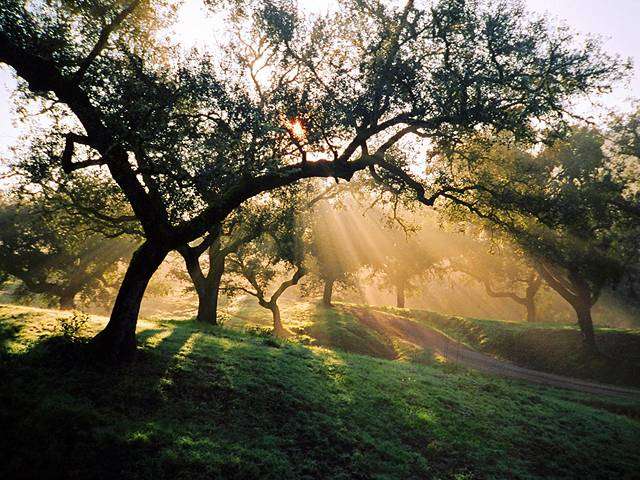

Ananda began to shudder because he was afraid that the master would decide to take the other role.  Mara would become the Buddha, and the Buddha would become Mara.  It made him very sad.

The Buddha listened attentively, and was filled with compassion.  Finally, he said in a quiet voice, “Do you think it’s fun being a Buddha?  You don’t know what my disciples have done to me!  They put words into my mouth that I never said.  They build garish temples and put statues of me on altars in order to attract bananas and oranges and sweet rice, just for themselves.  And they package me and make my teaching into an item of commerce.  Mara, if you knew what it is really like to be a Buddha, I am sure you wouldn’t want to be one.”  And, thereupon, the Buddha recited a long verse summarizing the conversation.  –Thich Nhat Hanh, in Soul Food, by Jack Kornfield and Christina Feldman

Monkey Mind

Sitting and sitting, this person becomes more and more aware of the inherent dissociation between nafs (ego) and soul.  I go back and forth between various strategies for taming my “monkey mind,” a Buddhist term for the endless chattering of the brain while the soul seeks to find itself in God.  Recently, someone said to me, “I don’t think I’m cut out for meditation.  I just can’t stop thinking.”  Well, you poor thing, I thought to myself.  Not coming from the Baba Ram Das New Age milieu I cut my teeth in, he didn’t realize that his Monkey Mind is all part of the Dance, a necessary ballast to keep him on the planet, rather than where he properly belongs and longs to be.

My teacher Shamcher once wrote to me, “Don’t even think about the ego, it is a phantom dreamed up in a nightmare.”  A phantom, yes, but one that is highly schooled in keeping the Self in a death-grip while the soul attempts to spread its wings and take off.  Recently, I read the book  Eat.  Pray.  Love. by Elizabeth Gilbert.  I had mixed feelings about the book, although I realized that I was at an entirely different phase of life than the author, and could be expected to.  But I did enjoy her description of sitting in the Ashram in India where she was fortunate enough to be able to spend several months (one reviewer referred to it as “Enlightenment for the Affluent”):  attempting to quiet her mind and meditate, it was indeed like a monkey swinging through the trees, chattering, quarreling, clinging…..  The Monkey Mind is frightened when we try to separate from it:  it wants to be preeminent as it has always been, and when we unmask the hoax and begin to open up to the possibility of another identity, its life seems threatened.  I have it on good authority from my own teacher, Pir Vilayat Inayat Khan, that the ego is always going to be there, as it should be, at least in the here and now, and that wherever we go, we will come back.

I have been “called” into an impromptu alchemical retreat in these past few months, and life has cooperated to allow me to acquiesce.  I note, in the several hours daily I sit, that my friend the Monkey Mind is not just beginning to calm down, but to–dare I say it?–actually transform a bit.  Instead of sitting on my shoulder, picking bugs from its fur, picking fights, quarreling, worrying, doing its level best to distract me from my spiritual endeavors, it is beginning to calm down a bit.  It goes into the corner and wraps its tail around its body and broods, sneaking an occasional glance at me to make sure I’m still there.  I notice that both of us are becoming more aware of who we are and who we are NOT.  Sometimes…  Oh, sometimes. . . . . . .

I am camping out on God’s doorstep.  Sometimes I get invited in, however briefly, and sometimes. . . I even get to have some say-so as to when I come and when I go.

I am becoming rather fond of my little nafs in the form of my Monkey Mind. A well-known Zen koan is:  What was my face before my parents were born?  As I polish that particular mirror and the clouds are rubbed away, the nafs does indeed reveal itself as but a phantom, a dream, useful fantasy that has gotten out of hand.  The surprising thing is that it is so easy to tame, once one is finally ready to unmask the hoax, as I mentioned.  When I am lucky–and increasingly–Vayu the Wind blows it out of range for awhile.  I see the difference between that eternal face and the phantom.  We are thoughts in the mind of God.  Even that goofy monkey swinging from limb to limb, yammering, picking its nose, raising hell endlessly.


When once the Nafs is crushed you will never find it necessary to be angry any more, though you can act the part of one who is angry and pretend to be angry. So if it is necessary to show anger this does not mean the fire of hell for you as it would be for others, for you are only using an instrument, and that instrument is not your master. In the same way you are justified in whatever course you find before you in life, as long as you really have freed your self from control by the Nafs.  –Inayat Khan


Still Sitting

This morning…

Perfect.

Autumn.

The leaves wave hello.

The cars go by on the highway.

The trees keep standing for what they know to be true (I am so grateful to them). . .

Sitting

Rising

Shining

Two crows outside my windows speaking to each other in Crow…

Leading me upwards

Showing me perfection.

One changes location

Rising over my head

Rising

Rising

Then:  off  into the Blue!

I am here.

I am There.

I am nowhere.

I am everywhere.

Trite…

but True.