From a spiritual point of view therefore marriage is a step forward on the path to perfection, that path by which the ultimate purpose of life is attained. Hazrat Inayat Khan
My oldest daughter got married yesterday, and it was my privilege, as an ordained Cheraga in the Sufi Order International, to perform the marriage. I had some reservations about this initially–so did she, as the bride–but in the end it was very sweet and somehow brought our often difficult relationship to a place of…completeness? I don’t know, that doesn’t make sense, because both of us plan to be around for quite awhile, and I have a grandchild on the way; but perhaps it signified that our difficult times were at an end. I’d like to think so, anyway. Theoretically, it was not going to be a “religious” wedding (the groom would have preferred a civil ceremony, I believe), and so I tried to be sensitive to his professed atheism, as well as my complete lack of knowledge about the religious beliefs of the groom’s family; but as always happens, I had a feeling all day that the masters, saints and prophets who form the spiritual body that governs the universe–in my understanding!–were gathering, with an emphasis on my immediate teachers, to put the seal on this joining, which is so obviously right for these lovely young people. And despite the groom’s being an “atheist,” and despite the bride’s impression that she felt like a fool and acted like one during the whole thing, it was a powerful and holy occasion filled with sacredness and laughter, and I felt, as always, that gratitude I feel for my link with all this, however weak a link I am. When I am “used” in this way, I am powerfully visited by my nostalgia for the way things really are, and I remember–once again–that we are barely sticking our toes in the waters of reality on this plane…and I look forward to going home again.
Our family went to see “Harry Potter and the Order of the Phoenix” tonight, having heard that it was the “best” of all these films, and we were quite disappointed, I must say. Let me hasten to add that my daughters and I are in love with the actual novels; in my opinion, J.K. Rowling’s books are proof of something I’ve always felt, which is that really good children’s literature is appealing to both children and adults. And I’ll also admit that few films ever equal the books they depict. In fact, I can think of only one series, Peter Jackson’s “Lord of the Rings” films, that were absolutely satisfying and complementary to the books so many of us loved. Oddly, both “Harry Potter” and “LOTR” have the same failing: the films wreak havoc with the original plots, far too much is left out (understandably, I suppose), and much of what endeared the books to their readers gets ignored. However, there is a difference, for Jackson’s films seem to underscore the deeper meaning of the “Trilogy,” and provide, if not an accurate account of the books, the perfect complement to them. Visually and musically, it seems to me (Howard Shore’s soundtrack is destined to become a classic for our time), the films underscore what touched us most in the books.
And then there’s “Harry.” Well, the first one was directed by the father of children who loved the books, and he made a perfect and perfectly reverent version of “Harry Potter and the Sorcerer’s Stone,” yet somehow, he just didn’t…get it. It’s hard to say why, but much of what struck so deeply in Rowling’s writing somehow just didn’t get communicated. The subsequent films each tried successively to get it right and while there were moments when they worked, there were more when one wanted to just go home and re-read the book and experience it all again the way it was supposed to be. As for this latest film, it was worst of all. I had the feeling that the general attitude around it was “hey, we’re going to make a trillion dollars anyway, so why bother?” It was as if the film was made for the viewing pleasure of a group of uncritical six-year-olds. Instead of trying to really illustrate the darkness and pain of Rowlings’ novel, the filmmakers found it easier to just make all the scenery a little darker and everything a little more depressing. Instead of at least making a stab at telling the story accurately, much was changed (one had the feeling to save money), and the most delightful moments of the book–as when the Weasley twins made their “last stand,” were shortchanged by not even making an effort to be true to the plot. None of the characters were given range for what had made them appealing in the past, and I had the distinct feeling that anyone who hadn’t read the book would be extremely confused by the movie, and my husband, who indeed has yet to read the books, said that this was true. He said, “But I remember you telling me about this book as you were reading it; didn’t you say in the book following Cedric’s murder by Voldemort that he yelled a lot at people, that he displayed lots of misplaced anger, that he had PTSD? Where was that in the movie?” What a disappointment.
As we near the climax of the story that has held so many of us in thrall for these last years, it would be great if there could be a really brilliant denouement….but things are not looking good, although I expect the final book will be as good as the rest of them were, to varying degrees. No one has been able to make the films right, but Rowling sure wrote the books right.
I’m beginning to feel like a film reviewer here, and that wasn’t quite what I had in mind when I started this. For about six-and-a-half years, those of us who live in the USA have had good reason to feel a lack of light, or hope or rightness or justice in the world. God knows, this plane of existence is a dark place, and although we’ve always fancied ourselves as somehow being above those tragedies and injustices that plague the rest of the world, it’s rough all over. I think perhaps that while the initial act that triggered these times was wrong, it has been good for us to go through “911,” and the dark times that have been. But it’s interesting to me that, during this time, some of the greatest artistic creations have emerged from the collective consciousness of the planet. One remembers that Tolkien’s books were a product of war-time Europe, and depicted both the tragedy and the soul-making in what human beings were going through. Same with the films, and the same with Harry Potter and some of other great works that have emerged during this time. What’s that saying–“desperate times call for desperate measures”? It seems that desperate times also birth meaning, as if there is nowhere else to go without going mad–and meaning is what makes it all bearable. When we feel most hopeless, we have the opportunity to either give up–or to become great. We want to understand, we want someone to tell us a story, to help us create a narrative that makes sense of our time here, and it is in these times that the most memorable narratives emerge, the stories that get us through. I feel very grateful for all that awakens our nostalgia for the truth in humankind.
If it’s said that “imagination is our memory of the future,” there is hope. I suspect that imagination also evokes our nostalgia for our origins, perhaps even more so. Meanwhile, our family tries to laugh when we refer to “he who must not be named,” pray for the next two years to go fast, and we are grateful to be offered the opportunity to consider that there is more here than meets the eye.
Recently, I have been thinking about these two topics, because one dear friend and one acquaintance made comments to me that I couldn’t entirely disagree with, but also couldn’t quite resonate with, either. My friend, Musawwir, (see link to his wonderful blog in my sidebar), is a colleague, in that we are both guides in our particular Sufi Order International, child of its parent, the Chishtia Order, of India. We both go pretty far back with our order, and have seen it go through many changes over the years, and have found ourselves able to accept some of those changes, and inclined to leave others alone. Recently, we talked about guiding initiates in the Sufi Order, and he commented that he didn’t even think they needed to take formal initiation, and I can’t argue with that, because initiation–real initiation–is supposed to be a deeply inner experience confirming what the initiate has always known.
The aim [of initiation] is to find God within your self: to dive deep within your self, that you may be able to touch the unity of the Whole Being. By the power of initiation, towards this end you work, so that from within you may get all the inspiration and blessing in your life. Hazrat Inayat Khan
As I understand it, initiation both is and is not connected with the person who stands in front of you and gives the initiation. It is a beginning, a confirmation, and classically formalizes a connection with a guide, or a teacher. We used to say words like “guru” and “Murshid,” and I still love to say them, because I love to give a title of honor to someone I know will never take advantage of it. Others in our Order have decided that these titles ought not to be used, because they imply an uneven power balance. Yet how is there not an uneven power balance, if such a phrase is taken literally? Initiation is about learning to tap into the inner power that is of the Divine Being, and one takes initiation in order to learn how to do that, and to confirm that this is the main goal in life, at least to those who choose this path. It seems clear to me that we are on different parts of the same road that leads to the goal.
Initiation, or in Sufi terms Bayat, first of all has to do with the relationship between the pupil and the Murshid. The Murshid is understood to be the counsellor on the spiritual path. He does not give anything to or teach the pupil, the mureed, for he cannot give what the latter already has; he cannot teach what his soul has always known. What he does in the life of the mureed is to show him how he can clear his path towards the light within by his own self. This is the only purpose of man’s life on earth. One may attain the purpose of life without a personal guide, but to try to do so is to be like a ship traversing the ocean without a compass. To take initiation, then, means entrusting oneself in regard to spiritual matters to a spiritual guide.
This, of course, brings us to my other topic, teachers. Guides. For me, the two are inseparably linked: the teacher initiates and continues to initiate as each new stage is discovered and internalized for practical purposes. Now, I happen to count, as one of my initiators, Murshid Shamcher Beorse, to whose works you will also find a link in one of my sidebars. Most Sufis–the real ones, anyway–tend to kind of be laws unto themselves, for this is a path that urges individuation. Shamcher loved to say, at every opportunity, that there ARE NO TEACHERS. I was not present when he died many years ago, to my sorrow, but I heard those were his last words. His point is that the teacher is no more than a reflection of what one has always known, which is that YOU are the teacher. My beloved Pir Vilayat used to tell the story of how, as a young seeker, he went to India to find a teacher he had heard of, who lived in the Himalayas. Bravely, he hacked his way through jungles, crossed rivers and climbed mountains until at last he reached the place where the guru sat, and he said the very air seemed to vibrate, to shimmer with meaning. When he sat in front of the teacher, the teacher asked him, “Why have you come so far to find yourself?” Pir said that if he’d had his wits about him, he would have said, “Well, I had to see what I looked like, so that I would recognize myself.”
It’s as simple as that. My dear friend Tansen-Muni once told me that the relationship between teacher and student is so simple as two friends walking along a road. One picks up a piece of wood and carves it into a clever little whistle, and the other says, “Hey, how’d you do that? Can you teach me?” And the other guy does. Many of us who got into the “spiritual trip” of the early 70s were inclined to be impressed by old stories that showed the teacher testing the disciple in numerous ways, of the proper attitude of respect for the teacher, essentially turning the teacher into a god and making obedience to every thought, word and deed of the teacher an imperative to obedience. But Pir always told us that an authentic teacher is one who makes no claims for her or himself, and who would never think of impinging on one’s free will in any way. And because of that, I myself have been saved many times from deals offered in bad faith.
Another person I know told me she didn’t need a teacher, and didn’t need initiation, although she had taken both. That’s probably true for some people, but I have a feeling that others take this stance for the wrong reasons, because ultimately this spiritual path thing is about learning to love, and true love invariably involves surrender to the object of one’s love and a deep commitment to the wishes and needs of the beloved. True love means forgetting oneself in the apprehension of the beloved. Ultimately, true love means that being in love causes one to become oneself in ways this would not have been possible otherwise. Curiouser and Curiouser….. My limited conception of myself has always balked at any hint of this, and my greater self has always been grateful for every opportunity to lose myself for the sake of love.
The Beloved is all in all, the lover merely veils him. The Beloved is all that lives, the lover a dead thing. –Rumi
“In the perspective of the Esoteric school, the concept is fana. In order for there to be a change one has to accept a breakdown and trust that there will be a breakthrough. That is the principle of alchemy. As long as one holds on to one’s self-image, one cannot undergo this breakdown. This is where faith is called upon: faith in the ability of nature to reorganize itself.Of course death is the ultimate breakdown, the ultimate fana, and just like in our lifetime, we trust that it is followed by a breakthrough. If it is not, we remain the same, and that is not a nice condition. You see, we go through crises unless we catalyze the breakdown. There are moments we go through a crisis in our life but at the psychological level it could be the dark night of the mind – that is, everything we thought breaks down. We don’t know what is true, only what is not true. But the deeper night is a breakdown of our self-image, and that is part of the esoteric work. When one has experienced baqa – that is, the reinstatement of our being then – we are not afraid of a breakdown. In fact it is a wonderful joy to be free from our own self-image, because it is limiting… You see, one does not want to continue to be what one was. Then you are not afraid of death.”
More Pir Vilayat quotes from the Alps Leaders Camp, 2002:
“Don’t ask where a person is after death. There is no where.”
“There is some indication that life doesn’t stop at the moment of the big jump (death). It’s never to early to pray – to get ready.”
In Islamic tradition, the anniversary of the death of the teacher–the Urs–is a very important and solemn occasion. Many of my spiritual colleagues and I have also found it to be a time of great blessing, with a special opportunity to access the teacher, to be “tuned” and taught by him, to feel his presence deeply. June 17 is the Urs of Pir Vilayat, who theoretically died just a few years back. The delight, for me, in all this has been that I’ve felt him to be far closer, opposed to farther away, since he died. It is as if he simply moved into another office! I get the sense that it’s a lot easier to get things done “there,” and my communications with him are much clearer and closer. My more immediate guide once commented to me “I am as near as the distance you choose to impose between us,” and that is true: it is my own feelings about myself that puts distance between my teachers–all teachers–and I. Moineddin once said to me, “God only remembers our sins if we do.” And it is true. S/He/It is far more faithful to me than I am.
So I allowed this particular Urs to creep up on me, because last week was a “down” week, and in my usual fashion, I was blaming myself for what may be more cosmic than one realizes, and when I read the post below, I was, as the author said, blown away. There would be celebrations all over the world, but we were traveling, to my daughter’s college orientation, and I did not join any of them.
Greetings on this Urs of Pir Vilayat (Australia is a day ahead of North America).
Yesterday at our monthly Gatha class we celebrated Pir’s Urs. We were joined by a magnificent falcon, who arrived outside the window when one of the mureeds began reading from “Awakening” and perched in a nearby tree. The bird stayed through most of the subsequent zikr, then flew off across the valley.
We were in awe! I led the group spontaneously chanting “Baz gasht” as we did a slow Dervish walk around the room. Baz gasht means something like “Return to the Source” with the sense that every conscious step is part of this journey of return. Pir Zia has pointed out a wonderful play on words, as “baz” also means “falcon” – so one can see this return as the bird flying home to the wrist of the king. Do you remember that photo of Pir Vilayat with a splendid raptor perched on his arm? Do you remember the expression on his face?
Peace to you as the blessings of the Urs arrive in your part of the world.
Pir Vilayat often looked exactly like one of these birds, when he bestowed his “piercing glance,” and it came over me again in the time he spent with me after that. I find that he is very enthusiastic in his encouragement these days, and knew him to be saying to me, “Don’t give up!” It’s nearer than you think!”
It was in a mountainous area we were traveling, and I will always associate him with the mountains, where he led us on so many alchemical retreats, so I went as high as I could to meet him and he blessed me, and spent a little time with me, and I was so grateful and so in awe of how many of these little meetings he must have managed to have. And to think, to a great extent, we control his schedule!
“You have in your keeping the soul of everyone you’ve ever smiled at.” –Pir Vilayat Inayat Khan
I wrote a paper on this topic awhile back. A professor of mine suggested it, and I thought it was a great idea; somehow it appeals to me, and I thought it might be interesting to update some of the material here, and add to it, because it’s quite a varied topic. Recently, I read a piece about a woman who was shy, and how she conquered her shyness to the extent of being able to participate in the world effectively. She commented, at the end, that she would always crave long periods of solitude, even if she was able to cope with being “out there”….. This made me think of the Jungian discussions on introversion versus extroversion. Dr. Jung, may peace be upon him, was an introvert who “looked like” an extrovert. I think I’m of that type, also, and people like us are evidently in good company with various humanitarians and teachers, such as Ghandiji, may peace be upon him, too. Some people are really, really introverts, and that must be very difficult, unless one finds a niche in life where one can be oneself and at peace. Anyway, I’ll go through the various categories of loneliness as an existential/spiritual/social/etc. condition, at least the ones that seemed meaningful to me. That long-ago paper this comes from also started with the “Oatmeal” poem, which you can find if you scroll down. It’s a wonderful description of the sacred nature of what might be called “commonplace” loneliness, in this case the loneliness of a man whose deeply loved wife, to whom he was married for many years, has died. Here are my remarks on this “average” loneliness, with material from my “abnormal” psychology textbook (I hate terms like that!
To deeply understand loneliness is to acknowledge its usefulness, whether that usefulness is in the diagnostic signs it presents in the “ill,” or in the diffuse, primordial reality of it as a “normal” existential condition. Between these extremes are loneliness as it manifests itself in the emotionally disordered, the addict, the mystic, the artist and the “average” everyday person. To attempt to categorize any of these as normal or abnormal is at best subjective, and at worst, reductive.
“Normal” loneliness is caused by the unavoidable situations of life, as described by Coleman, Butcher and Carson:
As the individual grows older, he or she is faced with the inevitable loss of loved ones, friends, and contemporaries. The death of a mate with whom one may have shared many years of close companionship often poses a particularly difficult adjustment problem. This is especially true for women, who in the United States outlive their spouses by an average of at least seven years.
Other factors, too, may contribute to social isolation. Children grow up, marry, and move away; impairment of vision, of hearing and various chronic ailments may make social interaction difficult; an attitude of self-pity or an inward centering of interest may alienate family and friends alike. In many instances, the older person also becomes increasingly rigid and intolerant and is unable to make effective use of the opportunities for meaningful social interaction that still remain.
Of course, retirement, lowered income, impaired health, and loneliness are not just matters of inability to maintain a particular lifestyle or to interact with loved ones. In a larger view, they involve the inability to contribute productively and to feel oneself a vital and needed part of the human enterprise. In essence, they progressively destroy the older person’s links with the world and feelings of living a meaningful existence. (1984, pp. 513-154).
Loneliness is implicated in a variety of stressors and physical illnesses:
…In a study of 50 patients, aged 40 to 60, admitted consecutively to a hospital following their first heart attack–as contrasted with 50 healthy controls–Thiel, Parker, and Bruce (1973) found significant differences between the two groups with respect to the incidence of divorce, loneliness, . . . (p. 287). … Lynch (1977) in a book entitled, The Broken Heart, argues convincingly that the relatively high incidence of heart disease in industrialized communities stems in part from the absence of positive human relationships. He notes that heart disease and other illnesses are more prevalent among individuals lacking human companionship and for whom loneliness is common (in Coleman, Butcher & Carson, 1984, p. 290). . . . …high-risk groups include depressed persons, the elderly (white), alcoholics, the separated or divorced, individuals living alone, migrants, people from socially disorganized areas, members of some Native American tribes, and certain professionals, such as physicians, dentists, lawyers and psychologists… (p. 328)
All of the above are persons separated from certain individual or collective relationships for one reason or another. However, while the above descriptions are no doubt true, what they also have in common is that loneliness arises out of an increased uniqueness, whether by virtue of uncontrollable events such as age, illness or profession, or out of the person’s own individuation process. The individual, for whatever reason, becomes less and less a part of the mainstream “they,” and loneliness is a condition of that.
I studied Heidegger in some depth in my Master’s program, and I have always loved his explication of the term “they.” Have you ever noticed the extent to which “they”–or at least one’s projected concept of the “they”–control a large percentage of our perceptions and actions? This reminds me of some of the thoughts I have shared here on the “stories” we tell ourselves to make sense of our lives. Why are we so willing to adopt and adapt the “stories” of the “they?”
Heidegger was equally helpful to me in my exploration of loneliness and “the abandonment of being,” another of his terms.
In Being and Time, Heidegger points out that the ‘I’ of Dasein, the human way of being, exists by virtue of its ‘being-with’ others (Heidegger, 1962, p. 154). Thus human beings are inextricably entwined with others, and are never alone. Yet equally primordial to the condition of ‘being-with’ others is Dasein’s ‘being-toward-death,’ and in this fundamental mode of concern with the inevitable end of being, Dasein is alone, and lonely (Heidegger, 1962). Further, the existential condition of loneliness is what causes Dasein either to remain lost in its ‘fallen,’ or inauthentic state, or which motivates it to strive for transcendence, which to Heidegger means something very much like individuation (Heidegger, 1962). The very condition of concern with the certainty of death leads to a preoccupation with the ‘I’ and alienation from the ‘we’:
Heidegger can be tough going, even if extremely helpful, in some of his terminology, which includes terms like “fallen,” which has a sort of biblical flavor (well, he was a clergyman, after all), and “transcendence,” which a lot of us aging-hippie-baby-boomers-Eastern-religion-devotees tend to give a certain interpretation to, although his is quite different. Suffice it to say that once one becomes transcendent, one is no longer dependent on the “they” for direction!
…anticipation reveals to Dasein its lostness in the they-self, and brings it face to face with the possibility of being itself, primarily unsupported by concernful solicitude, but of being itself, rather, in an impassioned freedom towards death– a freedom which has been released from the illusions of the “they”, and which is factical, certain of itself, and anxious (Heidegger, 1962, p. 311).
If you are reading this and asking yourself “what the hell does this mean?,” worry not. Heidegger is extremely difficult to understand, and I convey all this here in mortal fear of the real Heideggerians I have studied with, who didn’t have much use for my failure to be suitably impressed, or with my explanations. I was mostly, they said, “too Jungian,” which is just fine with me, even if Dr. Jung, peace be upon him, had no desire for there to be “Jungians.” Anyway, in order to “get” Heidegger, I found it necessary to forget everything I knew before then, and become a temporary disciple to numerous postmodern European philosophers. I flatter myself that good old Dr. Heidegger and I probably would have gotten on rather well, as I have in my possession at least one book on Heidegger and Eastern philosophy. Anyway, back to the topic at hand:
Thus the person, through its intrinsic anxiety, experiences the loneliness of realizing itself as a unique individual in the knowledge that death is inevitable and that one dies completely alone.
A different, but no less painful loneliness results from the nihilism of the post-modern era, which becomes a catalyst for the “abandonment of being” (Heidegger, in Levin, p. 483) in that the person becomes increasingly unable to see meaning in an authentic engagement with being. Levin notes the resultant disengagement with development of an authentic Self, which becomes reduced to an
…ego as a center of activity in a strictly objective field; interpretation of the ego as male will and a male will to power; extreme subjectivizing of the individual ego, taking place through the ego’s transcendental and practical aggrandizement; atomization and isolation of the individual; and finally, total exclusion of references to the deeper, more spiritual being of the Self from within the discursive field (Levin, 1987, p. 483).
We’re moving, here, into the more psychodynamic theories (read: Freud and his ilk), but not entirely.
What this points to is an increasing involvement in the unthinking life of Heidegger’s “they” and the increasing isolation of the authentic Self. At its extremes, the abandonment of authentic engagement with being leads to what is called psychopathology.
I hope this makes sense: basically, the point, here, is that we are conditioned to take our cues and eventually our complete identities from the “they,” and from then on we carry out a process wherein we are able to live out our lives on that level, or whether our innate craving for “an authentic engagement with being” leads us either to enlightenment or, sometimes, to what is popularly termed psychosis. If we use words like “psychosis”–and I’d really rather not–we can consider whether it is not true that psychosis and enlightement (or transcendance) are a sort of continuum, although sometimes a rather circular one, because what is called psychosis can often be a genuine engagement with the innate authentic being that wants to emerge.
And that’s enough for now. I want to say more about the loneliness of the “unique” (one web-site calls them (us?) the “mentally interesting,” aka known as the mentally “ill” (another term I’d rather now use). I’m exhausted. I’d better print my endnotes here, but I’ll wait until I get all this stuff laid out.
From the Oxford American Dictionaries sitting on my desktop:
lonely |ˈlōnlē| adjective ( -lier , -liest )
sad because one has no friends or company : lonely old people whose families do not care for them.
• without companions; solitary : passing long lonely hours looking onto the street.
• (of a place) unfrequented and remote : a lonely stretch of country lane.
DERIVATIVES
loneliness noun
solitude
noun
1 she savored her solitude loneliness, solitariness, isolation, seclusion, sequestration, withdrawal, privacy, peace.
2 (solitudes) : solitudes in the north of the state wilderness, rural area, wilds, backwoods; desert, emptiness, wasteland; the bush, backcountry;
informal the sticks, the boondocks.
THE RIGHT WORD
Loneliness, which refers to a lack of companionship and is often associated with unhappiness, should not be confused with solitude, which is the state of being alone or cut off from all human contact (: the solitude of the lighthouse keeper). You can be in the midst of a crowd of people and still experience loneliness, but not solitude, since you are not physically alone. Similarly, if you enjoy being alone, you can have solitude without loneliness. Lonesomeness is more intense than loneliness, suggesting the downheartedness you may experience when a loved one is absent ( | she experienced lonesomeness following the death of her dog). Desolation is more intense still, referring to a state of being utterly alone or forsaken ( | the widow’s desolation). Desolation can also indicate a state of ruin or barrenness ( | the desolation of the volcanic islands). Alienation, disaffection, and estrangement have less to do with being or feeling alone and more to do with emotions that change over time. Alienation is a word that suggests a feeling of unrelatedness, especially a feeling of distance from your social or intellectual environment ( | alienation from society). Disaffection suggests that you now feel indifference or even distaste toward someone of you were once fond of ( | a wife’s growing disaffection for her husband), while estrangement is a voluntary disaffection that can result in complete separation and strong feelings of dislike or hatred ( | a daughter’s estrangement from her parents).
When power leads and wisdom follows, the face of wisdom is veiled and she stumbles; but when wisdom leads and power follows, they arrive safely at their destination. –Hazrat Inayat Khan
I eat oatmeal for breakfast.
I make it on the hot plate and put skimmed milk on it.
I eat it alone.
I am aware it is not good to eat oatmeal alone.
Its consistency is such that it is better for your mental health if
somebody eats it with you.
That is why I often think up an imaginary companion to have
breakfast with.
Possibly it is even worse to eat oatmeal with an imaginary companion.
Nevertheless, yesterday morning, I ate my oatmeal–porridge,
as he called it–with John Keats.
Keats said I was absolutely right to invite him in: due to its glutinous
texture, gluey lumpishness, hint of slime, and unusual willingness
to disintegrate, oatmeal must never be eaten alone.
He said that in his opinion, however, it is perfectly OK to eat it with
an imaginary companion,
and he himself had enjoyed memorable porridges with Edmund
Spenser and John Milton.
Even if eating oatmeal with an imaginary companion is not as
wholesome as Keats claims, still, you can learn something from it.
Yesterday morning, for instance, Keats told me about writing the
“Ode to a Nightingale.”
He had a heck of a time finishing it–those were his words–“Oi’ad
a ‘eck of a toime,” he said, more or less, speaking through his porridge.
He wrote it quickly, on scraps of paper, which he then stuck in his
pocket,
but when he got home he couldn’t figure out the order of the stanzas,
and he and a friend spread the papers on a table, and they made
some sense of them, but he isn’t sure to this day if they got it right.
An entire stanza may have slipped into the lining of his jacket through
a hole in the pocket.
He still wonders about the occasional sense of drift between stanzas,
and the way here and there a line will go into the configuration of a
Moslem at prayer, then raise itself up and peer about, and then lay
itself down slightly off the mark, causing the poem to move
forward with God’s reckless wobble.
He said someone told him that later in life Wordsworth heard about
the scraps of paper on the table, and tried shuffling some stanzas
of his own, but only made matters worse.
I would not have known about any of this but for my reluctance to eat
oatmeal alone.
When breakfast was over, John recited “To Autumn.”
He recited it slowly, with much feeling, and he articulated the words
lovingly, and his odd accent sounded sweet.
He didn’t offer the story of writing “To Autumn,” I doubt if there is
much of one.
But he did say the sight of a just-harvested oat field got him started
on it,
and two of the lines, “For Summer has o’er-brimmed their clammy
cells” and “Thou watchedst the last oozings hours by hours,” came to him while eating oatmeal alone.
I can see him–drawing a spoon through the stuff, gazing into the
glimmering furrows, muttering–and it occurs to me:
maybe there is no sublime; only the shining of the amnion’s tatters.
For supper tonight I am going to have a baked potato left over from lunch.
I am aware that a baked potato is damp, slippery and
simultaneously gummy and crumbly,
and therefore I’m going to invite Patrick Kavanagh to join me.
–Galway Kinnell, 1995
I am so in love with words that sometimes I have to share them here simply because I am in love with them, and the fact that someone else “wrote” them doesn’t much matter; what matters is that they be shared, like passing around the most delicious meal possible. Even more than that, really, such a comparison seems almost to cheapen, especially, Galway’s sacred words here. Joan Baez said something to the effect that when she write, it seems that it isn’t her at all, although the words dance down her arms onto the page from somewhere (paraphrasing wildly here, no doubt!). And it’s true, when I write I feel that God (what’s That?!) wants something to be said, and it is a defining attribute of the Divine Being that s/he/it has so much to say and be and show in so many different ways.
So sublime and delightful and descriptive of this funny old world:
He still wonders about the occasional sense of drift between stanzas,
and the way here and there a line will go into the configuration of a
Moslem at prayer, then raise itself up and peer about, and then lay
itself down slightly off the mark, causing the poem to move
forward with God’s reckless wobble.
and….
I can see him–drawing a spoon through the stuff, gazing into the
glimmering furrows, muttering–and it occurs to me:
maybe there is no sublime; only the shining of the amnion’s tatters.
Does this mean God is in the details? I think so. Or in the oatmeal, anyway…
I’m choosing loneliness just now, and I think I’d like to explore it a bit. Stay tuned…
The question is have I learned anything about life. Only that human beings are divided into mind and body. The mind embraces all the nobler aspirations, like poetry and philosophy, but the body has all the fun. The important thing, I think, is not to be bitter… if it turns out that there IS a God, I don’t think that He’s evil. I think that the worst you can say about Him is that basically He’s an underachiever. After all, there are worse things in life than death. If you’ve ever spent an evening with an insurance salesman, you know what I’m talking about. The key is, to not think of death as an end, but as more of a very effective way to cut down on your expenses. Regarding love, heh, what can you say? It’s not the quantity of your sexual relations that counts. It’s the quality. On the other hand if the quantity drops below once every eight months, I would definitely look into that. Well, that’s about it for me folks. Goodbye. Woody Allen, Love and Death
Yes, we watched that film the other night, and I noticed I didn’t find it as funny as I had the first time, in my twenties. Even then, I had a certain frustration with its outcome, because I wanted some kind of resolution to this particular conundrum, and I hoped that Woody Allen would help me out with one of his occasional wry statements that tends to crack the universe open…well, at least a little bit. But he didn’t even do that. In the end, in my opinion, he really trivialized the question, possibly because it was just too big a subject to approach, even for him. Or maybe he really felt that way, who knows? Anyway, I was disappointed.
On the other hand, he’s not bad at asking good questions. What is the meaning of life? What is the meaning of love? Why do people die, and what does it mean? That kind of thing. But his answers to the questions are trivial; for instance, sex is about the most ephemeral thing there is, so why do we act as if it is all-important? It’s nice, it feels good, our bodies seem to need it (except for those who decide not to let it confuse their lives, which it does quite well), yadda yadda blah blah blah. Is it really that big a deal?
Well, here’s a thought: when my first child was born, I had the experience mothers everywhere get to have: for that moment and several weeks afterward, I KNEW. I just KNEW, that’s all. Couldn’t have described it, but I was radiant with KNOWING. Exact same thing with the second. And there are moments like this that are available to all of us: I asked my husband what some of his were, and he brought up the birth of our second child (his first), and the death of his grandfather when he was age five. I remember moments when I was teaching and I knew the teaching had come through pure and perfect, and I remember moments of being privileged to watch another person unfold in some way; and returning to good old sex, of course, there is that moment of free-fall when one loses one’s sense of oneself and experiences that “oceanic feeling” (Maslow).
Basic LIFE 101 gives us some ground upon which to base these questions, but for some reason we have this propensity to discount the peak moments and collect and grumble over the less pleasant ones. And yet it is the peak moments that keep us asking the right questions and, for some of us, trying to answer them, or to become the answer.
For me, this means contemplative practice, which I have occupied myself with for some 35 years, and this number alone makes me think of one of Woody Allen’s more memorable remarks, about his experience with psychoanalysis: “I plan to give it one more year, and then I’m going to Lourdes” (Annie Hall). In AA circles, they say, “Don’t leave before the miracle happens,” and that’s another helpful guiding thought. There are times that I think I’m never going to “get It” for good, although there are these moments of Understanding……and certainly milestones on the path of contemplation. And I am reaching a point, now, where it feels as if heaven and earth are coming together for me, in a vast, complicated–and yet beautifully clear–cosmic soup that I am increasingly able to swim in when I have the nerve to leave my fears behind. Sometimes it is rather frightening: will I come back? I remember my teacher, Pir Vilayat Inayat Khan, saying, “Oh, don’t worry, your ego will always bring you back.” So I suppose, as a teacher of mine further pointed out, “…one of the good functions of the ego is to act as an alarm system to bring us back – according to our anxiety response – which with time, as we become comfortable with it, becomes less and less.” (J.P. Gallien, with punctuation supplied by his devoted student). And, dammit, this is so true, yet I notice that he’s right: as I become more and more aware of the continuum that is between the temporal and the eternal, and even those distinctions fall away, it gets easier, and I am more and more able to revel in That.
How we long to become that which we hardly dared hope we could ever be. How we long to become that which we have always been. –Pir Vilayat Inayat Khan
ashram |ˈä sh rəm| noun (in the Indian subcontinent) a hermitage, monastic community, or other place of religious retreat for Hindus; a place of religious retreat or community life modeled on the Indian ashram. Oxford American Dictionaries
I have always said that if left to my own devices, I would probably become a contemplative of some kind: a nun, a renunciate, a priest, I would live in a great and silent monastery and life would make sense. I count my happiest times as those during which I was on one retreat or another, and could soak up the silence of my space, contemplating WHAT IS from afar. My mother used to tell the story about how, when I was a very small child, maybe a toddler, I would play a game called “Mary,” that is, I would get my babydoll and wrap it up in a blanket and drape another blanket over my head and sit before my “Christ child” with hands folded and head bowed. I vaguely remember this game, and the question that occurs to me now is one that can’t be answered after this much time: how long did I sit in this attitude? I mean, I could have really racked up some karma points! Given the results of my early practice, however, I doubt if it did me much good, although it is always interesting to think about this kind of thing in terms of the soul memories it might reflect, one’s divine inheritance.
And I am glad to say I seem to be living in a self-styled ashram right now. Perhaps it’s all in the perception. As I gradually became more and more disabled by my current physical problems, I naturally withdrew, and I began to realize that whatever else all this is about, it has certainly allowed me the time and solitude for remembrance. There’s nothing to it, really: I just spend my days alone, while my family is away, and then open up to them when they come home in the evening. Not a real ashram, you might remark, but again, I think it is all in the perception, and I have come to cherish my days alone. I do not spend them in intense meditation (at least not all of them), but I have been able to get past all my “shoulds” to a place where I actually choose this time, and relish it. It would be nice if I could get out in nature more, but I enjoy my deck, and I sit in my rocking chair and look up into the trees in the blossoming Spring, and…notice. Try to be fully present to the moment. I listen to the wind whispering through the branches and am reminded of various retreats in very beautiful places, and I soak up the increasing heat and try to open myself to it, rather than hide from it as I’m inclined to, and it reminds me of one brief retreat in the desert: rising one morning to go outside and listen to the pure silence and watch the changing pink and lavendar colors of the dawn over the pristine, arid space all around me…. It is in these moments that I am able to recall where I come from, and I notice that I have an increasing recollection of the home of my soul, and all I enjoy there.
I have been working with two particular wazaif (think: mantras) that facilitate the journey that seems to have begun: As my mind slows its endless chattering (or it at least grows dimmer), I work with my gradual experience of the expansion of my understanding in the vastness of Being, and try to pay attention as I breathe in that vastness, swelling my soul with its munificence. Increasingly, I find myself wondering what it is that’s expanding and what it is that’s contracting on the breath, because there is this growing sense that there is no one there to breathe, and no one inside to receive that vastness…and yet, despite this annihilation of my sense of myself, I become fuller and fuller with THAT, while in my “off” hours, I continue to be just as much of a screw-up as I’ve ever been, and I’m entirely capable of snarling at my husband or cursing at the dogs when they disappear into the brush where I cannot chase them, and I continue to procrastinate with all the projects that need doing and that, in fact, I want to do….
And time–or whatever passes for time–goes by so quickly, yet my days and nights have a silent, sacred, slow flow to them that feeds me, and makes this phase precious. I truly can’t imagine what the future–or whatever passes for the future–holds, but I find I care less and less. I suspect something will come along eventually to light a fire under me (whatever that is), but I am too content to worry about it. What healing there is in just paying attention.
One day, my dear,
you stop and look around you,
find yourself stuffing needs into a sack of thoughts,
realize you have talked your life to pieces,
scratched your self to bits,
that neither hope nor doubt
can protect you,
that you are not mistaken,
that you haven’t lost your grip–
it is dissolving.
Now you can speak about everything silently. –Terrance Keenan, St. Nadie in Winter: Zen Encounters with Loneliness
I wrote a paper on loneliness awhile back, and then I meant to write another, but somehow I resisted….possibly because I was too lonely to write about loneliness. However, I did collect a lot of material on the topic, and loved the work of this Rinzai Zen Buddhist priest, Terrance Keenan, St. Nadie in Winter: Zen Encounters in Loneliness. How we run from it! Loneliness, that is. Someone commented that there is a difference between loneliness and solitude. It occurs to me that the difference may be that one is unchosen, while one is chosen, but in truth, I think it is the unchosen starkness of the experience of loneliness that is the more valuable. It is good when nothing stands between me and me.
The idea of the prophets which one finds in the ancient scriptures, that there will be a Judgment Day, and that man will be called before the great Judge to answer for his deeds, must not be understood literally. No, the Judgment Day is every day, and man knows it as his sight becomes more keen. Every hour, every moment in life, has its judgment, as the Prophet has said, ‘One will have to give account for every grain of corn one eats.’ There is no doubt about this, but the Judgment Day has been especially mentioned in the scriptures as taking place in the hereafter because in the hereafter one cover has been lifted from the soul. Therefore the judgment which every soul experiences here on earth, and yet remains ignorant, being unconscious of it, becomes more clearly manifest to the view of the soul after it has passed from this earth. –Inayat Khan, The Soul Whence and Whither
For those of us raised in this Judeo-Christian culture, the idea of judgment is a rather obsessive one. I myself was raised with the “hell-fire and brimstone” concepts of my old grandmother, and even though our family dutifully attended the socially correct church in our community, those early, carefully-instilled control mechanisms stayed with me. I also realized, early, that by judging and punishing myself, I could deflect the blows of those who might hit harder, and so it was that I reached adulthood carrying a great deal of self-blame, and the entrenched belief that it was obligatory.
But recent movement out of the past and into the future has led me to reexamine my concepts of sin and salvation, judgment and redemption, and even “good” and “bad.” The thing is that one comes to see that what is popularly termed reality is really just the tip of the iceberg, and that things are in actuality far more complicated, and therefore far more subjective as to the judgments that might be applied to any of them. As my beloved Pir said, “If you really knew how the universe is governed, you would be shattered in your understanding.” Well, I’m all for that, and the universe seems to be cooperating with my my desire for a more expansive perception of things. As far as I can tell, most of us are still pretty wet behind the ears when it comes to having a clear perception of values. If I trace any event or memory as far back–and forward–as possible, I can generally see that any judgments of mine are indeed subjective ones, and I’m more and more convinced that I would do better to suspend my judgements, yea even unto myself, until I get a better grasp of things. But here we come to another problem: if reality is constantly reshaping itself, how is this to happen? It isn’t, as far as I can see. It is not hard to see why control mechanisms such as sin, law, responsibility, commitment, were created in order to keep people in line and keep this old world wobbling along….but the solution eventually becomes a problem, as we see, when we find ourselves trapped in our perceptions, our values, our judgments….. Eventually one tends to notice that there is more out there than originally perceived, and that is when we begin to, as Murshid said, “shatter our ideals upon the rock of truth.” Ah, but what is Truth?
Tune in, friends, to my next episode of “As the Dervish Turns,” wherein I plan to make a remarkably poor attempt at answering this question.
The way to spirituality is the expansion and the widening of the heart. In order to accommodate the divine Truth the heart must be expanded. With the expansion of the heart the divine bliss is poured out. –Inayat Khan
The soul during its journey towards manifestation, and during its stay in any plane, whether in the heaven of the angels, the sphere of the jinn, or the plane of human beings, feels drawn towards its source and goal. Some souls feel more drawn than others; but there is a conscious or unconscious inner attraction felt by every soul. It is the ignorant soul, ignorant of its source and goal, which fears leaving the spheres to which it has become attached. It is the soul that knows not what is beyond which is afraid of being lifted up above the ground its feet are touching. –Pir-o-Murshid Hazrat Inayat Khan, The Soul Whence and Whither
My father died recently, and it has been a curious process for me, dealing with it. I often envy those who had loving relationships with their parents, because they are able to experience true grief and true love when the parent moves on, instead of the uncomfortable mixture of rage, nostalgia, unresolved emotions and unspoken words that someone like me has to deal with, where both my parents are concerned. I notice that as the years go on, these do resolve themselves naturally, simply in the newfound freedom to be myself, which gives me the freedom, then, to forgive, and to hope that I may be forgiven. I have no doubt many people feel at least some of this when their parents die, but I have come to feel a great tenderness toward those whose parents were truly troubled, whether by alcoholism, narcissism, abuse, personality disorders or other extreme burdens that some souls carry in this life, and which they so often leave as a terrible legacy. Too, I have always wished I could be one of those people who “puts up with” a troubled parent all their lives, subjugating themselves to the needs of the parent….but not really. Just couldn’t do it. After a certain point, it seemed to me that my life was my own to screw up as I chose, and I went to work on that with a will, striving for a relationship of benign indifference with my parents, who never really changed. But just as the abused child loves the abuser, there is always a nostalgia that carries something of the pain of love, even if only for the parent one never had.
I have been wondering, for these last years, what it would be like for my father: he was well-liked in his own community, because he was a man who kept his feelings to himself and came across as honorable and kind…although with his children, he was able to be free with a diffuse, generalized rage over nearly anything, particularly me as the youngest birth child, the inner child he never accepted in himself, and between these opposing reactions, he coped with a sad life by, basically, working. Working at his job, working in his workshop, always busy, busy, busy. I guess they call that workaholism these days, and it was an effective way for him to cope, because it kept him strong and uninvolved….with just about everyone, although I believe he loved my mother dearly, even when he couldn’t stand to be too close to her. My father exemplified the old adage about biting the hand that feeds you: one had to be extremely careful in one’s approach to him, lest they come away mangled, as I often did, because I never had the good sense to do what the women of our family told me to do: “Just keep your mouth shut! Then he won’t hit you!” But not me, I was always a crusader. Yet I never stopped trying to make Daddy happy, no matter how futile it was to try.
But that’s over, and I now revel in a world where those close to me do indeed love me and, in most cases, even like me. It is a revelation, and took me quite awhile to get used to. I am so grateful to my beloved family; they are the joy of my life.
What I’m working on now, having given the rest of it up long ago, is my concern over my father’s being so unprepared to die. He was 94; you’d think he’d have been ready, but I noticed, for all his years, that he was not able to contemplate the deeper issues of life and death, and I didn’t see much more of this as the end approached. I believe he tried to avoid it for as long as possible, with some success; but finally even he couldn’t find a reason to linger. When he did pass on, I wasn’t sure whether it was my projection, or whether he really did go through a period of confusion and fear, shortly after death. It has been my experience that some souls tend to linger a bit after death, to say their farewells and perhaps clear up a few things. But I think it was a tough transition for my father (who I often judgmentally referred to as the “once-born”), although I do believe he had some guidance and support. But perhaps all that is just my imagination.
Inayat Khan speaks, in the passage above, of how the soul which is impressed by certain things takes those impressions into the afterlife, literally creating what comes next; whatever we expect is that happens, he says, after a period of inactivity:
What is purgatory? The Sufis call it Naza, a suspension of activity. If there is any death it is stillness and inactivity. It is like a clock which for some time is stopped; it wants winding, and a little movement sets a clock going. So there comes the impulse of life which, breaking through this cloud of mortality, makes the soul see the daylight after the darkness of the night. In Sufi terms this may be called Nahazat. And what does the soul see in this bright daylight? It sees itself living as before, having the same name and form and yet progressing. The soul finds a greater freedom in this sphere, and less limitation than it has previously experienced in its life on the earth. Before the soul now is a world, a world not strange to it, but which it had made during its life on the earth. That which the soul had known as mind, that very mind is now to the soul a world; that which the soul while on earth called imagination is now before it a reality. If this world is artistic it is the art produced by the soul. If there is absence of beauty, that is also caused by the neglect of beauty by the soul while on earth. The picture of Jannat, paradise, the ideas about heaven, and the conception of the infernal regions, is now to the soul an experience. — Inayat Khan
I also wonder if the soul that is confused, in its attachment to the earth plane, may not leave behind some of the impressions made on others, and if this can be troublesome. Just the action of moving away from the earth, in and of itself, may be very frightening if the soul is not ready, at least to some extent. I felt “haunted” for some time after my mother died, even though I was entirely aware that a large part of this was my guilt-based projection over my lack of grief for her passing. I suspect that not all souls leave willingly, even if only because they are confused, and feel that they still need to resolve things that would be better left in order that they contemplate their next steps. At the deepest level of reality, we are so profoundly interconnected…and if we haven’t been able to keep our sacred commitments to each other, what is the impact of that?
Is the soul sent to the one or the other place, among many who are rejoicing there or suffering for their sins? No, this is the kingdom that the soul had made while on earth, as some creatures build nests to stay in during the winter. It is the winter of the soul which is the immediate hereafter. It passes this winter in the world which it has made either agreeable or disagreeable for itself. But one might ask, ‘Does the soul live a solitary life in this world that it has made?’ No, how can it be solitary? The mind, whose secret so few in the world know, can be as large as the world, and larger still. This mind can contain all that exists in the world, and even all that the universe holds within itself though some might say, ‘What a wonderful phenomenon; I never thought that the mind could be so large; I thought my mind was even smaller than my body, that it was hidden somewhere in a corner of my brain.’ The understanding of mind indeed widens one’s outlook on life. It first produces bewilderment, and then the vision of the nature of God, which is a phenomenon in itself, becomes revealed. Does one see, then, all those whom one has known while on the earth? Yes, especially those whom one has loved most, or hated most. What will be the atmosphere of that world? It will be the echo of the same atmosphere which one has created in this. If one has learned while on earth to create joy and happiness for oneself and for others, in the other world that joy and happiness surrounds one; and if one has sown the seeds of poison while on earth the fruits of these one must reap there; that is where one sees justice as the nature of life. — Inayat Khan
A far cry from “Bible-belt” mentality, yes? But I find that the comfort and ease produced by this kind of thinking proves its accuracy. Nothing is ever lost, and all can be regained. It is comforting to think that one’s thoughts and dreams produce a further reality, and I have noticed this happening more and more as I progress on this plane–or rather, I notice that I have a sense of my fantasies in the imaginal realm beginning to seem more and more real, more and more…imminent. Who knows?
“For now we see through a glass darkly, but then…face to face.” –1st Corinthians 13
I have let a few things stand in the way of my writing lately (see below), including a move for our family to the country, and the sudden worsening of a chronic arthritic condition I’ve struggled with for some time. Around Christmas, the pain began to plague me in all my limbs, and it is an interesting experience to learn to live with chronic pain. One of the most interesting parts of it is that, while I do contemplative practices, which traditionally call for the pilgrim to cease all indulgences in mind-altering substances, I find that I must take pain medication in order to have any quality of life at all, for if I didn’t, I would not be able to do much of anything. Hopefully, I will get past this point, and I’m thankful that I don’t seem to have a tendency to addiction, but even so, it is a real balancing act to use medication for pain relief and still maintain a regular and disciplined meditative practice. A friend and teacher of mine said to me, “let it all be part of the same process,” and although I would be hard put to explain this idea, it resonates: if I time the medication carefully enough so that I can do my practices relatively unmedicated, and work hard to maintain a sincere commitment to my highest goals, I can manage it. This pain is useful to me, both inwardly and outwardly, because I find that I am able to avoid self-pity–mostly!–and that living with pain helps me to become–mostly!–more saintly. Well, kinder, anyway, and that’s important, because pain makes me cranky. It’s not as if the medication really relieves the pain, of course (my doctor insists I don’t take enough to really help myself), but makes living actively more possible.
While I always knew my health might take this turn eventually, it is a surprise to have it happen so early, and I know not what the outcome will be. But my path seems to be taking the turn all paths must take, into a greater and less self-indulgent reality, and all that I once took for granted–or tried to–has needed to be released from my conceptions, as St. Paul said: “For now we see through a glass darkly, but Then face to face.” It is the glimmers I’m having of Then that make the sacrifice of my pretty imaginings a very worthwhile sacrifice indeed. In giving up my attachments, I find love as it really is, and as Pir Vilayat said once, “if you really knew what love actually is, you would be overwhelmed in your understanding.” Well, I don’t know yet, but as I say, I have glimmers, and I have a much more realistic and intimate relationship with my highest ideal.
Fellow mureed and traveller Ellen Burstyn said in an interview I recently read, “I try to start every day with the words ‘thank you.’ I must keep trying to do that.
One of the reasons I have not been spending much time here lately, in the form of a post I have sent to some of our “Sufi” mailing lists:
Dear Ones,
I am writing to you on the occasion of today’s scheduled memorial service for Tansen-Muni, held today on the West Coast. Some of you will be fortunate enough to attend it, and I imagine that it will be one of our most glorious opportunities to celebrate the true Cosmic Mass, because our beloved friend lived an exemplary and beautiful life, and I have no doubt if there is such a thing as the archetypal Judgment Day, the Beloved will be saying to him “well done, thou good and faithful servant.” Those of us who have been in the Sufi Order for a long time know him well, as we have all been interwoven into the fabric of each others’ lives over the years. For those of you who never had the privilege of knowing him, I want to say a few words here so that you will know who he is, and why he is “ours.” I’m hoping that Elsa will write in a more lengthy fashion about her husband, when she is able, and my words may not all be completely accurate, because it was just prior to his most profound decline that he had begun to “tell his story” to me, at my request. I had heard quite a bit of it before, and knew that I would want to write about this wonderful soul, but never got to hear the “end” of the story, and barely the beginning. But we have much shared history, because his involvement with the Sufi Order began in the Cleveland area, where mine did, but much later. For Tansen, it began when, a college student, he met a beautiful young woman known as Jalelah Engle, the daughter of Fattah and Bhakti Engle, among Murshid’s closest mureeds. He often remarked, humorously, that he was dragged “kicking and screaming” to Sufism, because it came with the woman he married as an inextricable part of her life and being. The rest, of course, is Sufi history, but the two went on to have six children and Tansen-Muni became more and more known and beloved for his beautiful singing voice, his musical talent and his work as a supporting Cherag, helping Jalelah (now Qahira) with Universal Worship. He also sang in numerous barbershop quartets, and you can read a brief history of that in his obituary,
Many years later, Tansen and Qahira took different directions, and Tansen later married Elsa Weber. The two travelled extensively, to China, to New Zealand, and Kaui, living the Message that, in them, had become deeply ingrained.
Tansen was a very dear friend and teacher to me. I notice as I write this that I am pulled to write still another obituary, and that is not what this is about: it is about Tansen’s wish to put his signature on a life well lived, by creating a final recording of him singing Murshid’s songs and reading his words, after so many years of doing so both formally and informally. He often “hung out,” as he said, after Universal Worship, and while Qahira sat with her mureeds, he made many informal recordings for people who would come up to him and ask him to sing one of Murshid’s songs. Those of you reading this may be among those who has such a recording, and you know what a beautiful voice he had and how the purity of his devotion came through in his singing. Several years ago, in New Zealand, Tansen and Elsa were able to produce a complete recording, and they have been waiting for the chance to produce and distribute it. Attached to this email is a flyer that will be available at today’s service, offering it for a nominal fee for anyone who wants a copy. I have no doubt it will become a true heirloom, an important witnessing of our spiritual history, and the opportunity to receive the darshan of his saintly, loving man. Elsa wanted to offer these as gifts to his friends, on his behalf, but the cost of production will be offset by the small fee asked.
I had the privilege of being with Tansen-Muni quite a bit over his last months, and I feel forever blessed by his loving presence. Although his health grew steadily worse and he was barely able to sit up much of the time, he remained exactly who he has: a true extrovert who loved to talk and sing, often bursting into song flat on his back (“it helps me build strength”), delighted with all visitors, whether they were his caregivers or his friends. He never once complained, always expressing gratitude for the good care he was getting and the love of his friends. Two of his children were with him and Elsa when he died, and I imagine I must have been one of his last visitors, at the only visit I made to him where he was barely conscious, yet still managing to suddenly sit up and look me straight in the eye, conveying an unforgettable blessing before he passed, a few days later.
Elsa remarked that the recording being produced is really the crown of Tansen’s life, and I believe that is true: I designed the cover for it, and am so glad he was able to see it before he died, because she reports that he “just beamed” when he saw it. I know he wants to leave this legacy, this gift, to all of us who loved him, before he starts his next project.
“Death takes away the weariness of life and the soul begins anew.” –Inayat Khan
If you didn’t know him, it might be difficult to understand what it was that was so special about him, because it was, in a word, goodness. He was a man who never wished anyone ill, and who made it his role in life to be a friend and support to all. He was guileless and unpretentious: he was a simple man. He had a great sense of humor, he loved to talk, and his very being was a blessing to all who knew him.
All will come again into its strength;
the fields undivided, the waters undammed,
the trees towering and the walls built low.
And in the valleys, people as strong
and varied as the land.
And no churches where God
is imprisoned and lamented
like a trapped and wounded animal.
The houses welcoming all who knock
and a sense of boundless offering
in all relations, and in you and me.
No yearning for an afterlife, no looking beyond,
no belittling of death,
but only longing for what belongs to us
and serving earth, lest we remain unused.
–from Rilke’s Book of Hours
It is a very deep time, a time of unfoldment and living and dying and giving up and giving over, and my words are few, but it is the best time of all.
I spent ten thanksgivings volunteering in a Harlem soup kitchen
because–hell, I’ll just say it–I’m one of the few women of my
generation who look really good in a hairnet. Also, I love to
cook….Oh, and there’s one more reason I went out of my way to
spend every holiday surrounded by a group of strangers: I
couldn’t bear to be with my family.
It’s not that I don’t love them–I do. They are a decent,
God-fearing lot who would walk a mile out of their way to help
if they thought you were in trouble. They recycle, they vote,
they pay taxes, they e-mail the warning signs of a stroke….But
here’s where my family and I parted company: They were all
married with children, and for the first 42 years of my life, I
was neither.
‘One of these things is not like the others. One of these
things just doesn’t belong’, goes the lyric to my favorite
Sesame Street tune. Who’d have guessed that Big Bird would end
up killing me softly with his song, but it’s true–while I
hardly qualify as the family’s black sheep, in the the race for
the odd duck I’ve broken away from the pack and am currently
maintaining a significant lead.
I am another variety of odd duck: while I see my family-of-origin as basically well-meaning people who wanted badly to love each other but just couldn’t find the means within themselves to do so, I have largely given up finding any “warm, fuzzy” feelings for them, or they for me, what’s left of ’em. Frankly, they’re kind of mean people, and I got tired of it after about forty years. So holidays have become bittersweet for me, because I remember large, extended-family gatherings when I was a kid, gatherings where people dressed up and consumed huge amounts of food and pretended to like each other, but actually (a) hated each other, (b) were terrified of each other, (c) didn’t really want some of them there, (d) were drunk, or (e) were faking it. Some or all of the above. I’ve always been a rather opinionated sort, and I freely admit that after I passed the age when I could go off and play with my cousin, who I was fond of at that point in my life, I spent much time, around holidays, wondering why these people kept trying to pretend they felt something they didn’t. But I played the game, too…
Until I was in my thirties. A single, divorced mother, until that time I took my own child to family gatherings from time to time, tried my best to keep my mouth shut, and complained to my daughter vociferously all the way home. We often would stop at the beach for a day or two, in order to emotionally detox and enjoy being ourselves again.
Eventually, I had a family, a small family, of people who actually liked each other, and while I continue to feel a nostalgia for the family I never had, I am very, very grateful for my current family, all of whom try their best to tell the truth, don’t get drunk, share a common worldview and love the same jokes. This Thanksgiving, we will cook a free-range turkey, have a glass of wine, see a good film and pray for snow, which is unlikely for this area of the country, and thus we will remember the pleasures of endless snow falling on our little house in the woods in Alaska and be grateful for each other’s company and the certainty of simple human kindness.
May all people be happy,
May all people know peace,
May all people be free.
Spiritual awakening is frequently described as a journey to the top of a mountain. We leave our attachments and our worldliness behind and slowly make our way to the top. At the peak we have transcended all pain. The only problem with this metaphor is that we leave all the others behind–our drunken brother, our schizophrenic sister, our tormented animals and friends. Their suffering continues, unrelieved by our personal escape.
In the process of discovering bodhichitta, the journey goes down, not up. It’s as if the mountain pointed toward the center of the earth instead of reaching into the sky. Instead of transcending the suffering of all creatures, we move toward the turbulence and doubt. We jump into it. We slide into it. We tiptoe into it. We move toward it however we can. We explore the reality and unpredictability of insecurity and pain, and we try not to push it away. If it takes years, if it takes lifetimes, we let it be as it is. At our own pace, without speed or aggression, we move down and down and down. With us move millions of others, our companions in awakening from fear. At the bottom we discover water, the healing water of bodhichitta. Right down there in the thick of things, we discover the love that will not die. –Pema Chodron, When Things Fall Apart
I had a dream, early in my life, of walking in the mountains. I come from the very beautiful mountains of West Virginia, and I have since been in many other mountains, including the French Alps and the heart-stopping landscapes of Alaska, but the mountains in that dream were the same…and yet different. They were beautiful in a way that went beyond the visual, a quality of light that was not perceived only by the eyes, but by all the senses, and by that inner sense that is activated when we experience something that goes beyond the ordinary, as when we read a poem or see a painting or hear a piece of music, and…everything stops. The universe cracks open. But that wasn’t all about these mountains I was in, in that dream: there was a quality of peace, of homeliness, of rightness…of forgiveness and acceptance…of the love that will not die….that made me want to stay there forever. I was home. I walked down the mountain into a valley, and I found there numerous people I’d known, but the only one I remember was my piano teacher, who at that time in my life was one of the few holy and righteous people I knew. She was stern and uncompromising in some ways, but she knew who she was, and she knew where she stood, and she had that quality, that understanding that permeated that valley. If I were to live there, I would live with people like that, and I wouldn’t be afraid of them any more.
The first time I went on retreat, I wanted to go right up the mountain and come to realization and end all my pain. My teacher would not let me go for quite some time, and it must have been, at least partially, because I did not realize that in going up, I would actually be going down.
You must not lose faith in humanity. Humanity is an ocean; if a few drops of the ocean are dirty, the ocean does not become dirty. –Gandhi
I suppose one could argue with Gandhiji’s statement here, but it works for me anyway. We went to Ocracoke Island last weekend. It has always been one of my favorite places in the world, although I did not discover it until I was supposedly an adult. In our family, though, the Outer Banks were where we went at least once a year in order to restore some semblance of cleanness in our psyches, which in our family were sorely tested in daily life by way of numerous family dysfunctions. There was something about proximity to the ocean that kept my soul alive, nurtured and protected at least enough to allow me to grow into adulthood with sufficient resources to survive and heal. I’m writing a book, currently, about the therapeutic heuristics of space and loneliness, and although the book is primarily about my life in bush Alaska, I found myself needing to return to those early memories of the Atlantic as the primer for my later understanding:
. . . I returned to one of the first of these greatly loved places, on the Outer Banks of North Carolina, a place my family visited yearly when I was a child, returning again and again to a fairly unattractive, flat-roofed little forties-style beach cottage on what was then a miles-long stretch of stark seashore where the distances between dwellings was great enough that one was seldom aware of one’s neighbors. And even if one were, the continual roar of the wind and the ocean filled in any space that might be invaded by an awareness of lesser importance, for the poetry of those waves, for me, was far more worthy—and indeed, insistent—of my attention than any more ambient words or sounds might be, and I needed to be able to look at the horizon and see no-thing of human origin. I remember, at night, lying in bed sunburned and painfully sensitive to my gritty, sandy sheets, listening to that music; imagining, in cold terror, a vast tidal wave racing over the dunes and carrying us out to sea, into that vast being I loved and feared so greatly, perhaps one of my earlier intimations of religious horror; and I remember now, although I was not aware of it then, feeling comforted by not being able to hear, under the roar of those waves, my father bellowing about a light being left on, or my mother’s slurred speech as she stumbled off to bed, possibly falling, cursing at her inebriated clumsiness. I was at once terrified and comforted by the power of that great parental Ocean, my stand-in for what I did not find in those who were supposed to enfold me in their largeness. The ocean might frighten me, but it was, somehow, constant, and it made no excuses for itself, nor did it tell any lies.
We spent long weeks at the beach in summer, and although I knew that my family was around, and that we had visitors and friends and a fairly lively social life, given that many of our neighbors from the mountain village we lived in during the rest of the year also came to “our” beach in the summer and had cottages near ours, I seem mostly to recollect myself as being alone. It amazes me, now mother to children whose welfare was all-important to me from their very beginnings, to recall that my sister and I were allowed and even encouraged to play on the beach and swim in those treacherous waves—the “graveyard of the Atlantic,” so called–while my mother was playing bridge and drinking bourbon with her friends, or at best passed out on a towel on the sand reeking of beer and suntan oil, well out of earshot of any maritime catastrophe that might take place in those waves. That vast “graveyard,” with its unpredictable and powerful currents that made swimming dangerous and often impossible, was universally, in our day, referred to as Nags Head, one of its villages so named because of the dunes-dwellers who led an old horse with a lantern around its neck up and down the dunes at night, seeking to lure loaded cargo ships to shore, where they would crash on its shoals and be plundered by these land-pirates. It was, then, an austere and lonely landscape, and people said you either loved it or hated it, never in-between. I loved it, but I realized many did not, and when I returned after so many years, it amazed and amazes me that so many have come to build on those dunes, and that the Outer Banks now rivals the coastlines of such places as Florida and California. Its miles are now lined with huge, pretentious houses, and many of the bare miles are landscaped and planted with such trees and flowers as will grow in that sand, and where they will not, turf is brought in to replace what is meant to be there, which is very, very little other than sea oats. Chic shops and restaurants abound, and if the ocean is not entertainment enough for your kids, you can take them to play miniature golf or see a movie. Wal-Mart has come to the Outer Banks, I deeply regret to report, and the Food Lion rules, in a place where I recall a dearth of fresh vegetables when I was a child, an earlier prescience of my life in the Alaskan Bush.
Copyright 2006 Amidha K Porter
I think it is the vastness of the ocean, its unforgiving and uncompromising insistence on being exactly what it is that was and is the healing for me. When we returned to the Outer Banks all those years later, I was astounded at the changes, and yet–it’s still the Atlantic. She (and the ocean is a ‘she,’ you know) takes what she needs and brooks no denial. She comes and goes as she pleases, and–to quote my former employer in the Dare County Soil Conservation Service–no matter how many times people with more money than brains build at her very edge, she handles the matter as she thinks best. Ocracoke itself is an even better example of this, as it is surrounded on all sides by the Atlantic, and although building a bridge so that tourists and developers can overrun her continues to be a hot political topic, it hasn’t happened yet, and Ocracoke is still comfortingly shabby and picturesque, and although the wild horses would rather be fed by hand than forage for themselves, I am thankful for the National Seashore, which keeps trying to make sure we do not squander all of our most precious resources, all of which are found in the ineffable. And it is in that which I cannot see completely but only marvel at, that I am purged of my misunderstandings.
No, I am not crying.
I hold my face in my two hands.
To keep my loneliness warm
Two hands, protecting,
Two hands, nourishing,
Two hands preventing
My soul from leaving me in anger.
–Thich Nhat Hanh
So….anger. So many different kinds, so many different uses. Yes, I did say uses. Someone I love told me she’d had a horrible fight with her husband recently, and felt “eviscerated.” That’s a good word, I think; it’s certainly how I feel when I have a fight with my husband, and as I thought about this, I compared it to the difference in “fights.” Or arguments. Anger. I fight with my husband. I fight with my daughter. I argue with some authority figure in my life. Someone does something unfair, and sometimes I can do something about it–or I tell myself I can–and sometimes I can’t. Carol Tavris, in “Anger, the Misunderstood Emotion,” points out that anger is a signal that something isn’t right. It’s a particularly difficult-to-manage signal though, isn’t it? I agree that anger can be used, but its very quality tends to cause us to get ourselves into a state where we are not prone to use it very intelligently. It depends on the situation, I suppose: if I have an argument with my daughter, I find that my anger tends to be more of the broken-hearted variety: because I adore her and see myself as her protector and caretaker, when we are angry with each other, it just….hurts. If I argue with my husband, that’s a different matter: the power balance is equal, and no one has to be taken care of, protected from my wrath. We can be absolutely vile to each other. And this is where Thich Nhat Hanh’s poem comes in for me, because if we really, really get into it, it is truly as if my soul leaves. My ego takes over, and I’m furious enough to let it. Thus, my soul flies away, retreats, sometimes seems to die. It seems the poet is saying, here, that if we were to cherish even our anger, hold it, honor it, the soul would not retreat. What would this look like? What if we were to somehow manage to pause in the midst of the worst fury, and hold and cherish that rage, honor it, examine it, retreat with it….. What then? If anger is meant to be used for good, and in that it is almost invariably precipitated by the self at war with the Self, would this not be the act of kindness that is demanded, rather than the self-immolation that one thinks one is inclined toward?
You don’t know what it is to stay a whole day with your head in your hands trying to squeeze your unfortunate brain so as to find a word. –Flaubert
Well, I’ll tell you how it is for me: it’s not so much that I can’t find a word as that I am convinced someone won’t think it is a good-enough word. That’s how neurotic I am. I suspect Flaubert would probably concur with this, as would many other writers. I, personally, am in love with language. I am seldom at a loss for words, often to my detriment, and I love writing…when I have little reason to think someone is going to judge it. I also love it when I’m relatively certain someone I respect is going to make a fuss over it. And I will admit, people do usually make a fuss over what I write, when I’m able to turn loose of it and allow them to read it. Here, for instance: blogging represents my ongoing process in putting myself “out there.” So far, it’s working fairly well; when I first started, I was not about to put any personal identification on this site, and I was a nervous wreck every time I took a look at my “blog stats.” It continues to astound me that while people may not be reading what I write, they appear to click on my blog from time to time, when looking for other stuff. And I have yet to drop dead from fear. Imagine that. No one comments, but no news is good news, I figure, and that’s fine with me. Even if no one actually reads what I write, they’ve seen it, however, briefly, and I’ve lived to tell the story.
I’ve was haunted by writer’s block all through my graduate school career, I’ve tried to write for publication for years and succeeded occasionally, and I have this book inside me that has been alternately stewing and percolating for nearly ten years. In fact, all of these things have come to fruition at least partially, but I still hold myself back by my terror. Lengthy self-analysis certainly brings up some of the reasons for this hang-up, but it doesn’t appear to make it go away. What does seem to work is to make myself write something every day; and now that I’m posting it here, putting it out in cyberspace helps, also.
I am currently applying for my first writer’s grant, and the deadline is fast approaching. Most of the preparatory work is done, and I am at the point of polishing up and submitting my application. I would love to find a reason to avoid putting my neck on the line this way, but my self-disgust has grown to the point where I know I have to do it simply for the sake of doing it, whether or not I get the grant. As Hillman would say, this book wants to be written, and who am I to argue?
A long time ago, my Murshid came to me in a dream, and explained to me what detachment really means. Detachment, he said, can only be achieved when one is completely in love with what–or who–one wishes to detach from. If one is truly in love, he pointed out, one is indifferent to anything the beloved does. How could it be otherwise?
I have long tried to achieve this. I am still trying.
You hear me again, as words
from the depths of me
rush toward you in the wind.
I’ve been scattered in pieces,
torn by conflict,
mocked by laughter,
washed down in drink.
In alleyways I sweep myself up
out of garbage and broken glass.
With my half-mouth I stammer you,
who are eternal in your symmetry.
I lift to you my half-hands
in wordless beseeching, that I may find again
the eyes with which I once beheld you.
I am a house gutted by fire
where only the guilty sometimes sleep
before the punishment that devours them
hounds them out in the open.
I am a city by the sea
sinking into a toxic tide.
I am strange to myself, as though someone unknown
had poisoned my mother as she carried me.
It’s here in all the pieces of my shame
that now I find myself again.
I yearn to belong to something, to be contained
in an all-embracing mind that sees me
as a single thing.
I yearn to be held
in the great hands of your heart–
oh let them take me now.
Into them I place these fragments, my life,
and you, God–spend them however you want.
–Barrows and Macy, trans. 1996. Rilke, Rainer Maria. Rilke’s Book of Hours: Love Poems to God. Riverhead Books.
Someone I love is very ill, and we don’t know which direction he’ll choose to go in, because he is a saint, and he will go where his responsibilities call. Knowing we can have faith in him to do that doesn’t make the possibility of our loss less painful, though. Love, relationship, are funny things on this plane of existence: one can live with another person all one’s life and never “get it right,” as my own relationships with my father and mother have taught me. One can carry another person in one’s heart and forget to even write a letter for years, yet be called when needed, and discover that there was a divine friendship that carried no hidden contract and needed no tending, but would cash in when necessary, for the sake of either or both parties. “For now we see through a glass darkly,” as 1st Corinthians says, and it is true: how little we see, when we are drawn to another person, what the relationship might offer up to us at the end of the day…or another day, or still another day.
I am guardedly enthusiastic about advancing age, because I notice that it is beginning to make many things clear to me, relationship being one of the most prominent, and the “difference” between life and death another. Mostly, that is, that there isn’t one. Or rather, I could say, if there is, it is that “this” life is not about comfort and happiness, but rather about the search for what these really are, a lesson to be learned through the realization of limitation, which can only be found through its overcoming.
My husband and I watched Ram Dass’ film “Fierce Grace” the other night, and were deeply moved by it in unexpected ways. For me, it was a greeting to an old friend, because although Ram Dass and I do not know each other well, we have greeted each other with a warm embrace and a heartfelt “Mmmmm…..” with no words even needed several times over the years, and because the film documented many cherished memories and reminded me of many other of my old friends from that fairy-tale time during the 60s and 70s when many of us found ourselves as spiritual beings. Ram Dass, like the rest of us, is getting on now, and was unable not to offer his own profound experience of “being stroked” so that we could consider for ourselves how it can be when it comes to us. What moved me most about the film was the couple of times when, in different circumstances, he himself broke into tears: messy, embarassing, awkward tears….those tears that come from a place so deep one was not even aware of its existence until that moment, that moment when the worlds meet and it all comes clear and one cannot help but weep for the glory and the sorrow and the limitation and the sacredness and the tears and the laughter and the profound foolishness of divinity emerging through the willingness of our humanity. It is a willingness hard won, and it is the pearl beyond price.
My “Daily Tao” widget produced this for today; I find it most helpful:
DailyTao.org
Friday, 15 September, 2006 :: 29
Do you want to improve the world?
I don’t think it can be done.
The world is sacred.
It can’t be improved.
If you tamper with it, you’ll ruin it.
If you treat it like an object, you’ll lose it.
There is a time for being ahead,
a time for being behind;
a time for being in motion,
a time for being at rest;
a time for being vigorous,
a time for being exhausted;
a time for being safe,
a time for being in danger.
The Master sees things as they are,
without trying to control them.
She lets them go their own way,
and resides at the center of the circle.
Translation by Stephen Mitchel.
DailyTao.org Widget by Glen Sanford.
I was transported by destiny from the world of lyric and poetry to the world of industry and commerce on the 13th of September 1910. I bade farewell to my motherland, the soil of India, the land of the sun, for America the land of my future, wondering: “perhaps I shall return some day,” and yet I did not know how long it would be before I should return. The ocean that I had to cross seemed to me a gulf between the life that was passed and the life which was to begin. I spent my moments on the ship looking at the rising and falling of the waves and realizing in this rise and fall the picture of life reflected, the life of individuals, of nations, of races, and of the world. I tried to think where I was going, why I was going, what I was going to do, what was in store for me.
“How shall I set to work? Will the people be favorable or unfavorable to the Message which I am taking from one end of the world to the other?” It seemed my mind moved curiously on these questions, but my heart refused to ponder upon them even for a moment, answering apart one constant voice I always heard coming from within, urging me constantly onward to my task, saying : “Thou art sent on Our service, and it is We Who will make thy way clear.” This alone was my consolation.
This period while I was on the way was to me a state which one experiences between a dream and an awakening; my whole past in India became one single dream, not a purposeless dream but a dream preparing me to accomplish something toward which I was proceeding. There were moments of sadness, of feeling myself removed further and further from the land of my birth, and moments of great joy, with the hope of nearing the Western regions for which my soul was destined. And at moments I felt too small and little for my ideals and inspirations, comparing my limited self with this vast world. But at moments, realizing Whose work it was, Whose service it was, Whose call it was, the answer which my heart gave moved me to ecstasy, as if I had risen in the realization of Truth above the limitations which weigh mankind down.
This is a very auspicious time for the students of Sufism I hang out with: a time of beginnings and endings and leavings and arrivings: it is the time when our teacher came to the West from his home in India, feeling that he had a mission to fulfill. Oddly, on the same date, he finally left the West to return to India, temporarily in theory, but he knew he would not return, and he did not. More strangely still, it is the date when his daughter, Noor-un-Nisa Inayat Khan, aka “Madeleine dans le Resistance,” died at the hands of her Nazi captors, culminating her incredibly brave mission in the French Resistance during World War II.
And Hejirat Day is quite close, obviously, to “911.” What does that mean?
What can we say about times like these? For me, I can say I feel the power of my calling, both on an individual and collective level. I find that it is a time when my teachers are even more available to me than at other times, and I ask myself why this is….
It is my tendency to go kicking and screaming toward my fate, but go I must, and I am strengthened by my knowledge that it wasn’t much easier for them than it is for me. Murshid said that when we feel we are given a task that we are beneath, don’t worry about it: just do it. It is a responsibility that has been given, and the results don’t matter, only that it get done.
My thoughts I have sown on the soil of your mind. My love has penetrated your heart; My word I have put into your mouth; My light has illuminated your whole being; My work I have given into your hand. — Hazrat Inayat Khan
Yesterday, I picked up Scott Peck’s latest, a sequel to The Road Less Traveled, and after I got over being annoyed with myself because he had the courage to go ahead and explicate and publish on topics I’ve researched and contemplated for years–how dare he have the nerve to do what I didn’t!–I was impressed by his bravery in calling addiction what it really is: a sacred illness. You know how it is when someone voices a phrase that’s been percolating in your unconscious for some time?
The point here, and one I’ve been working with for a long time, is that people who are addicts just really don’t like being here on the earth plane. Often, they are fragile, highly advanced souls with too exquisite attunement to the pain of the world. They have too much sensitivity to tolerate the shock and coarseness of the earth plane: it’s just more than they can handle. Substances seem to provide enough that reminds them of “home,” but of course tend to backfire, and there we have it: a wasted life, all too often, or at the least, a far-too-painful life for someone who doesn’t deserve it, and a purpose thwarted–or so it might seem.
But I’ve always said–I’m an addictions therapist, among other things–that I never met a drunk I didn’t love. And I’ve known quite a number of them! They are invariably deep, caring souls who want to know what life is all about. Bill W. discussed this in The Big Book.
Peck is a big fan of 12-Step groups, apparently; he discusses the concepts and some of the research around the concept, and makes the point that this program is a good containment for the fragile soul who needs to be held during recovery. I suppose I agree with him, although in my experience, the 12-Step meetings often hold so many toxic personalities that I can see why many people do not feel safe in them. It’s a conundrum, for sure. I too believe in that Bill W.’s inspiration was truly a gift from God to the world.
I was interested to hear Peck confess to his own addiction–smoking–as I had heard this about him, and I find myself wondering at his instruction to others about dealing with addictions, even as he himself evidently cannot–or will not–manage his own. This is common, of course, and is not sufficient reason to “shoot the messenger,” but it does make me wonder if sometimes addiction–or some addictions, perhaps–do allow the addict to function on the earth plane, to some extent. Is it possible that some of us need our addictions? Obviously, some addictions are safer and more legal than others, and as well, some addictions are less consciousness-altering in ways that keep the soul from functioning at all.
Are we meant to be “perfect” on this plane? Or are we meant to experience it fully–warts and all? Inayat Khan said, “Hail to my fall from the Garden of Eden! Had I not fallen, I would have lost the opportunity to probe the depths of life.”
from The Quest Tarot deck by Joseph Martin, ISBN 0-7387-0195-5
Is God a Being? I have, like most Westerners, spent my life alternately clinging to and battling with the paternal, benevolent image of an old man in some remote place, sitting on a cloud watching over his creation. It is an image that appears to emerge from the core of the Judeo-Christian takeover, when God stopped being a Goddess and became a kind of Daddy figure, the ultimate symbol of the coup staged by the masculine archetype, when Woman was pushed out of the fray and told to go home and put her feet up and “be sure to eat for two, darling, it’s for the baby.”
Well. What about that baby? This is where we get into it, I think. Putting aside the obvious fact that there had to be someone around to have that first baby, I am thinking even further back, before the One became the Many. Allow me to describe it in terribly cosmic terms:
There was/is the One. The divine, eternal Principle, that which has always been and will always be. Pre-eternity prior to post-eternity, as I understand all THIS effects post-eternity. So whatever we understand as the divine impulse that brought the world into being, the divine coup that created THIS, the way my own teacher, Pir Vilayat Inayat Khan, explained it, it was a series of events, or a sort of descent of the divine principle–God asleep?–into Awakening. The Seed becomes the Plant becomes the Flower becomes the Fragrance, and out of that, another Seed emerges.
But I’m thinking, here, about the original Seed, the first Being. That’s the Fool. That’s how he’s depicted in the alchemical tomes, and in the Tarot deck: one thinks of a being that is completely untainted by incarnation, like the first being that ever existed. If god emerges out of Oneness into multiplicity, first there is glory, splendor, then attributes, then Being, and that’s where Dhul Jalal Wal Ikram comes in. “The Lord of Splendid Power.” Some would call him the Christ, and other archetypes fit, but really he is beyond images in a sense, except that his image is perfection before the world crucifies it. It’s like, even before light, Being emerges out of Splendor. One imagines the divine emotion of that process, that becoming… “We come trailing clouds of glory….” Wordsworth, I believe.
So, back to thinking of God as a Being of some kind, well, that’s the idea: I can attune to, resonate with, discover within myself, that being that is Original Being, free of karma, free of desire, free of darkness or intention, just…in a state of glory, completely in love, the purest love that needs no reason or cause: perhaps bewonderment is a better word, if there is such a word. The divine bewilderment. Even better. The experience of perfection before emotion. To pray to that God would be to discover that same glory in oneself, that same freedom from limitation or intention. What might emerge out of That?
(We lived in Alaska for some seven years, and I heard and told a lot of stories, many of which made their way into group emails to friends and family. It has always been my intention to turn these into a book, and they’re on their way after several incarnations as research papers and dissertation segments, and I believe they’ll make it, but not yet. I came across this one tonight, though, and it remains in its original state, and it made my heart turn over with love and pain. I’m pasting it in here “as is,” i.e., a group email):
Dear Friends,
I’m sure that some of you read the “subject” of this message with a smile, remembering the series of “chronicles” I sent when our family began this Alaskan adventure some six years ago. Others of you are new friends discovered along the way, and may fit into one or more categories of acquaintance: Sufis, Saybrook students and teachers, Alaskans both native and otherwise, professional colleagues, relatives and, maybe, none of the above, which is even better, since life would be too, too boring if all our friends emerged from the warp and weave of the subgroups we identify ourselves with. But whichever category you fit into, this is going to you because of an ongoing dialogue you and I have had, and because it is a kind of memoir of an experience, yes, but even more so, of a people in general, and of some persons in particular, known against the backdrop of a land which I know to be the most beautiful in the world. Some of you live here, and some of you have never been here, but have let me know that what I have sent through in this way has made you feel that you have been with us on this adventure, and so I hope you will want to read the final story.
Loosestrife Near Juneau, Alaska Courtesy of Becky Shuon
I suppose we waited too long to make the decision to return to the Lower Forty-Eight, if a growing existential lassitude is proof of the avoidance of the decision to take one’s next steps, but who knows? That is what brought us here in the first place! And it may well bring us back. Perhaps it had to be that way, although I’m sure for many, Alaska becomes home in every sense of the word, and despite our imminent departure, I believe it will always be that for us. In any event, I type this at my poorly balanced Mac, which desk I sold last week at the moving sale to end all moving sales. Whatever else can be said about Mother Alaska, she is just as remote as she ever was, and shipping costs are high and methods chancy, so when one leaves, one does tend to get an adequate return for funds invested in living well: a local antiques and collectibles dealer literally cleaned me out all in one morning; bought everything I was willing to sell and carried it out of my house. It was painful to let go of the things we’ve collected here, and not only will there be a new life, I have a feeling that we will always remember things that came into the old one briefly, but were too unwieldy to be the kind of baggage one usually takes away from an experience. Currently, we are worried about even being able to take our dogs back, one of which shared the trip out here behind the wheel of the car we towed to put on the barge from Seattle. It seems the airlines now, however, have a rule that not only are terrorists not allowed on board, animals cannot travel in the hold unless the weather is predicted to be above 45 degrees. As the Alaskan winter wanes and the days grow longer, we can only hope that will be true, but in a place where the tulips don’t bloom until June 1, it is a worrisome thing.
But those are all just details, even if details are sometimes well-loved-and-traveled dogs. What this is about, tonight, is an attempt to briefly commemorate a life, one that began in an isolated fishing village and ended in what, in Alaska, passes for “suburbia.” If you read the former “chronicles,” you know how we got here, and you know why this has been an important experience to us, but if you didn’t, let me just say that what this has been about has been “life at the end of the road,” and the adventures of a family that wanted to do something different and found something, ultimately, far deeper than “different.” That is what Alaska is to everyone who comes here, and I would say that this is what it is about to those who were born here, too, because even the new Republican administration, which firmly intends to continue the process already begun, of turning Alaska into the same homogenous society the rest of the USA tends to present itself as, ignoring of its individuals, cannot change the fact that Alaska is a strange and mysterious archangel who winds the tendrils of her mysteries around her devotees in a death-grip which brings just that: death, whether of the ego or the illusions, or….life, as one might have hoped life would reveal itself, if only one were patient enough and brave enough to lean into it. I honestly cannot give words to what she has meant to me, I only know that I feel a deep pain and an even deeper joy in my love affair with Alaska. As some of you know, I firmly intend that these stories will one day become a book, and I once thought the book would be written here, but it seems that this will not be the case, and I tend to think that is as it should be, because I don’t think I will know what this all means any time soon. Anyway, there are too many stories to tell in an email, and each one of them is deserving of all the devotion and attention I can give it, because ultimately my Alaska stories are about a place and some people. I’ve had this feeling, for awhile now, that a large part of my particular purpose on this earth is to tell stories. A lot of you are familiar with Hillman’s ideas about “healing fiction,” a concept that has helped to cement my own impulse with regards to psychology: “Of all psychology’s sins, the most mortal is its neglect of beauty. There is, after all, something quite beautiful about a life,” and after all, the study of psychology is what I have given most of my adult life to, and a good deal of that has been figuring out exactly what it is–psychology–and how to do it. Psychology, that is. Ultimately, it seems to me, just telling stories is the best way to commemorate the beauty of a life and its struggles, and I will be telling some of these stories for quite awhile. I thought I’d tell one or two tonight, particularly the ones that got interrupted for one reason or another, and because it was in their interruption that I found the most poignant impression of meaning I’ve gotten from my own “Alaska experience.” These stories–vignettes, really, at the moment–are about people, but these people are about the heart of Alaska, the archangel of meaning for me for some time now, and some of them are about Alaska herself.
When you come to Alaska, be sure to see every Russian Orthodox church you can (there are only five or six), because they are beautiful and because, in some way, they symbolize the glory and the pain of those of us who came from outside and barged into the hearts of a people with no guile. Most dear are the “spirit houses” you’ll see outside the churches, sweet little abodes built to house the dead until the resurrection day, with windows for their souls to peer out of, and heaps of real and plastic flowers, plants and crosses, carefully tended by those who fully expect to see their loved ones again when they emerge. They are a good way to do death.
When we were out on the Alaskan Peninsula, David and I flew, once a month, to the outlying fishing villages to offer “mental health services,” a term I find even more ironic than usual in these settings, because the varieties of tragedy and beauty in places that have only one store–the liquor store–and exist in the most pristine and heartbreakingly isolated settings most people will never see, form a backdrop for understanding that will continue to sear the heart eternally. I met Roland up in Wilson Lagoon, on the Bering Sea, with its fine black sand. He wasn’t a native, he was from Seattle; but he’d lived up there most of his life, fishing with his father; and when I knew him, he was mostly fishing across the Bering in Russia, although word had it that most of his earnings were going up his nose, given the lively cocaine traffic up there. He was the archetypal “wild man,” with frizzy, curling blonde hair to his waist and a beard almost as long. He had these electric blue eyes, and he adored women, including me, a very flattering thing to a middle-aged, overweight mental health clinician whose ilk was mostly viewed with suspicion and caution in those parts, and the minute he’d see me, he’d put his arms around me and ask me what I was doing that evening, which made me laugh, because what was there to do except walk on the beach or sit in the local cafe which, if the planes had gotten through and food had been delivered, might or might not be serving, although there was usually coffee to be had, with an opened can of evaporated milk waiting on the counter. One night, when he and I and the local village-based counselor, along with her husband and brother had spent the day trying to coax the cafe owner/cook out of her house and failing (she went into occasional depressions that caused her to refuse contact with society), Roland decided he’d cook for us all, and somehow produced an enormous platter of ribs, along with mashed potatoes and the usual mushy frozen green beans which accompany Bush meals. It was a great dinner there in the center of the closed cafe with the ceiling light shining down on us and shadows all around, seaspray clouding the windows, just the five of us. I was the only woman. At one point, I remarked to Roland, probably twenty years younger than me, who had been flirting with me outrageously and devouring his heavenly cooking simultaneously, “You really like women, don’t you?”
He spluttered. “Of course. I’m normal. What do you think?”
“No,” I said. “That’s not what I mean. I’m not talking about sex or anything like that, I just mean….you really like women, don’t you? I don’t think all men do.”
He got it. In the midst of the clamor of several hungry men eating, smoking and wishing they were drinking beer, men who didn’t consciously think much about the meaning of life, because most of their time was spent figuring out how to stay alive at sea or how to pay the bills when the Japanese usurped their fishing grounds and the harvest was bad, as it has been for many years now, Roland looked up quietly and said, “Sure. I’d go to war for you.” And at that moment, he told me who he was: a noble, pure-hearted knight-errant of true honor and virtue who knew only one true thing.
A few weeks later, he went home to Seattle to see his Mom, and they found him dead in his house one evening; a heart attack, they said, but Roland was only about 30, and we always figured it was cocaine. It has been one of the greatest honors of my life to have been with him even briefly, and I want to make sure his story gets told, although I don’t know much of it. Folks up here, native or not, tend to withdraw into themselves when something like this happens, so I don’t know much, but I know this man would have gone to war for me (i.e., all women), and that is enough.
There are a lot of sudden deaths here, both at sea and on the road. Out there on the Bering, the line between the dunes and the sky is intermittently broken by little crosses decorated with those same flowers that adorn the spirit houses, to commemorate those who have died at sea. On the road system, the same little shrines are often seen on the side of the road, because there is a lot of drunk driving, and in a world where every town has only one road in and one road out, people get in a hurry, and “people” are usually the summer visitors, in this case.
Then there was Katherine. It is painful to talk about these people. She was “my” village-based counselor, meaning that I supervised her work, which is a laugh, because she did more and knew how to do it better than I ever have. Katherine was out there at the Lagoon with her family for many years, doing whatever it took to keep people alive and well, whether it was single-handedly detoxing a drunk with no knowledge and no means to do it (and certainly no “clinical permission”), figuring out how to get someone from the village to the native hospital in Anchorage before they died of a heart attack, or delivering a baby come into this world too early, where most women went to Anchorage six weeks before their due dates, leaving family and other kids because there was nothing resembling a doctor out there, although the cannery at Port Moller had a seasonal nurse practitioner, another man I simply loved. But that was another boat-ride or bush plane flight, and he couldn’t do everything. Katherine came from a family of alcoholics; it was one of those stories that makes you grateful for your own, and mine was bad enough. A couple of years earlier, her brother had shot himself, and she and her other brother were in recovery for at least a couple of years before and after that, and still trying to figure out how to live with permanent grief. After finishing a course of studies through the Rural Human Services Program at UAF, Katherine had started correspondence courses for a Bachelor’s in social work at UAA, and she had three little kids and a husband who fished and evidently loved her and the kids, but he was gone a lot, and the state couldn’t seem to get her any relief out there, and she was the mainstay of the clinic, putting up with a series of local and out-of-state nurse practitioners who told her what to do, but weren’t there for long enough to give her a rest after she’d done it, and way more than her share of anything else that presented itself, including counseling the unhappy and consoling the bereaved. I loved her, but I, too, left, and she wouldn’t talk to me after that. She couldn’t forgive me, I think, because I made the incredibly stupid mistake of telling her she could count on me. I tried to let her see that I’d still be on the line after our stay was up, but I guess she didn’t believe me, and I can’t say I blame her. I know her feelings of burnout and pressure were growing, and last winter, working temporarily in an Anchorage hospital, I ran into one of those nurse practitioners, one who’d spent a lot of time out there. I asked her how Katherine was, and her face froze. “You don’t know?” she said.
I froze, too. “Oh, no…….” I murmured. She nodded.
“Last winter. She’d been drinking for awhile then. I heard her marriage was in trouble, and while her husband was at sea, she took his shotgun and did it. I guess they found her later.”
I wanted to die too, then. I kept thinking of how worried she was any time she left her kids, because she didn’t want her own mother near them: her mom was still drinking heavily, and she didn’t want her kids to go through what she’d gone through as a child. Although I heard pieces of the story from other friends eventually, I was always afraid to ask if her kids found her dead when they came home from school that afternoon. I wouldn’t be surprised, but I was too much of a coward to ask.
After I lived in civilization again, there was Mike, the Native American man who had temporarily landed on his feet, after a lifetime of abuse from his alcoholic father, Mike who had stories to tell of running and hiding under the bed when his father was violent, of watching while his dad held his mother down and two of his friends raped her. Mike was labeled schizophrenic, and although I’m skeptical of labels, I guess he was, because he had medicated himself and suppressed his visions as best he could for many years, and had a lot of stories to tell of being homeless in Anchorage, and how the police treated Native people like him when they picked him up wandering the streets, overwhelmed with amazing, transcendent visions (which he had been told were bad, and he shouldn’t have them, but couldn’t seem to stop) and shivering from the cold, beating him when he threw up in the van on the way to jail. He’s still around, and I have always felt hopeful for him, because his visions were so beautiful; and when I listened to him, he once said, “You’re different from the others. You don’t think I’m crazy.” I had a rocking chair in my office, and after awhile, he let me hold him while he cried, and one day he even took off the dark glasses he always wore, and let me see his beautiful eyes. He put them back on, fast.
I talked to him recently, and he had two years of sobriety in AA, after nearly dying in a diabetic coma. His mother lives with him when she can stay sober for a few days, and she’s been sober for nearly a month now. She’s been a “street person,” too, for awhile now, but she made it clear long ago that she had no intention of stopping the drinking, because she needed it too badly. He won’t let her live with him if she isn’t sober, though.
Yesterday, I was foolish enough to let Maggie, our Golden Retriever, out to run in the woods. When I heard her barking hysterically, I realized I had miscalculated, and there were probably moose out there. Sure enough, she was standing at the edge of our forest, telling a Mama moose and her baby, in no uncertain terms, just what she intended to do with them, if she got half a chance. They gave her an occasional baleful look while grazing, but were otherwise unimpressed. It took about two hours of steady, hysterical barking, rooted to the spot, before they ambled away.
Linda lived up in the woods outside Wasilla, and she had one of those “addresses that wasn’t really an address.” She had running water by the time I knew her, something most homesteaders in Alaska don’t have, and she and her profoundly retarded daughter were doing pretty good, although her career as one of the biggest “growers” in the Mat-Su Valley was cut short when, one day about seven or so years ago, marijuana became illegal. One day, a well-known and respected grower. Next day, a felon, in need of “treatment.” We loved each other, and she began to make sense of her scattered thoughts while she was treating me and I was constantly uplifted by her spiritual rapture, when she would suddenly seem to go into a trance and spout something that sounded like holy scripture, but always reminded me of things I’d forgotten.
“You KNOW,” she said to me once. “I can see it in your eyes. You KNOW.” I hoped she was right, but I was pretty sure she knew more.
In the village, a couple was eaten by a bear one night on the way home from the bar. The villagers are still getting over the sight. It was Spring, and it does happen.
One of David’s clients, also on the way home to the dump he lived in, after an evening at the bar, crawled up in some old machinery and put his hands on the controls and froze to death. This was in Valdez, where they get at least 300 inches of snow each winter, 400 the last winter we lived there.
Alaska: where there there are five men for every woman, each of them complete with gun, pickup and dog. Where there is a publication called “Alaska Male,” replete with ads, in case you can’t find them yourself. Alaska, where the “odds are good, but the goods are odd.”
Alaska: where you can homeschool your kids and the government will help you.
Alaska: where Seattle is your backyard, and you can shop at Ikea or any number of supermarkets and have your purchases floated down to you at the local fishery.
Alaska, particularly Valdez, where by February, you could climb out your second floor window into the snow, if you wanted to, and folks had to shovel their roofs. We were on the road system by then, though, and went to Anchorage, 300 miles away, whenever we needed to and had the time and money to make the drive. If Thompson Pass was open, the eerie silence of miles and miles of the cosmic emotion called mountains was a heart-and-soul message that stilled the mind. Tsaina Lodge was open on Easter, and one year, looking for something we were used to, we had an exquisite, gourmet brunch cooked by generator and complete with champagne, sitting in the log lodge at trestle tables, next to the bar numerous locals were draped across, listening to honky-tonk music loud enough to rattle your teeth.
All these stories, and for the last few, I’ve been thinking, “people will think this is a story about alcoholism and addiction,” and I really didn’t intend that, but this is Alaska, and if you go all the way to the end of the road, there’s usually a real good reason for it, and there’s a lot of that up here. One of the ancient Sufis–I forget just which one–said, “To see God you must become nonexistent,” and it seems like there are a lot of people up here who can’t figure out what to do about what they see when they encounter that cold, bleeding face.
For these last couple of years, we’ve had a little house outside Wasilla, which is about as Lower Forty-Eight as it gets in Alaska, and it’s a different kind of vision here, because everyone is trying to be normal, i.e., situation-comedy, middle-class normal. We even have a Homeowners Association that regularly gripes at us about our dogs, after years of forgetting where we put the leashes and having them warmly welcomed by and paraded across the lobbies of elegant hotels. But these efforts at normalcy never entirely work, and Alaska remains as weird and peculiar as it ever did, and high-speed internet and the new Pier One haven’t really helped either. There is something about this place that brings one face-to-face with reality and in all this space and all this loneliness, there is nowhere to run, nowhere to hide. The dark winter months make you crazy, and the long summer nights make you manic, but the fish are clean enough to rate the “organic” label, even though the Halibut are bottom-feeders. Cabin Fever is rife by January, but the hotels are cheap then.
Meanwhile, we are headed to Florida, of all places, to regroup and hang out with my very elderly father while I finish my dissertation and we try to peer ahead down the highway and figure out what the next leg of the journey is. The thing is, the airlines have a weight limit, and we are heavy with all these stories and all this reality, and I cannot, for the life of me, figure out where to put them or how to make them any lighter. Someday, post-dissertation, I will get that book written, and I hope you’ll acquire a copy (if need be, I’ll send you one), because I need people to help me carry them, and we all need to carry each other’s. After all, you are all co-authors.
Listen to the sound of water. Listen to the water running through chasms and rocks. It is the minor streams that make a loud noise; the great waters flow silently.
The hollow resounds and the full is still. Foolishness is like a half-filled pot; the wise man is a lake full of water.
In the eating hall, a stuffed parrot hung from the ceiling, and from its golden beak dangled a card that read, “We are in training to be nobody special.” I had often repeated this to myself, working against my need for achievement and recognition, and the discontent that could engender. “I am in training to be nobody special.” Saying the words in my mind, I felt how they redirected me from a certain seductive struggle and excitement and disease, into a more stable focus: forget what others think of you, forget the future goal of achievement; arrive instead in this body/mind, attending to this present moment. This is is the whole of practice.
-Sandy Boucher, “Hidden Spring”
Ouch….and praise Buddha from Whom all blessings flow! Sometimes things happen in life, and I am prompted to say “I’m a believer.” This is one of them. Here I am, well into a day of self-pity and powerlessness and “what am I going to do” angst about this and that….and then this. A clear directive, reminding me of what needs to be done, which is…nothing. This reminds me of one of my “best friend” books: St. Nadie in Winter: Zen Encounters with Loneliness, by Terrance Keenan. Nadie means “no one.” Nadie is a mirror, if we’re motivated to look.
“Excitement and disease”…. “future goal of achievement”……. All these fall away in this moment, and there is no end to this moment.
I believe in all that has never yet been spoken.
I want to free what waits within me
so that what no one has dared to wish for
may for once spring clear
without my contriving.
If this is arrogant, God, forgive me,
but this is what I need to say.
May what I do flow from me like a river,
no forcing and no holding back,
the way it is with children.
Then in these swelling and ebbing currents,
these deepening tides moving out, returning,
I will sing you as no one ever has,
streaming through widening channels
into the open sea.
–Rainer Maria Rilke, The Book of Hours: Love Poems to God, trans. Barrows and Macy, New York: Riverhead Books, 1996
In this dream, our family was going to move. Where we were going was somewhere way beyond the Pacific Northwest, beyond Canada even. My husband was going to bring our belongings, and he was working very hard to get everything together and move us. I was going to take my baby (I don’t really have a baby, at least not in many years) and our older daughter. I think we started out on a boat, but after awhile, it became clear to me that we should swim, and I took the baby in my arms and slipped into the water, which I’d heard was far too cold to swim in, as Alaska waters had been. It was cool and delicious, silvery clear and exquisitely fluid. I was able to hold the baby to my chest and stroke through the water. The three of us swam and swam, and after a long time, we waded ashore in a lovely little fishing village. It was quaint and arty, and we had a friend who had a bookstore, an older woman. I think we were waiting for my husband to get there, and finally he did. Where we were going was much farther than that, but I felt a deep connection with my friend, and we were glad to see her. She was quite old.
Beloved, Thou makest me fuller every day.
Thou diggest into my heart deeper than the depths of the earth.
Thou raisest my soul higher than the highest heaven, making me more empty every day and yet fuller.
Thou makest me wider than the ends of the world; Thou stretchest my two arms across the land and the sea, giving into my enfoldment the East and the West.
Thou changest my flesh into fertile soil; Thou turnest my blood into streams of water; Thou kneadest my clay, I know, to make a new universe.
— Inayat Khan, The Complete Sayings of Inayat Khan, Sufi Order Publications, 1978
All this time, and I cannot deny it has been many years, I have been hiding what wasn’t mine to hide, in the mistaken belief that it was mine, and why on earth would I waste my time in such an unpleasant fashion? Perhaps I had given up hope. At the very least, I had given up on myself, and at the very worst, I had given up on God… Yet giving up or not giving up are both devices of the ego, and sometimes…the soul.
I still don’t know what God is, but at this moment I can reach beyond the universes of my own constructs and those of others, into the starry black fullness and I can find the vastness and void within, and I know now that there is this intention to do just that: to use this clay to make a new universe, to paraphrase Inayat Khan. I need not do a single thing to bring that into being, because I am part of an emotion that is ready to bring about an upheaval that brooks no denial. I suppose I can go through the motions of putting my fingers on the keyboard, but that too is only a device: “say Allah and leave Them to their devices.”
For how long have I said, pretending to joke: “I have FEAR OF PUBLISHING.” God is publishing, and I am That.
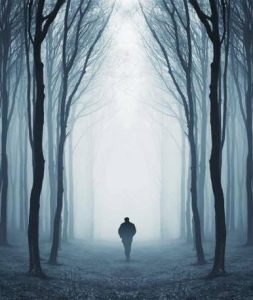


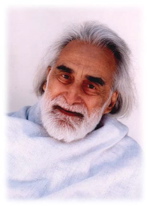
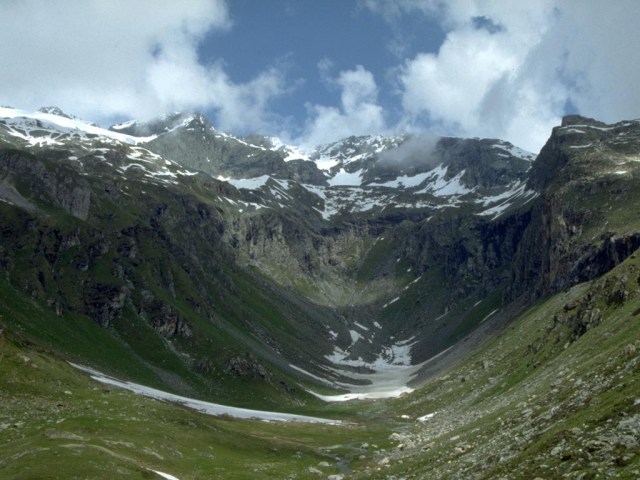


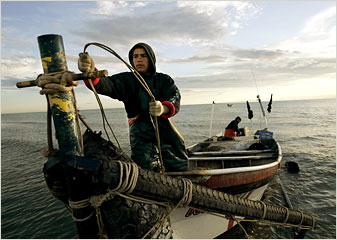




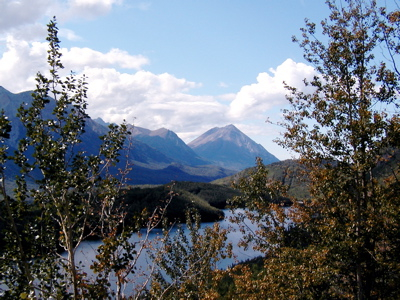
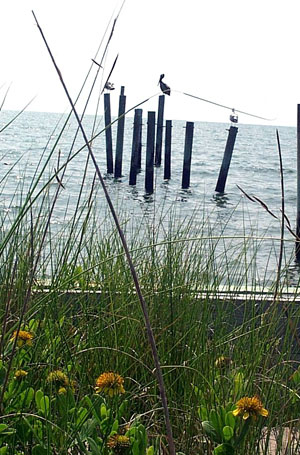
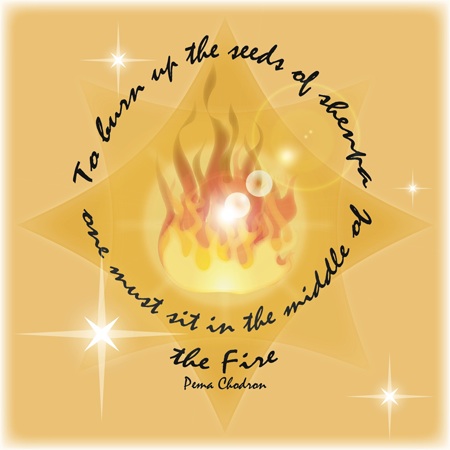

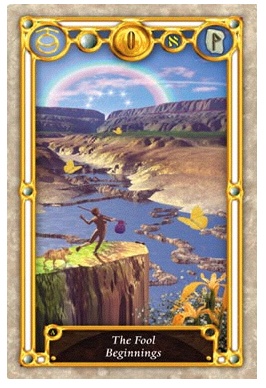
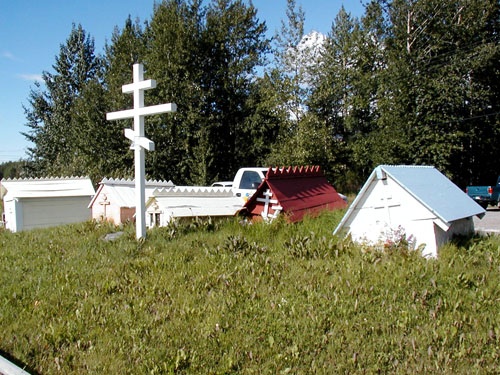
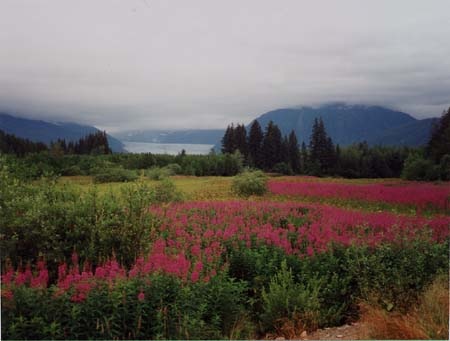
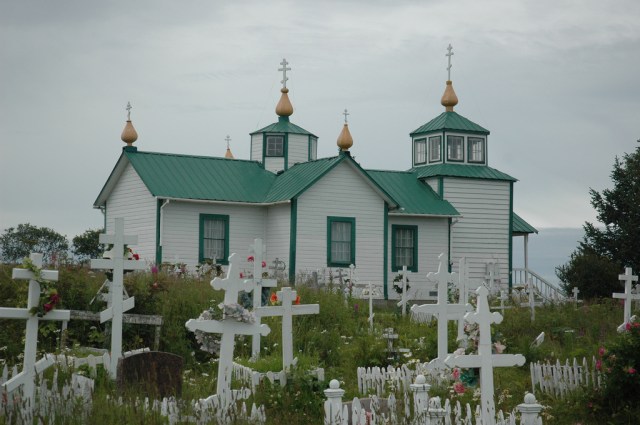
 a, of all places, to regroup and hang out with my very elderly father while I finish my dissertation and we try to peer ahead down the highway and figure out what the next leg of the journey is. The thing is, the airlines have a weight limit, and we are heavy with all these stories and all this reality, and I cannot, for the life of me, figure out where to put them or how to make them any lighter. Someday, post-dissertation, I will get that book written, and I hope you’ll acquire a copy (if need be, I’ll send you one), because I need people to help me carry them, and we all need to carry each other’s. After all, you are all co-authors.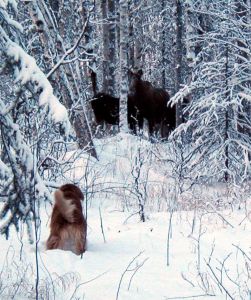

 In this dream, our family was going to move. Where we were going was somewhere way beyond the Pacific Northwest, beyond Canada even. My husband was going to bring our belongings, and he was working very hard to get everything together and move us. I was going to take my baby (I don’t really have a baby, at least not in many years) and our older daughter. I think we started out on a boat, but after awhile, it became clear to me that we should swim, and I took the baby in my arms and slipped into the water, which I’d heard was far too cold to swim in, as Alaska waters had been. It was cool and delicious, silvery clear and exquisitely fluid. I was able to hold the baby to my chest and stroke through the water. The three of us swam and swam, and after a long time, we waded ashore in a lovely little fishing village. It was quaint and arty, and we had a friend who had a bookstore, an older woman. I think we were waiting for my husband to get there, and finally he did. Where we were going was much farther than that, but I felt a deep connection with my friend, and we were glad to see her. She was quite old.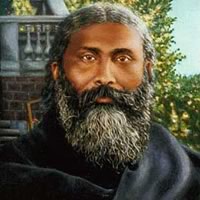
 Rays
Rays 