

Category: Home
This is where you can find my posts…
Soul Music
You just never know what God will produce next.
There is a true poetry and there is a false poetry just as there is a true music and a false music. A person knowing many words many syllables, can fit them together and arrange something mechanically, but that is not poetry. Whether it be poetry, art, or music; it must suggest life, and it can only suggest life if it comes from the deepest impulse of the soul. – Inayat Khan
The Hidden One

Al-Batin is the most hidden treasure, the secret of secrets. The essence of God is utterly hidden, but it is not hidden inside of something else. There is nothing for it to be hidden within. — Meyer, Wali Ali; Hyde, Bilal (2012-07-15). Physicians of the Heart: A Sufi View of the Ninety-Nine Names of Allah. Sufi Ruhaniat International.
The hidden One
waits in sacred longing and anticipation
in the place that can be found with close attention
in silence.
Often found in the empty space within a sound or a note,
there It is:
Yes! I knew it all along.
Why, it’s perfectly natural.
Then the rest falls away.
It never mattered in the first place,
nor did it exist to begin with.
A great relief.
Thanksgiving 2016, without a leg to stand on
Sometimes there is nothing left but Rilke:
I love you, gentlest of Ways, 
who ripened us as we wrestled with you.
You, the great homesickness we could never shake off,
you, the forest that always surrounded us,
you, the song we sang in every silence,
you dark net threading through us,
You began yourself so greatly
on that day when you began us—
and we have so ripened in your sunlight,
spreading far and firmly planted—
that now in all people, angels, madonnas, you can decide:
the work is done.
Let your hand rest on the rim of Heaven now
and mutely bear
the darkness we bring over you.
Barrows, Anita (2005-11-01). Rilke’s Book of Hours: Love Poems to God (Kindle Locations 823-830). Penguin Group US.
And that is enough.
The Earth Stands Still

Evil people do not further
The perseverance of the superior man.
The great departs; the small approaches.
On Election Night 2016, as we all began to see what was happening, I went to throw an iChing, which often comforts me in times of horror. The hexagrams that came up for “Present” and “Future” were both “Stagnation” or “Standstill”
In a state of standstill or decline, confusion and disorder come along. Inferior forces are on the rise, when the powers of clarity and creativity are on the decline. In such times, the wise take shelter in their own integrity and quietly remain faithful to their principles. Retreat from public activities and common exchanges until the times favor direct action.
During periods of stagnation, inferior elements in society come to the forefront. When the inmates are overrunning the asylum, summon up your fortitude, hide your worth and withdraw. Concentrate on your personal affairs with a quiet dignity, even if that means forfeiting short-term rewards.
Desiring to change a situation too quickly often creates extra conflict. By accepting hardship, while striving to maintain integrity, you are preparing for future growth. “A seed of prosperity is often hidden inside the husk of misfortune.”
Draw your own conclusions.
Or This

Voldemort has returned, and Snape is dead. It’s up to us. And all the unseen Beings.
Leonard
I lost my way, I forgot to call on your name. The raw heart beat against the world, and the tears were for my lost victory. But you are here. You have always been here. The world is all forgetting, and the heart is a rage of directions, but your name unifies the heart, and the world is lifted into its place.
Blessed is the one who waits in the traveller’s heart for his turning. – Leonard Cohen

The doors keep opening and closing… Beauty and ugliness. When will we learn?
On Election Night
When a country obtains great power,
it becomes like the sea: all streams run downward into it.
 The more powerful it grows,
the greater the need for humility.
Humility means trusting the Tao,
thus never needing to be defensive.
A great nation is like a great man:
When he makes a mistake, he realizes it.
Having realized it, he admits it.
Having admitted it, he corrects it.
He considers those who point out his faults
as his most benevolent teachers.
He thinks of his enemy as the shadow that he himself casts.
If a nation is centered in the Tao,
if it nourishes its own people
and doesn’t meddle in the affairs of others,
it will be a light to all nations in the world.
-Lao Tzu
Tao Te Ching 61
Critical Thinking

I have been thinking, in this election season, about the art of critical thinking. There’s not a lot of it around at the moment. I know this, because I used to teach it to undergrads, and I always pointed out that if they would learn this skill, no one could ever make a fool of them. Yet fools abound.
Here’s a definition of critical thinking from a pretty neat page I found:
Critical thinking is that mode of thinking — about any subject, content, or problem — in which the thinker improves the quality of his or her thinking by skillfully analyzing, assessing, and reconstructing it. Critical thinking is self-directed, self-disciplined, self-monitored, and self-corrective thinking. It presupposes assent to rigorous standards of excellence and mindful command of their use. It entails effective communication and problem-solving abilities, as well as a commitment to overcome our native egocentrism and sociocentrism. (http://www.criticalthinking.org/pages/our-concept-of-critical-thinking/411)
There are a lot of lies being told just now, many of them masquerading under the guise of “fact” taken out of context, misread, misinterpreted, falsified, etc., etc. . . . If we are willing to believe whatever comes before us instead of using our powers of reasoning, of careful reading, checking of sources, and questioning motivations and agendas including our own, perhaps we need to ask ourselves what our own motivations and agendas are.
And THAT is the last thing I will say about this particular election, except that I am embarrassed to be an American just now.
The Indifference of Forgiveness
When the stream of love flows in its full strength it purifies all that stands in its course, as the Ganges in the teachings of the ancients purifies all who plunge into its sacred waters.
There are two people in my life who have taught me lessons about forgiveness. I find that to forgive someone takes deep love and even deeper commitment. There are, in fact, many people in my life that I have not felt the need to forgive or to be forgiven by, but that is because I was never able to love them. I hope someday I will, although I also believe that in some cases, forgiveness is not necessary, although only in the case of forgetfulness.
The first lesson I learned about forgiveness was from a teacher of mine, the one who took me where I wanted to go with all my heart. It was hard for me when I later had to admit that he had some moral failings that I happened to find particularly unacceptable and painful to contemplate. I was, in fact, angry at him for several years, and there wasn’t a thing I could do about it. Yet gradually, I found that when I contemplated what he had given me and where he had taken me, when I considered what had come through him and how perfect it was, the enormity of his gift purified me and I realized that I could forgive him for being a human being and making mistakes. It was a beautiful, clean moment when I realized that I didn’t even have to think of issues such as forgiveness where he was concerned and further, that whatever others felt and thought did not have to be my concern.
Thus, one of the final lessons he taught me was how to forgive, and all without saying one word on the topic.
The quality of forgiveness that burns up all things except beauty is the quality of love. – Inayat Khan
I was given a further lesson just this morning, and I suppose that is a good sign, but I feel eviscerated and wounded, and perhaps those feelings are a good sign as well, because they take place in the heart and not the ego, if that is what one focuses on. What happened, you might possibly ask. Well, I live in a culture that is currently quite polarized as our leaders take us through a process that very probably involves their shadow-projections making us all too aware of our own. One of them, as you may know, is putting this country through a rather horrifying time, as he is completely unfit to be a leader and seems determined to be exactly that. We Americans are, I suspect, frightened at this time, and our fear reflects the overall, historic success of our way of government, because however imperfect it is, it has kept us relatively safe for a long, long time; yet now we are given to realize how fragile and easily broken our way is, that we are not immune to the horrors other countries have known throughout history. It is easy to judge someone like this person I refer to, and the media fully cooperates in the process of manipulating peoples’ fears and emotions. It is a time of grave dishonesty, a time when people’s fearful minds are being manipulated at the hand–ultimately–of this person who is at a level of evolution such that this is all he can do. How does this idea of forgiveness operate in cases like this? Inayat Khan offers one solution: he points out that we ought not to judge the person, but that we can certainly judge his actions:
For instance, take a person who is ill, and creating disturbance in his atmosphere by crying, weeping, shouting. It disturbs us. We say, “How bad, how annoying! What a bad nature!” It is not bad nature, it is the illness behind it. It is that reason which will make us tolerant. When we see no reason, we are blind to that Light of God, blind to that forgiveness which is the only essence of God which can be found in the human heart. – Inayat Khan
That kind of forgiveness is a tall order, but think of the power in its sincere application. Yet a global, distant forgiveness of this kind is far easier than forgiving someone who has the power not just to make us angry, but to break our hearts. To forgive at a distance is a powerful thing, far more profound in its effect than the worst judgment or punishment.
When a friend or family member hurts us, what then? Once upon a time, long, long ago, Murshid (I mean, here, Hazrat Inayat Khan, my life’s teacher) came to me in a dream. I am not old enough to have ever met this great soul, although I have been taught by his friends and relatives, so to meet him in this way was very precious to me. At the time, I was going through the breakup of a marriage, and I was certainly a spiritual infant at that time… and when Murshid came to me, he offered me the premier definition of indifference: Indifference, he said, means to be so completely in love with the person who causes pain that one doesn’t even see the need for forgiveness, doesn’t even see the wrongdoing, but only sees love in the other.
Another tall order. In my case, that one took a long time to work, but I know it is the ultimate definition of forgiveness.
And now a friend has hurt me. We are told that when we find another’s behavior intolerable, we need to look at ourselves first, and I realize that I invited what happened, and that although I would like to think that I handled my end of it intelligently and kindly, it doesn’t matter, because the other person didn’t think so, and lashed out at me. And so I have given us both the opportunity to learn to forgive.
My thoughtful self,
Bear all and do nothing,
Hear all and say nothing,
Give all and take nothing,
Serve all and be nothing.
While I was roaming through the forest, a thorn pricked my bare foot and cried, “Ah, you have crushed me.” I felt sorry and I asked its forgiveness.
A wasp flying in the air stung my arm and cried, “Ah, you have caught me in your sleeve.” I felt sorry and I asked its forgiveness.
My foot slipped and I fell in a pool of muddy water. The water cried, “Ah, you have disturbed me.” I felt sorry and I asked its forgiveness.
I absently happened to touch a burning fire, and the fire cried, “Ah, you have extinguished me.” I felt sorry and I asked its forgiveness.
I asked my gentle self, “Have you received any harm?” “Be thankful,” said she, “that is was not worse.” – Inayat Khan
“I look to thee, o Lord, when I try to do right and it turns to wrong.” (Inayat Khan)
It occurs to me that the present time offers, most of all, the opportunity to learn forgiveness.
The Teacher . . . The Lesson
Do not dwell in the past, do not dream of the future, concentrate the mind on the present moment. – Buddha
We all have something we’re particularly good at, and what I’m good at is guilt. I come by this talent honestly: I remember when I realized that it was a very good way to stay alive. I was still a child in grade school, and I remember one night escaping into the bathroom at my aunt’s house in a potentially dangerous moment, and perched on the side of the bathtub, knowing that the ax was probably going to fall. I’m sure I’ve mentioned, here, that I come from the Family from Hell, a phrase coined by professionals who work with such people and have to keep a sense of humor somehow–therapists, social workers and the like–and I also happened to work with such people for many years, as is so often the case with people who come from the Family from Hell: that’s where we learn to save lives, including our own. I don’t know who it was who first spoke of how the children of sorrow are often the bringers of joy, but it’s true, I think, because who else would know how to deal with these moments?
As usual, I digress. There I was, probably about age 9, balanced on the edge of the tub in my aunt’s pristine bathroom, feeling the unbearable weight of all my wrongdoing, at the same time knowing that I was probably going to get it for something that I wasn’t sure I’d actually done, and that didn’t matter whether I had or not: I would still have to be the scapegoat. I didn’t know words like scapegoat at that time, and I certainly didn’t understand concepts like corrosive guilt and emotional abuse, but I knew enough to know that I was generally miserable and that I was probably going to be made more miserable before long. And suddenly, a solution occurred to me: I’d apologize before the ax fell! Yeah, that’s what I’d do. If I took responsibility before it was conferred on me, I could maybe control the force of the blow that was surely coming. And for the most part, it worked pretty well. When I was nine and had no other recourse, that is.
The problem with solutions found by children is that while they work at the time they are found, they tend to become entrenched habits and solutions that are pulled out of the hat so often that by the time the child becomes an adult, it seems too late–and too dangerous–to find less painful and debilitating solutions. It all works together, of course, this mind-body thing: the mind solves a problem and if the solution doesn’t grow up, the body becomes more and more weary from carrying an unviable solution. I wrote a post awhile back about Fibromyalgia, a post that has been meaningful to a lot of people, remarking that chronic illness is an excellent example of this phenomenon: our bodies are the sensors, the recorders of our experiences, and when the writing becomes too deep, the pressure too great, the body begins to collapse, and some form of exhaustion takes its toll. I often think that I am fortunate: some people get cancer or even more cataclysmic illnesses. With my ignominious little chronic body-mind syndrome, I still look healthy and my mind is in relatively good shape (at least I think it is), and it’s probably not really going to get much worse. I don’t know whether this is significant, but it seems to me that it is a sign that I have not given up yet. But then, what do I know.
So: guilt. “The gift that keeps on giving.” I know most of the jokes made by chronically guilty people, and I proved to myself as that child sitting on the side of the tub that I wasn’t giving up. I added another skill at almost the same time: that of getting even, but that’s an essay for another time, for it helped me make far worse messes than my generally internalized sense of global shame. Guilt worked the best, although it has long worn out its efficacy. It’s what I do. It’s how I stay alive. It’s a misery, but it’s one I’ve learned to live with, although I continue to cherish the hope of finding another coping mechanism. Still, if I’m feeling lousy on a particular day, it’s no doubt my fault, and if the window won’t open, that has to be because of something I’ve done in not maintaining my house, and if I have yet to finish my doctoral dissertation or publish seventeen novels, then I am a BAD PERSON. You get the idea. I’m sure that some of you play this tape over and over for yourselves too, it’s a popular way of getting by. It’s my most polished ability. Just ask my husband!
Here in cyberspace, there is a tremendous amount of good advice going around: just Google whatever it is you’re thinking about, and you can instantly learn what everyone else is thinking about it. At one time, we read books, and hopefully we still do, but I think we have learned to consider things in short, sharp bursts of information that, with any luck, hit home. It’s not a bad way to think about things, either, because we’re all looking for that “Ah Ha!” moment, and sometimes we get it when we read a quote or a news story or a Facebook meme. I have a vast number of ideas stored away, and yesterday I was considering guilt, which continues to take its toll. I’m better at ignoring than I once was, mind: it doesn’t have quite so much power to take me down, but it’s still a bad habit. Yesterday, I was considering how much energy it takes and how difficult it makes it to see things clearly, and I thought of the idea above, the supposed quote from Lord Buddha: we have, each time undesirable thoughts come, the opportunity to ask ourselves where they come from, and if we do, we generally find that they come from past feelings and conditioning, past events and ideas and relationships, and if we consider the emotion of the moment, we realize it’s fear of the future that perpetuates them. In this sense, of course, guilt and fear are synonymous.
Considering this, I did something I’ve done before but not really developed a habit of doing as yet: I considered my guilty feeling in the moment, relinquishing the past and my fear the future, and I allowed myself to be in the moment. “How do I really feel RIGHT NOW,” I asked myself, divorcing the constructs that produced this sense of pervading remorse, and I stayed with that for awhile. I was in pain, yes, but the pain was less, and there was a sense of expansiveness, of freedom. Suddenly I had more energy. I didn’t feel so attached to it, and it wasn’t accompanied by all the habitual “shoulds” that plague me (“I’m shoulding all over myself” is a popular phrase, too). I realized that in this very moment, I really don’t have any problems: I’m warm and dry and I live in a beautiful atmosphere and I’m loved and I have time for the things I most want to do. But there’s another aspect that this little practice brings, because it’s like meditation: when I let go of the past and the future, I become pure consciousness. I live in this soul. I have always been and I will always be. What is this?
I have a page here on this blog where I share the Ten Oxherding Poems. Read them if you are in the mood. I have loved oriental poetry for many years, and in addition to these, Ryokan, “(1758–1831) … a quiet and eccentric Zen Buddhist monk who lived much of his life as a hermit. He wrote poetry presenting the essence of Zen life, but refused any titles, such as teacher. His poems are characterised by his playfulness, directness and questioning nature.” (http://www.poetseers.org/spiritual-and-devotional-poets/buddhist/ryokan/). It’s the playfulness part that appeals to me: this man learned to laugh at himself!
Too lazy to be ambitious,
I let the world take care of itself.
Ten days’ worth of rice in my bag;
a bundle of twigs by the fireplace.
Why chatter about delusion and enlightenment?
Listening to the night rain on my roof,
I sit comfortably, with both legs stretched out. – Ryokan
So there I was in that moment, no past, no future, just Being. A great relief.
We live in an increasingly complicated world. A hut in the mountains and a life in solitude is something that most of us won’t even consider, and so we continue to try to navigate the pain of living with schedules and possessions and worries and….love. That’s the problem, isn’t it: love. Perhaps our greatest need, and rightfully so: Inayat Khan said “You are love, you come from love, you are made to love, you cannot cease to love.” And there we have it: the ultimate dilemma. We come from love, and we are made to love, and all the rest of it (including guilt) is an outgrowth of that. Can the responsibility of love be found in just Being? What happens to the quest of love if we relinquish past and future as the learning tools we have been given? It seems to me that the predicament lies in the fundamental process of our own becoming: we are, after all, thoughts in the mind of God, and ultimately all our experiences arise out of our quest for realizing what that means in this particular life and being.
How awful! And how wonderful to realize that my guilt and my worry and my faults and my miseries are all expressions of God becoming God. I remember my life’s teacher, Pir Vilayat Inayat Khan, saying over and over that if we knew what love really is, we would be shattered in our understanding. Could it be that this deadening talent for remorse is right out there on the luminous arch of the bridge into divine understanding? How may we embrace our share of the agony of knowledge?
There is a well-known story about an event where the Dalai Llama was observed, as an Easterner, not to have the same concept of guilt as those of us in the West do. I thought about that as I was writing this, and then I found this story, which changes that idea:
The Dalai Lama with (sic) working with an American psychiatrist who was interviewing him for a book on happiness. The subject of remorse was broached: His Holiness explained that one time an elderly Buddhist man came to see him to ask for instructions on how to do a very difficult Yoga pose. The Dalai Lama told the man that he was too old and should not attempt the pose as it would be too dangerous. The old man thanked the Dalai Lama, went home and killed himself so he could be reincarnated as a younger, healthier man who could attempt the pose. After hearing the news, the Dalai lama was overcome with guilt at being the reason for another man’s death.
“So how did you deal with that?” asked the interviewer. “How did you get rid of the remorse.”
The Dalai Lama sat there in silence for a minute or two, thinking hard about the question.
“I didn’t get rid of it” the Dalai Lama explained. “It’s still with me every day. I just continue to live with my heart open.”
(From another, rather wonderful blog: http://doorsandsardines.tumblr.com/post/8111056301)
If our lives are the writing in the book of the divine life, that is what it’s about: keeping an open heart, despite everything. It occurs to me that herein is the divergence of Zen and Sufism, although in the core of each that divergence curves back into itself:
The Sufi considers devotion of the heart the best thing to cultivate for spiritual realization. It might seem quite different from what many think, but the ones who close their hearts to others, close their hearts to God. Jesus Christ did not say, “God is the intellect”. He said, “God is love”. if, therefore, there is a piece of God that can be found anywhere, it is not in any church on the earth, nor in Heaven above; it is in the heart of each person. The best place where you are sure to find God is in the loving heart of a kind person. – Inayat Khan
Years ago, I read a wonderful book by Joan Borysenko, Guilt is the Teacher, Love is the Lesson. The title alone was enough, really: what if we can learn to bear the cross of guilt, that one that so often seems far more heavy than anyone should reasonably be expected to carry, and bear it not only willingly, but gratefully?
A great gift.
Dhikr
Riding on the horse of hope,
Holding in my hand the rein of courage,
Clad in the armor of patience,
And the helmet of endurance on my head,
I started on my journey to the land of love.
A lance of stern faith in my hand,
And the sword of firm conviction buckled on,
With the knapsack of sincerity,
And the shield of earnestness,
I advanced on the path of love.
My ears closed to the disturbing noise of the world,
My eyes turned from all that was calling me on the Way,
My heart beating the rhythm of my ever-rising aspiration,
And my blazing soul guiding me on the path,
I made my way through the space.
I went through the thick forests of perpetual desire,
I crossed the running rivers of longing.
I passed through the deserts of silent suffering,
I climbed the steep hills of continual strife.
Feeling ever some presence in the air,
I asked, “Are you there, my love?”
And a voice came to my ears, saying, “No, still further am I.” – Hazrat Inayat Khan, Alankaras, Complete Sayings
To love enough . . .
Happy Days

Happy days were when your hand was by my side, Signs of your love, my features beautified, when your words crucified, Then my soul resurrected, upward glide.
Happy days were when the wine, we glorified, God was with me while by my side was my bride, when your candle was my guide And my heart, like a moth, your flames would ride.
Happy days were when amidst knowledge and pride, The drunken laughter was dignified, when we drank from the cup in our stride And told tales of the things that we tried.
Happy days were when Beloved would decide, On the sun and moon, in service, relied. Happy days in the tavern I would abide and Saw the things that from the temple would hide, when your signal verified; Made the crooked straight, Hafiz, narrow, wide. – Hafiz , Ghazal 204
___________________________
There was a time when I did my very best to have at least some knowledge of the ancient Sufis, but I seem to have forgotten most of it as I became increasingly bored with names and forms, but I thought I’d look up Hafiz and say at least a little for folks who may not have much knowledge of Sufi poetry (I am probably one of them). This is what I found on Wikipedia (in part): Khwāja Shams-ud-Dīn Muḥammad Ḥāfeẓ-e Shīrāzī, known by his pen name Hafez, was a Persian poet who “lauded the joys of love and wine but also targeted religious hypocrisy.” I thought that was plenty to say: that, and that we need to remember, even in this election year, happy days are still available.
Light Being

I remember those mornings at dawn with you…
“Shield your eyes for safety, and gaze into the light,
And in that instant recollect ourselves as Beings of Light.”
It worked, that instant shock of recognition, that simplicity of knowing…and then
beyond knowing to Being
How did this happen? How did I forget…and why?
Light streams through all the cells, molecules, ignites atoms…
This body becomes radiant, this mind clear, but it’s more than that.
No need, no need, no need.
Just light.
It is just to remember, and one day,
Never to forget again.
My Father
When Father’s and Mother’s Days roll around and everyone posts love stories about their parents, I always feel kind of lonely. I also feel as if I–or someone–ought to figure out how to write the perfect post about being the damaged child of damaged parents. My parents were the narcissistic and, in my mother’s case, alcoholic offspring of other screwed up people who had their own issues. I’m sure my mother and her siblings were abused, possibly sexually, and my father lived a lonely, orphaned life until he was 16 years of age, when he got on his bike–this was during the Great Depression–and went off to seek his fortune. He was an angry man. And my mother was an angry woman. Both had good reason to be, but it’s not okay to beat up and neglect your kids because you yourself are frustrated. However, it was a generation of postwar parents who assumed ownership of their children, and believed the best way to control them was through rage and, often, physical violence.
I am sure that many people reading this are nodding their heads knowingly, but in my case there is a difference that not everyone will relate to, because I have seen time and time again that children who are abused by their parents continue to love them despite everything.
I am not one of them. I cannot deny that when each of them, in the near past, died, I was relieved. I grieved, but I realized that I was grieving for the parent I never had, more than for an actual person. I am aware that, as human beings, we are supposed to forgive those who do us harm, but I never did. As time goes on, I understand more and more, but I cannot honestly say I have forgiven. Over time, my anger has dissipated, and I take increasing responsibility for my own part in the conflicts I had with them, but I would still not want to live with either of them again.
Love all, trust none; forgive all, forget none; respect all, worship none. That is the manner of the wise. – Inayat Khan
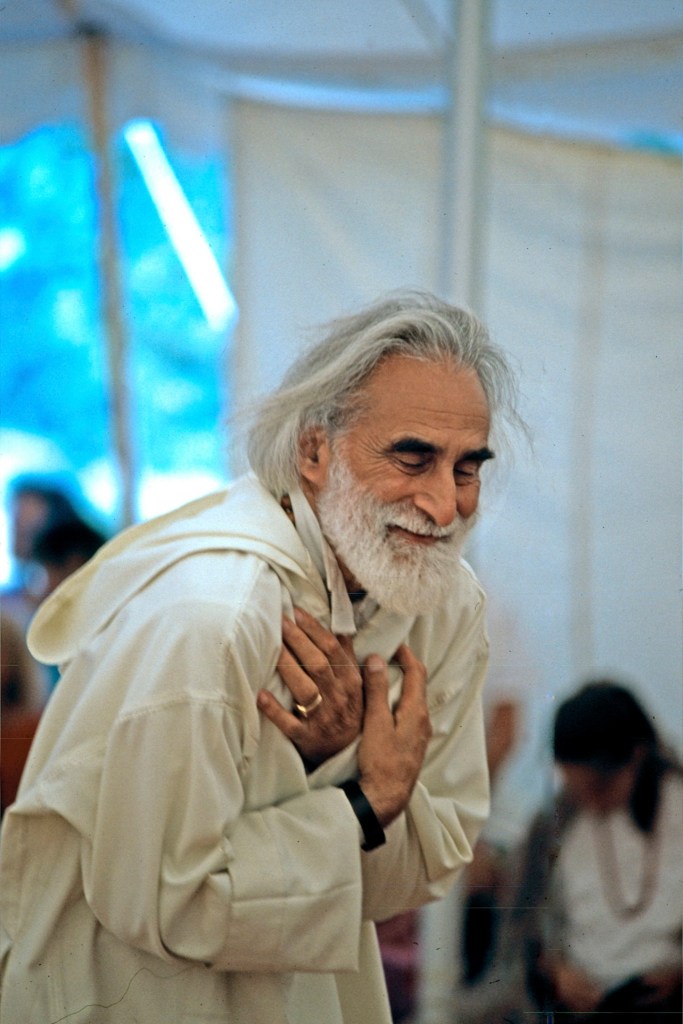
The thing about being raised by someone you cannot trust is that when you grow up, you tend not to trust most authority figures. This brief post is about the father I eventually found, my Sufi teacher, Pir Vilayat Inayat Khan. I loved him dearly throughout my life and will until my own death and thereafter. However, it took me many years to know him as my father and to trust him as I had never trusted my father-of-origin. The following is a brief story I am reminded of on this particular holiday:

Once upon a time, when I was still in my early twenties, he asked me to come to the (then) New York khanqah (this is the Arabic name for a spiritual commune, so to speak) to have a talk. He ended up giving me Holy Hell over something that was going on in our center, and being a spiritual infant at that time, my ego rebelled, and I felt unfairly blamed. It took me a long time to get over my resentment of what he said, and he did not give me “equal time” to defend my own point of view. I remember him saying “I have to try to be your Father and help you to do what’s right.” Without going into what he asked of me, let me just say that it of a political nature and was quite a lot, on that occasion. Looking back, I realize that to take on the role of spiritual father was a tall order for him, especially given the Father who had raised him (Hazrat Pir-o-Murshid Inayat Khan).
I was not able to appreciate his comment about his obligation to be my spiritual father, although I do remember feeling a vague sense of comfort, even as I felt anger with him; but as the years went by, I realized that he really did mean exactly what he said, and even though I was only one of thousands of students, he was always there for me, whether in a dream, in a letter or in person. Eventually, I learned to accept what he had to offer on the terms he chose, and I am all the better for it. He was always looking up, and he never gave up. Now he waits for all his children in the planes of Light.
Thank you, my Father. It is a great joy to be able to write you a love letter on this day.
The 100th Wedding Anniversary
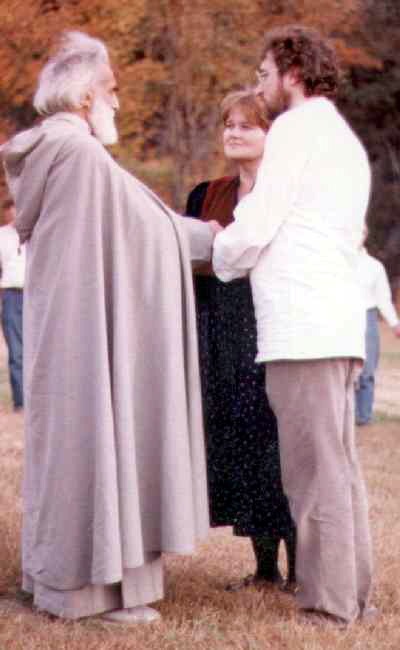
This year is the 100th wedding anniversary of Pir Vilayat, my life’s teacher. I use the term “wedding anniversary” in the sense that the death of a teacher is not a death–not for any of us–but a return to the arms of the Beloved, traditionally called God. Likewise, it is a birth. I am combining his earthly birthday and his Urs here, because it seems to me that both are a wedding and an initiation. Traditionally, however, the Urs is the anniversary of the death of a saint, while the birthday is, well…the anniversary of her or his death. The picture above is of the earthly wedding–celebrated in the heavens and earth–of my husband and I, when Pir Vilayat officiated at that joyful occasion. I was fortunate in having a dear friend, Greg Blann (find his wonderful paintings with a Google search), take photos unbeknownst to us, and so it is not perfect, but the four pictures he took mean a great deal to us. To understand a true wedding one must look behind the outer forms.
Pir Vilayat would have been 100 this year, and he “died” in 2004, 12 years ago. It amazes me that he has theoretically been gone from this planet for this many years, because to me he is as present as he ever was. He is, indeed, there whenever I need him, just as he was in this phase of life. He always came when he was called, whether in a dream or a letter or an actual visit, and he never failed, if one was paying attention.
People who have not experienced being the student of an authentic spiritual teacher don’t quite understand why such events mean so much to those who were, and they need not: it is not for everyone to come home in this way. We are all finding our way to return from whence we come, and it matters not how we get there. Yet for me, and for many like me, he was our best friend, our teacher, the one who went before us and yet stayed with us. The below is his “final” message:
A Final Message
to his Mureeds
fromPir Vilayat Inayat Khan
Pir Vilayat’s final message was given in Suresnes, France, on January 27, 2004, six months before his death. It was published in Heart and Wings, a publication of the Sufi Order International Secretariat, New Lebanon, New York.
I must say, it has been such a joy to share with you the encounter of our thoughts sparking each other. The mission— the meaning of the Message of the future, all of it has been exciting and overwhelming, and I am very grateful for your sharing with me. From the moment that one has broken bread at the same table, one is linked by a special link, and that’s the reason for the Mass. The Mass is the ritual of eating at the same table together, and we have been sharing this wonderful bread and wine at the same table, and that establishes a link between us that can never be broken, so that we can always find each other. So, I will just say that you can find yourself— you can find me in your heart; and I can say, I can find you in my heart. God bless you. – Khan, Pir Vilayat Inayat (2011-11-01). Life is a Pilgrimage . Omega Publications, Inc.
Traditionally, one has the ability to receive a boon from the teacher on such an occasion. I asked for and received one as always, and I cannot put it into words, which itself is appropriate, because Pir, as we called him, was always full of surprises. One never knew from one moment to the next what was coming, whether an inner or outer experience of growth. And any growth, however painful–perhaps the one that is especially painful–is useful to the sincere seeker, so I look forward to the gift he has given me this time, and I celebrate his wedding with joy and tears and a renewed sense of commitment. All blessings to you in this world of contrasts.
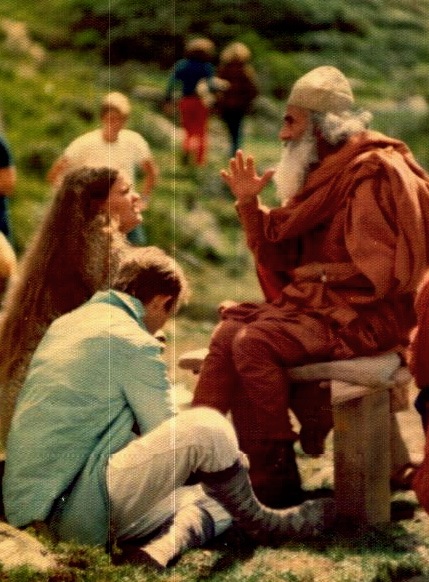
(Another personal picture taken of me at age 24 or so, in his summer camp at Chamonix-Mt. Blanc, in the French Alps. It is the perfect picture of the disciple at the feet of the Master, and in reality he was chewing me out for my stupidity, in his own fatherly, sometimes stern way.)
The Light that is seen in the Port
Blessed is she who sees the star of her soul as the light that is seen in the port from the sea. – Inayat Khan
This ship speeds over the darkling waters
with the moon shining down, a glimmering path of light highlighting the waves that
slap against its sides . . .
In the distance is the stony island where the ancient tower with its beams of light shining through the turret openings on the highest level, flickering across the stone walls: the lighthouse where You wait for me to come home finally, once and for all.
And You will never say No.
Shall we dance?
Back to Middle Earth
Out of the shell of the broken heart
Emerges the Newborn Soul
– Inayat Khan
On Reading Rilke
Ich bin derselbe noch, der kniete
I’m still the one who knelt before you in monks’ robes, patiently waiting.
You filled him as he called you into being—
a voice from a quiet cell
with the world blowing past,
And you are ever again the wave
sweeping through all things.
That’s all there is. Only an ocean
where now and again islands appear.
That’s all there is: no harps, no angels.
And the one before whom all things bow
is the one without a voice.
Are you, then, the All? and I the separated one
who tumbles and rages?
Am I not the whole? Am I not all things
when I weep, and you the single one, who hears it?
Listen—don’t you hear something?
Aren’t there voices other than mine?
Is that a storm? I am one also,
whipping the trees to call to you.
Are you distracted from hearing me
by some whining little tune?
That’s mine as well—hear mine as well;
it’s lonely and unheard.
I’m the one who’s been asking you—
it hurts to ask—Who are you?
I am orphaned
each time the sun goes down.
I can feel cast out from everything
and even churches can look like prisons.
That’s when I want you—
you knower of my emptiness,
you unspeaking partner to my sorrow—
that’s when I need you, God, like food.
Maybe you don’t know what the nights are like
for people who can’t sleep.
They all feel guilty—
the old man, the young woman, the child.
They’re driven through darkness as though
condemned,
their pale hands writing; they’re twisted
like a pack of frenzied hounds.
What’s past lies still ahead
and the future is finished.
They see not the faintest glimmer of morning
and listen in vain for the cock’s crow.
The night is a huge house
where doors torn open by terrified hands
lead into endless corridors, and there’s no way out.
God, every night is like that.
Always there are some awake,
who turn, turn and do not find you.
Don’t you hear them blindly treading the dark?
Don’t you hear them crying out
as they go farther and farther down?
Surely you hear them weep, for they are weeping.
I seek you, because they are passing right by my door.
Whom should I turn to,
if not the one whose darkness is darker than night, the only one
who keeps vigil with no candle
and is not afraid—
the deep one, whose being I trust,
for it breaks through the earth into trees,
and rises,
when I bow my head,
faint as a fragrance
from the soil. – Rilke
_____________________________________
Response from here:
Let’s see, what do I know about You?
I know that you are the music, the notes and, most of all, the spaces between the notes.
I know that you are always waiting there, divine spouse, love of my life . . .
We plan to meet and you show up, but I’m often late,
and there you are, leaning against the streetlight, patiently waiting in the dark.
Your arms are always open, but I push at you and hold you back, because I am afraid of dying.
Still, there you are, waiting in the silence, and that has to be lonely.
You never judge.
You just wait.
How did all this happen?
I could say you must have been lonely, or some of the other things people surmise,
And I suppose you were. . .
But I believe in love.
I really do, you know. I know you now.
And I really don’t care where it comes from, or why or how;
I don’t care what your motive is, or your need or your neurosis was, because here we are, and here it is, this love, which is always on offer . . .
Patiently, kindly. . .
And that is what keeps me going.
You know (God knows?), you don’t get much in return, but perhaps I’ll improve.
It could happen.
Because now we’ve found each other again.
We’ve renewed our vows, that “promise we made in pre-eternity.”
So it’s just a matter of time, and sometimes I manage to slip past time and it is NOW.
Oh, yes. . .
The Wedding Day

Thy light hath illuminated the dark chambers of my mind; Thy love is rooted in the depths of my heart; Thine own eyes are the light of my soul; Thy power worketh behind my action; Thy peace alone is my life’s repose; Thy will is behind my every impulse; Thy voice is audible in the words I speak; Thine own image is my countenance. My body is but a cover over Thy soul; my life is Thy very breath, my Beloved, and my self is Thine own being. – Inayat Khan, Ragas
Urs (from Arabic: عرس, literally “wedding”) is the death anniversary of a Sufi saint in South Asia, usually held at the saint’s dargah (shrine or tomb). In most Sufi orders such as Chishtiyya, Qadiriyya, etc. the concept of Urs exists and is celebrated with enthusiasm. The devotees refer to their saints as lovers of God, the beloved. The death of a Sufi saint is regarded as visal (union with the beloved), and the death anniversary is celebrated as a wedding anniversary. – from Wikipedia
Those of us who have been following this Inayati Sufi path have been celebrating the Urs for as long as we have been initiates. Thus, it can no longer be said that the Urs of Hazrat Inayat Khan is primarily celebrated in South Asia, for now it has spread to wherever his followers come from, and is no longer always celebrated at his dargah, but wherever his students are.
As well, the Urs of other Sufi teachers are celebrated: The Urs of Moinuddin Chishti, for instance, attracts thousands of followers every year. The concept sounds a bit somber, doesn’t it? One remembers, however, that the death of a soul on earth is a coronation and a wedding in the heavens, if it is so wished. Inayat Khan said that the soul creates its own afterlife:
The afterlife is like a gramophone; man’s mind brings the records; if they are harsh the instrument produces harsh notes, if beautiful then it will sing beautiful songs. It will produce the same records that man has experienced in this life. – Hazrat Inayat Khan
If one dies in a state of fear, then that will be creative of one’s afterlife. If one dies in a state of divine love, so be it. Perhaps this is why the Urs is so important: the followers of this teacher experienced him as the embodiment of divine love, and so his wedding–his Urs–is a particularly holy time. Sufis from all over the world are at the tomb–the dargah— of Hazrat Inayat Khan in India, in Delhi, giving thanks for that life, and hoping for the boon of partaking of that realization.
Recently, this person who is writing, has been thinking very deeply about this business of what we of the sixties called “the guru trip”: there is a growing realization that organizations and –isms, philosophies and religions, are traps that keep the soul from reaching its own authenticity. Why then, do I experience this particular being and this particular urs as a time of power, of resonance, of prayerfulness? Perhaps it is because on the way to my own wedding, I passed through the being of the Rasul, the Christ, and have the great good fortune to have interiorized them on my journey, a stage typical of the Sufi’s journey, and of the mystics of all religions, no matter what label they give themselves or are given.
The belief in Christ is in the Church, the book of Christ is with the clergy, the spirit of Christ is in the illuminated soul.
The spirit of Christ can be traced in Christ’s own words where he said, ‘I am Alpha and Omega,’ I am first and last. By this he meant, ‘I was before Jesus was born, and I shall be after Jesus has gone.’
‘I am Christ’ means ‘I am now, and I shall be till the end.’ In this the Master identifies himself with that light of which we read in the Vedanta, and which existed thousands of years before Christ, the divine light which is recognized by the Sufis as the Spirit of Guidance, and which is also mentioned in the Quran. This light of Christ is symbolized by the lantern in the story of Aladdin, in the Thousand and One Nights. And it is this same light which the Hindu legend speaks of when it says that there exists a cobra with a light in its head, and when it searches for food it takes that light in its mouth and by its illumination it can go about in the forest. It is the light of life of all men and all beings, seen and unseen. In reality it is the essence of light. – Inayat Khan
It is the Christ, the Rasul, who fulfills the divine Message: what a sacrifice! These great beings work in all spheres of life, representing the one Guide, the Spirit of Truth, in the various forms of the prophets, the rasuls, the Christ, each coming for the age and in the form for which that one Spirit is drawn:
The principal work of the Prophet is to glorify the Name of God, and to raise humanity from the denseness of the earth, to open the doors of the human heart to the divine beauty which is everywhere manifested, and to illuminate souls which are groping in darkness for years. The Prophet brings the Message of the day, a reform for that particular period in which he is born. A claim of a prophet is nothing to the real Prophet. The being of the Prophet, the work of the Prophet, and the fulfillment of his task, is itself the proof of prophethood. – Inayat Khan
Please understand: in recounting, to some degree, my own experience, I do not make any claims; I have a long, long way to go, assuming that there is any ending to eventually come to, which I rather doubt, and passing through the being of the prophet on the way to the Absolute is inevitable and available to all. Yet it occurs to me that there is a difference in varieties of experience, of perception: there is the intellectual interpretation we give something that we see or find out, and there is the experience of the ineffable, beyond intelligence. Perhaps it is a matter of perceiving with the intelligence of the universe, as opposed to the conditioned, individual intelligence. This love I have for the teacher I found (and who found me) goes beyond my intellectual reasoning and further, it came to me through my own ability to perceive, not the journey that was laid out for me, although I’m sure that even Sufis are imbued with a set of conditionings.
Historically, these conditionings–teachings!–are passed down over the ages through what is called the Silsila, the chain of enlightened beings. Increasingly, the Sufi order in which I am initiated is being designated as “Universal Sufism.” This is because, even though our roots might seem to be in Islam, and like other Sufi orders we chant dhikr, in fact Sufism predates Islam and in some form, it emerges as the mystical adjunct to all religions. It is only the name and the language of love that causes it to seem to be Islamic. Yet the practice of tassawuf distinguishes it:
Sufism, it should be remembered first of all, is a neologism – a newly coined word. And I must say it’s not only a neologism but also a misnomer, a badly coined word, and that is because it contains an “ism” and the “ism” subverts the essential meaning of the word because an “ism” always suggests a closed community, an ideology, a doctrine — and Sufism, in essence, is none of those things.
So if we want to truly know what Sufism is it would be helpful to go back to the original word in Arabic which is “tasawwuf“. It’s not quite as easy to pronounce but it contains a more accurate meaning because it is a verbal noun, and so it refers to a process of becoming. It’s not static, but dynamic.
Tasawwuf literally means the process of becoming a Sufi. So from the outset one understands that it is not a club to which you belong or do not belong, it is a transformative experience. – Pir Zia Inayat Khan, current head of the Inayati Order
So on the one hand, I have a deepening sense that one must guard against any tendency toward following. Yet I feel myself to be part of a long tradition that has brought me to an ineffable reality. Tonight, the Urs, is a Night of Power, as the Quran terms it in describing the moment when revelation was given to the Prophet Muhammad. Traditionally, one is given, on this night if on no other, the blessing of the soul-perception of this particular incarnation of the one Spirit of Guidance. And I am a believer: this is the one who I was meant to find on my journey homewards, and who protects me from myself and shows me the way. He–in whatever form–is still as real now as ever, and I am endlessly grateful for that.
The one whom I have called God, whose personality I have recognized, and whose pleasure or displeasure I have sought, has been seeing His life through my eyes, has been hearing through my ears. It was His breath that came through my breathing, His impulse which I felt, and therefore I know that this body which I had thought to be my own is really the true temple of God. I did not realize that this body was the shrine of God. –Inayat Khan


 saw this man dressed in these terribly impressive wool robes, youngish then, and with short hair, clean-shaven (that changed shortly), and I thought “I belong to that man.” I didn’t know what that meant, either, but that is what I thought. I think the word “disciple” flashed through my mind…that did mean something to me, so I must have had some innate idea. However, it was not until I left home and moved to Cleveland, Ohio, that I began to search earnestly for the Sufis, with this man’s image in the back of my mind. One day, it happened: I saw a newspaper article about a seminar at the local Unity church that this man was giving, and I saw that I could at least attend a public lecture at the end of it. So I went to that, and was blown away, still not quite understanding what was happening to me.
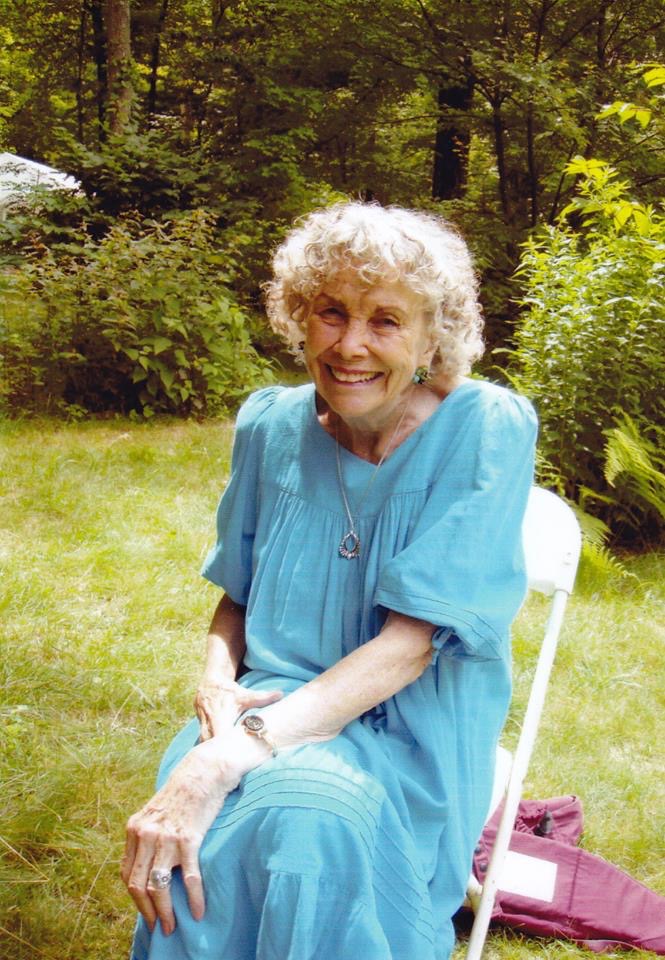 Now, an alchemical retreat, the way most of us do it in this order, is generally taken in silence, in the wilderness. This was quite a historic retreat, for many reasons, and ordinarily I would have observed silence, but Rabia and Nick were parked on the outside of the camp area (most people brought tents), and I’m not entirely sure what they did during the days of the retreat, but I imagine she tried to divide her time between him and his reasonable desire for sightseeing, and the retreat. I just knew that Rabia, extrovert that she was, would want to talk, and so I observed silence during the hours of the retreat, and in the evenings, I would walk over to where they were camping and talk to Rabia. I remember her expressing guilt that I was breaking silence for her, but I said that it was a privilege, so she let it go, and we chatted happily. I remember that, toward the time of my departure back to Tennessee, where I lived then, I realized that I was running out of money. I was a single mother, and I lived pretty close to the bone. I went to Rabia and guiltily asked her if I could borrow $100 from her, and she gave it to me, and I paid it back eventually. I remember another time, during those lean years, when I was flat broke, and out of the blue, she sent me some cash, saying “I just have a feeling I owe you some money, let me know if this isn’t enough.” I doubt that she owed me one thin dime, but golly! I needed those few bucks, and they came exactly when I needed them.
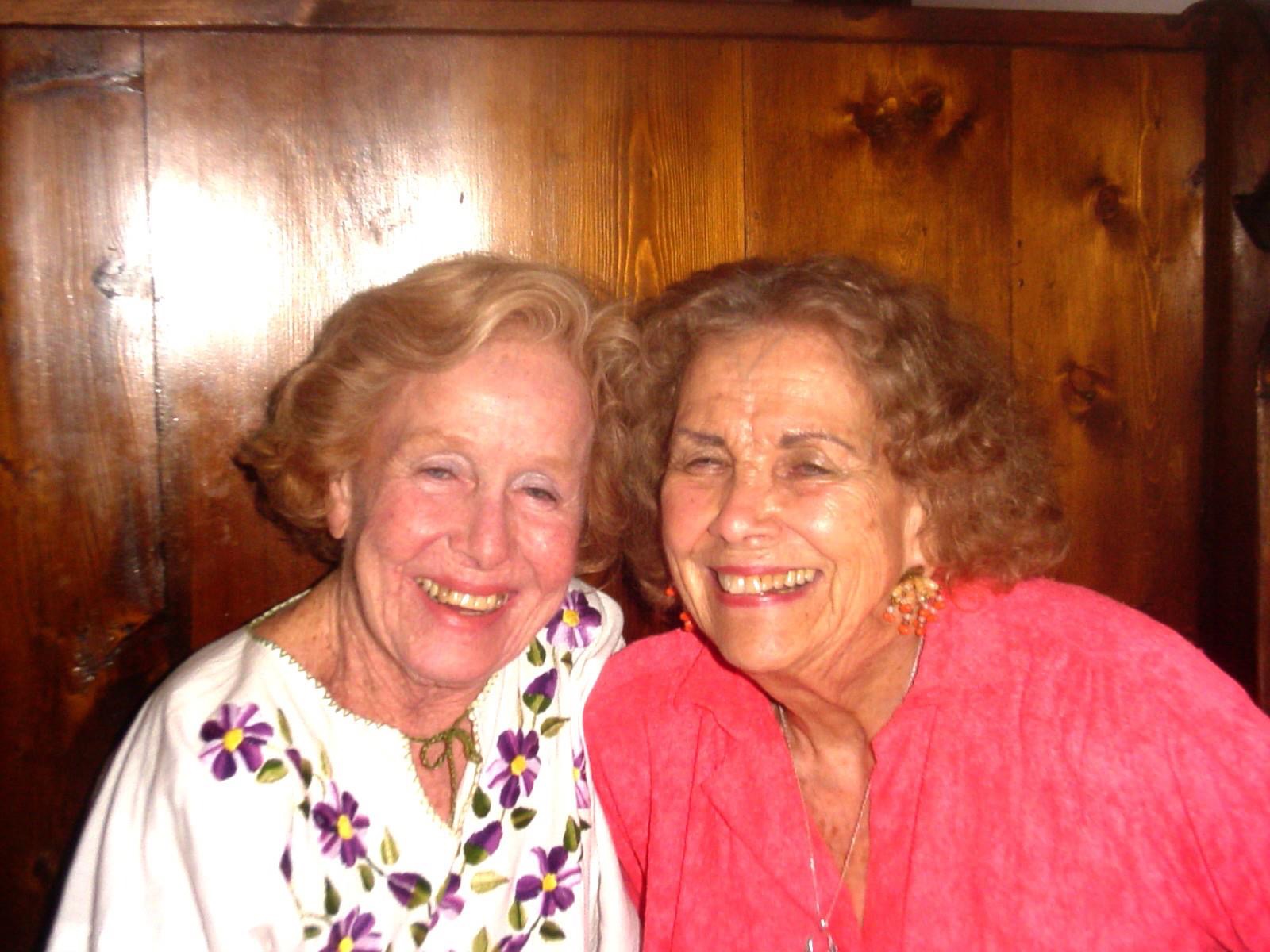 stories up, as I recall, and neither of them was a spring chicken at that time, but they were the dames de grandes of the Abode. I sometimes felt anger that the Abode couldn’t get her down to a ground floor (and Aftab, as well), but I also heard that she wouldn’t stand for it. It was in the days of the Abode when no one had their own bathroom, although Rabia managed one; I never saw it, because the one time I had arranged to go and stay with her, physical problems intervened, and it didn’t happen.
 All these memories span some 40 years of friendship, and they are not necessarily in order, but come as they come. I cannot say exactly when they took place, but this is what I remember. And our Rabia was quite the extrovert, and I suspect that these memories of mine will not at all rival the memories of any of her ten thousand friends, because I don’t believe she ever met anyone in her life who was not a friend.
 In her last years at the Abode, tragedy struck: walking down the road one d
 Merton, and as we read, nodded sagely and exchanged looks of understanding. It was a communion of heart and soul. The first afternoon, we took her to the Nasher Art Museum, and had lunch and saw the exhibits. She was appalled at the price of her lunch, and grumbled about it for the rest of the afternoon, but she also enjoyed herself thoroughly (as I recall, we spent about $10 on her; we tried to hide the check–really!–but she managed to find out). Rabia loved to eat, but there were limits!
Two Dog Nights

I have this cool page I keep bookmarked in my browser bar. It’s a page that keeps account of whether Mercury is retrograde or not. Most New-Age-y types such as myself know about the Mercury retrograde thing, but in case you don’t, here is a link to the Wikipedia page on the topic.
If Mercury IS retrograde, the page informs me: “Yes. That may account for the weirdness.”

If it is NOT, then: “No. Something else must be bumming you out.” I love the Sixties language of these two responses. Not being a scientist OR an astrologer, I am not about to try to explain this idea to you, but what I do understand is that if Mercury IS retrograde, things are likely to not exactly turn out the way you expect them to. It is not a good time to start new projects, supposedly, or to try to go places or do things. The results may not exactly be bad, just unexpected. This is the short version. Obviously, there is much more to this whole Mercury thing. I have at least two friends who are Vedic astrologers and would probably scoff at this explanation, but There It Is.
Now, whether or not I believe in astrology kind of depends on which day you ask me about it. Sometimes I do, and sometimes I don’t. My teacher, Hazrat Inayat Khan, says that this kind of belief tends to fall away as the soul evolves, and has less and less influence. That makes sense to me. Yet as an Indian, he had great respect for these occult sciences:
The science of astrology was based on the science of cosmic vibration. Everything depends on vibratory conditions, including the position of the stars and planets, individuals, nations, races, and all objects. A great deal of the secret power, which the Hindus have found in the science of music, has been derived from the science of astrology. Every note of Indian music corresponds with a certain planet; every note has a certain color; every note denotes a certain pitch of nature, a certain pitch of the animal world. — Inayat Khan
It seems that, whether or not the soul grows beyond the science of vibration, life is always governed by it.
I have been struggling with some big issues lately, and I cannot deny that I have been letting them get to me. So last week I came up with the idea of taking off for the beach for a few days, and my husband liked the idea. We did not think to consult my Mercury page, and I am wondering if we should have. I doubt that if I’d known that old Mercury was in retrograde that I would have decided not to go, but maybe. I guess it would depend on whether it was a day when I believed in such things (skepticism is a convenient thing!). In any event, we set off for the beach with our little Westie (West Highland White Terrier), and for the most part, all was well. The weather was good for this time of year, and we had rented a cottage on the beach. I find Sister Ocean to be very healing.
However, friends, it was a WEIRD week. The morning after we got there, my husband and I decided to take off for Ocracoke Island, just because we love the drive through the National Seashore. Prior to that, however, my husband took our little Westie (aka “Spud” aka, formally, Hamish) for a walk on the beach.  Thinking he might be able to let him off the leash for a bit to frolic in the waves, he did so, and immediately Spud took off for the nearest houses, quickly disappearing. Westies are bred to be vermin-hunters, and they move FAST. My husband took off to look for him on foot and I took the car, terrified that in the fast-moving traffic on the beach road he might be killed very quickly. Continuing in the parlance of the 60s, what a rush! I was terrified. He is my child-substitute, my own human children being officially grown-up.
The beach, at this time of year, is mostly deserted. Most of the vacation houses are closed down, and one would think there was no one around: but not so. Immediately, a man appeared across the street, saying he’d seen Spud and would go look for him on his way to work. My husband had disappeared to somewhere he thought he might have scampered off to. I continued to panic, slowly driving and looking for the little devil between houses and lots and dunes. Turning onto a side street, I saw my formerly unknown neighbor driving toward me, and he had my little guy in his front seat. He said he’d seen another neighbor taking him up to his house to try to find his owner, and all was well. The whole enounter was a friendly and kind one, resulting in our getting to know a few neighbors we hadn’t known were there, when we thanked our other new neighbor and his mother, both local real estate mavens. I wanted to murder my pup, but that would have been counterproductive. My husband and I, who had been kind of cranky and strung-out that morning, were in a completely different space. We were flooded with gratitude and relief, and we put our little man in the car and headed off to look for breakfast and a ride up the beach road. It is amazing how a simple incident can change everything.
Mercury retrograde.
 When we reached the Hatteras ferry, we were feeling adventurous and positive, and as it happened, a young man wearing a big backpack and carrying a camera spoke to us, and we ended up having a pleasant conversation with him. His name, he said, was Juan Pablo Cardoña (great name!) and he is from Colombia. He is creating a blog for the folks back home, in order to show them how to travel with very little money. He had started his trip, as I recall, in New York City, and had traveled through Philly, DC, down the East coast, and was now headed–on foot–for Ocracoke and then to Cedar Island, and on. He planned to return to his parents’ home in Orlando to sort out his photos and write his blog. A nice kid (well, anyone under 30 is a kid to me; he is 26). We gave him a ride into Ocracoke Village,
 and he had to decide where to spend the night. He had so far slept in at least one church, camped out, been offered accommodations by people he met, and he was kind of up against it on Ocracoke, as the campgrounds are closed at this time of year. But we gave him a small tour of the village and parted with him since we were going in the opposite direction, and the next day, he contacted us on Facebook to let us know he was okay. I hope he still is. Again with the 60s theme: I was reminded of those days when people like me took off for parts unknown whether or not we had money, quite often barefoot.
And given the number Mercury was doing on our lives, I hope he’s okay!
 My daughter brought our other two dogs down to spend a couple of weekend days with us: we had (notice the past tense) two aging Shelties (Shetland Sheep dogs, aka “miniature collies”), both fairly elderly. The older one had a rough time climbing the steps to our cottage, and we had to haul him up. On Saturday morning, as we were about to head out for further adventures, I was sitting on the back porch meditating. I was listening to the waves, and as well, I had the earphones to my iPod in my ears. I was aware of a distant whining, but I thought it was our young Westie, who gets kind of excited about things. When I got up, I saw that our oldest Sheltie was in obvious distress, heaving and whining, unable to respond to anything. It was clear to me that he was very likely dying, and while I was essentially okay with that (he was, after all, quite old), obviously I was distressed. My husband and my daughter carried him to the car to find a vet, and I stayed with the other dogs. Of course, he was dying, and the nice young vet they found put him out of his misery and soothed their feelings of guilt and didn’t charge a penny for doing that. In these days when medical care for one’s animals costs as much as it does for human, that was really quite decent.
And that was that.
Mercury?
Do animals project their thought and feeling upon the human being? Can man reflect the feeling of an animal? Yes, sometimes human beings who are in sympathy with a pet animal feel its pain, without any other reason. The animal cannot explain its pain, but they feel how the animal is suffering. Besides, the most curious thing is that on farms one sees shepherds, reflecting the feelings of the animals; they make noises, sing, or dance in a way that resembles animals’ sounds and movements, and show in many ways the traits of animals. – Inayat Khan
What is it, though, about having a well-loved animal die? One feels so responsible for its welfare! And I am reminded of something the psychic Edgar Cayce was said to have given in a “reading:” animals, he said, don’t have individual souls, but rather a group soul. I don’t know whether that is true or not, but I have noticed that at the moment of death, the animal’s presence leaves quickly, and there is no fight, no resistance to the moment of death. Just as our animals love and serve us in life, they are willing to die without resistance. We were and are heartbroken, but he died a good death, our Wellington the Sheltie, no doubt returning to the Great White Sheltie in the sky. Why not? He is with Maggie now, although of course we are anthropomorphizing (to say nothing of philosophizing).
What can we say about Wellie? Another saintly dog. This makes sense, as he was raised by Maggie, who taught him how to be a loving and kind-hearted dog. I never saw him growl or bite in a mean way, only a warning one. He barked far too much, but he was, after all, a sheepdog. He did nip at the mailman’s heels once, but after all, he was herding him! Our nice mailman understood. Wellie loved his family most of all, not having much use for anyone else, as is typical of the breed. It is fascinating to me how different breeds of dogs have such completely different personalities: Shelties are incredibly intelligent and well-behaved dogs. “Just give me a copy of the job description, and I’m on it,” they seem to say, and so it is. Spud, on the other hand, is a feisty little so-and-so, empathetic and loving, but far more independent. He loves everyone. An opportunist most of all, his predominant answer to any request is “What’s in it for me?” Not so with a sheepdog. They are on the job at all times. We have one cat, Sita, and her general attitude is “leave me alone,” unless, of course, she doesn’t want to be left alone, in which case we’d better comply. I am quite fond of Sita, but ultimately, I am a dog person. 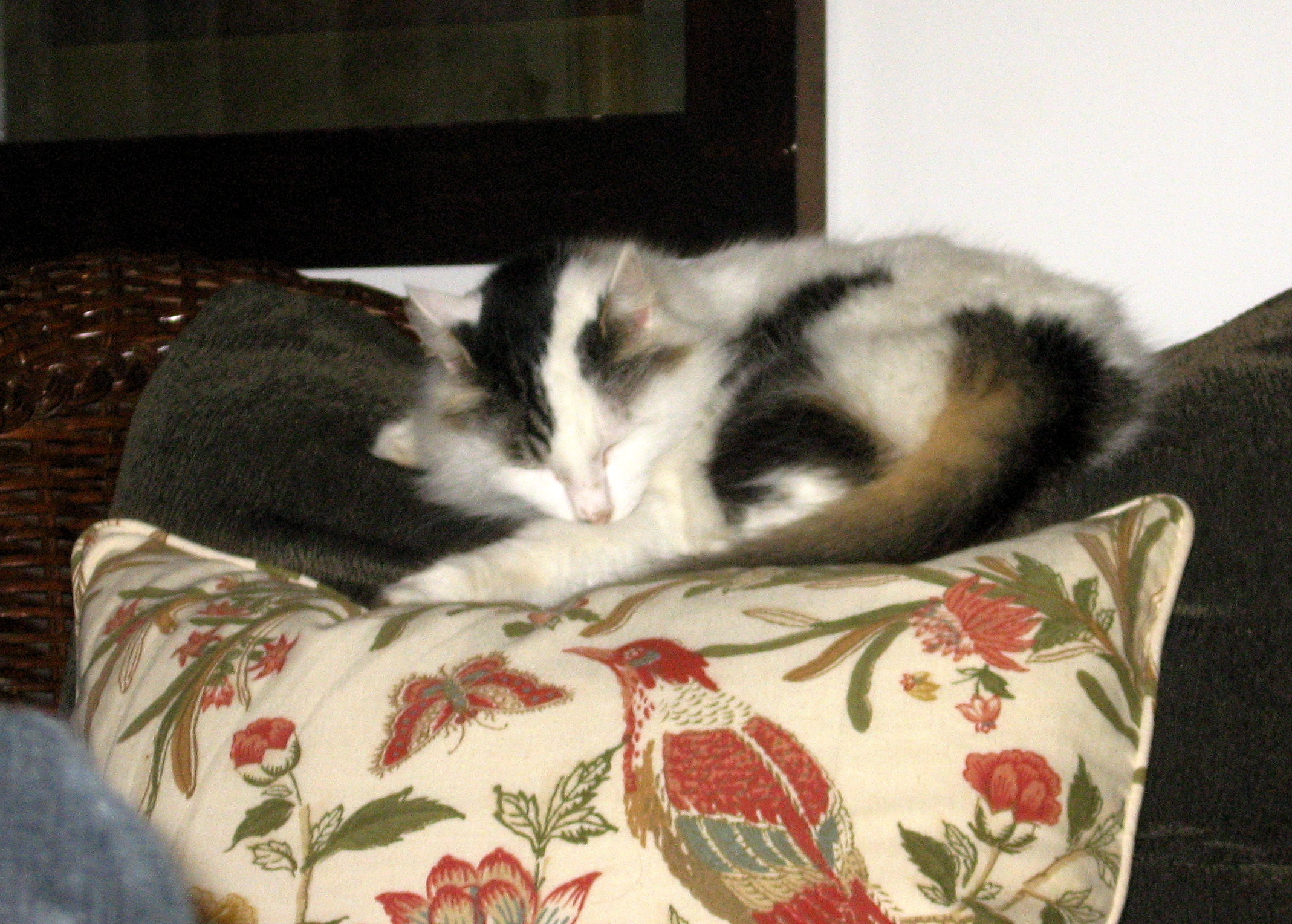
If we can distinguish ourselves from other beings, it is only in the things that animals do not do that man can be different from them. When it comes to eating, do not both eat? Both sleep; both seek comfort. Man does all the things that animals do; man can only be greater than animals in things that they do not do. And what are those things? Building houses? Birds can do this. Ability to fight? Animals and birds fight. The showing of art and skill? Animals can show these things; think of the spider and how it weaves its web; it is wonderful.
Man was created in order that he might overcome that which animals have not overcome. – Inayat Khan
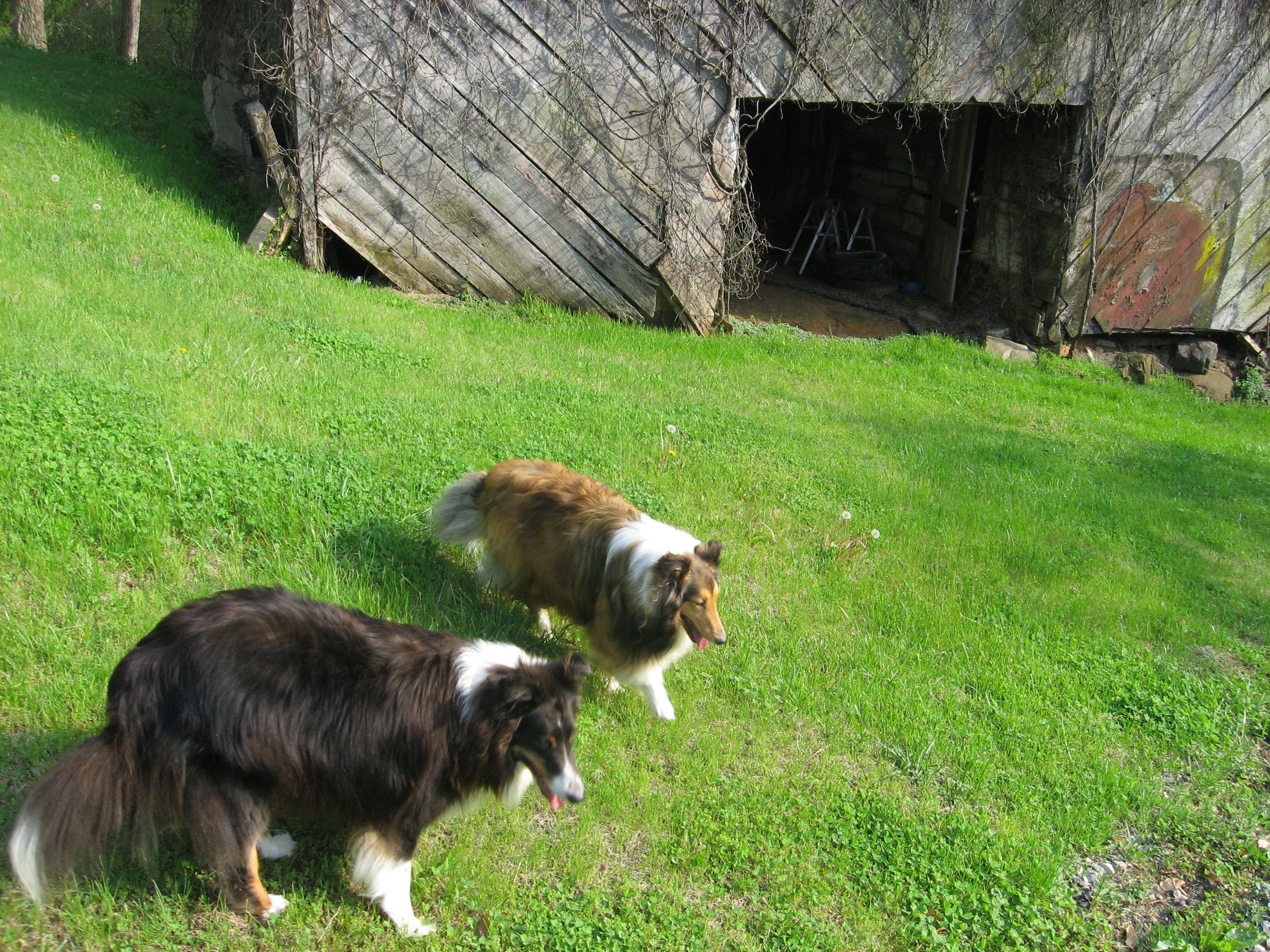
Our surviving dogs, now that we are home, are wandering around looking as if they don’t quite know what has happened. It is particularly hard for our second Sheltie, as Pippin is only a couple of years younger than Wellington. Spud is our “gap dog,” because we knew this day was coming, and figured Pip would want a pal to get him through, and it seems to have been a good idea. I suppose in a year or two, we will need another “gap dog.” Everyone should have someone to hang out with.
Some of our friends do not want to have animals. Animals tie them down, they say. They are a lot of trouble. To my way of thinking, animals are the real teachers of humanity:
Nature does not teach the glory of God; it need not teach this as nature itself is the glory of God. People wish to study astrology and other subjects in order to understand better, but if we study astrology then we are sure to arrive at an interpretation which is given by a man, whereas what we should read from nature is what nature gives us and not what any book teaches us. There comes a time with the maturity of the soul when every thing and every being begins to reveal its nature to us. We do not need to read their lives, we do not need to read their theories. We know then that this wide nature in its four aspects is ever-revealing and that one can always communicate with it, but that in spite of this it is not the privilege of every soul to read it. Many souls remain blind with open eyes. They are in heaven, but not allowed to look at heaven; they are in paradise, but not allowed to enjoy the beauties of paradise. It is just like a person sleeping on a pile of gems and jewels. From the moment man’s eyes open and he begins to read the book of nature he begins to live; and he continues to live for ever. — Inayat Khan
We are home now, and our dogs are with us. For the forseeable future, we will be having Two Dog Nights. Yet best friends never entirely leave.
The Tao of Change
An anthem of my generation, and resonant with uncontrolled change of this day, as well:
Coming Home
Oh my Love, my dearest One,
The one I see with sightless sight, who speaks with voiceless voice…
What else can I ask
but that we forget all this nonsense that causes this monkey-mind to chatter away,
this heart to worry
and this soul to wear away from its body, bit by bit.
Just continue to work on your art, paint this sonata you are composing
and play it for both of us.
We both know the rest of it will take
care of itself, because that is what You do.
This one, that one, all will, in their own time, come into their own,and I will come home as quickly as I can.
Just keep waiting.
Just keep being the one who never says No.
Human Rights Day
In 1948, under the leadership of the United States and the prodding of Eleanor Roosevelt, the UN General Assembly proclaimed December 10 to be Human Rights Day, to bring to the attention to the Universal Declaration of Human Rights as the common standard of achievement for all peoples and all nations. Today, 66 years later, America faces the reality of police brutality, CIA torture, and the imprisonment of a larger portion of our population than any other modern nation. What happened? –Robert Reich
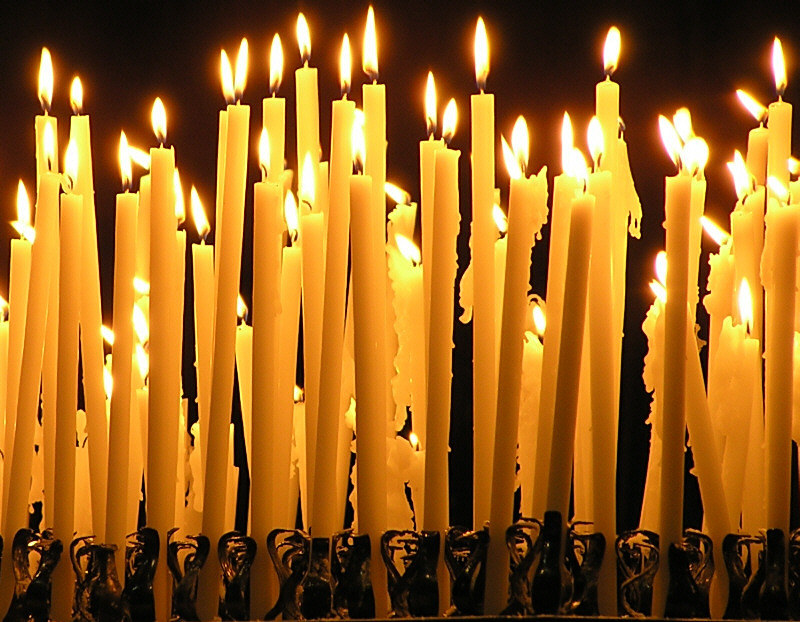
In the early ’80s, Amnesty International began to celebrate Human Rights Day with the Sufi Order International’s Universal Worship Service. The Universal Worship, instituted in the early 1900s, is the “Church of All and of all Churches.” The service involves an altar set with a semi-circle of candles representing the major religions of the world, with a larger candle in the back, in the middle of the altar, and one in the front. The Cherag(a) or Priest(ess) goes from candle to candle, lighting each one from the large candle in the back:
“To the glory of the Omnipresent God, we kindle the light symbolically representing the Hindu religion… the Buddhist religion… the Zoroastrian religion… the Hebrew religion, the Christian religion… the religion of Islam…” and finally, lighting the candle in the front,

“To the glory of the Omnipresent God, we kindle the light symbolically representing all those who, whether known or unknown, have held aloft the light of truth amidst the darkness of human ignorance.”
 In 1981, I was living in Nashville, Tennessee, where I’d come to start a Sufi center, and we held a Universal Worship for Universal Declaration of Human Rights Day at Peabody College, inviting religious leaders from all over the city to take part in the service, lighting the candles for their own religions, and reading scriptures from them. In the congregation was a young Vanderbilt Divinity School student who had been attracted to the service, which I happened to conduct, so he saw me first, at the altar, in the light of the candles, wearing my white robe. After the service, he came up to me and said, “I was watching you all during the service, and you look like a truly religious person.” Inwardly, I chuckled. “It’s you!” I thought, and so it was. It seemed to me that God had a good sense of humor, because here was this buttoned-up Div School student, and there I was, a flighty hippie with hair down to my waist, wearing Indian clothes. He said that as he tried to sleep that night, he heard an orchestra playing in his head, “heavy on the brass.” If you know me, you will enjoy that. He later told me he thought as he saw me in the blinding white flood lights, “My God! Who is that woman?”
The rest is history.
It took us awhile to figure out what to do with each other; six years, in fact, because he was a United Methodist minister, and I was a flaming Sufi, and I knew I couldn’t be a minister’s wife, and he knew he could never fit the likes of me into his congregation. Eventually, all those considerations fell away, and it was time for us to be together, and 33 years later, we’re still going strong.
So yes, the world is still going to Hell, and the earth plane is a terrible and dark place to live. And somehow, sometimes, we still kindle the light of love, of freedom, and most of all, the “light of truth amidst the darkness of human ignorance.”
1Then I saw a new heaven and a new earth; for the first heaven and the first earth passed away, and there is no longer any sea.
2And I saw the holy city, new Jerusalem, coming down out of heaven from God, made ready as a bride adorned for her husband.… –Revelations 21:1-2
Let freedom ring.

Pir Vilayat Inayat Khan
Just wanted to post a YouTube of my beloved life’s teacher, Pir Vilayat:
Rivers Run Back
I cannot deny it: I am an obsessive reader. I read for pleasure, I read to counteract misery, I read when I’m bored, I read when I’m not bored, I read while I’m eating (if I’m alone), I read while watching television (and miss most of what’s on TV), I read in the car during trips and, well… you get the picture. I like to think I don’t read just anything, and I don’t. I also like to think I am not one to read murder mysteries, but the number of them I have now read is mounting, and I’ll have to do some thinking about why I enjoy them occasionally. Oh,  wait, I’ve got it: I like the ones written by people who can write. That’s it! That’s the ticket!
Recently, Joyce Yarrow came into my life through other avenues, and I just read her book with Arindam Roy, Rivers Run Back. I like Joyce a lot, and so I wanted to read her novel, although one can get into a LOT of trouble in reading the work of friends. In my case, the pile of stuff I have waiting to be read seems to constantly grow, and people don’t always ask you politely to read their stuff. A lot of them seem to simply assume that you will want to do them the favor of being a “test reader” for what they write. I tend to avoid those kind, through some cussedness of my own. I personally am quite hesitant to ask people to read what I write, but as usual, I digress: I want to talk about this book.
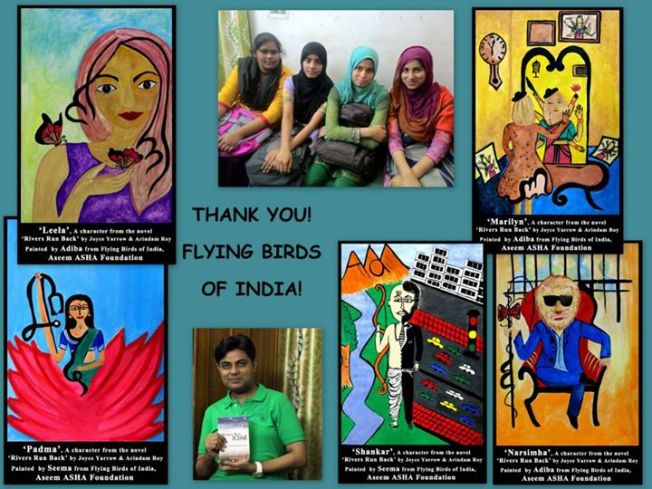
First, however, let me tell you about the pictures you are going to see here: they are the work, overall, of the Flying Birds of the Aseem Asha Foundation of India, and each one is a painting of one of the characters in the book. If you have some disposable income and want to feel you are contributing to a worthy cause, you should check out the work my good friend Aseem Asha is doing with the most marginalized of children in India: he is teaching them to make films, he is teaching them technical skills, he is teaching them to express their creativity, he takes them to museums and holy places and other places they need to know about in their own country. He is teaching them to improve the community they live in and he is teaching them to think. He helps them with their schoolwork, he helps them to learn English, he teaches them to minister to those less fortunate than they are, and he clearly loves them. He does all this on what is probably well below a shoestring budget. He started by opening his very own personal room in Delhi, and the children flocked to come to him after school, and more children kept coming and coming, Hindu, Christian, Muslim and all. Now, through the help of friends, he has a little more space and a bit more money, and they still come, increasingly. You can find the Aseem Asha Foundation on Facebook; they do not have a website yet, although that is in the works, and you can find Aseem here: (aseemasha@gmail.com). I’m sure you can find some of the films the kids have made on YouTube, as well. Just do a search for Flying Birds. To get back to these paintings, they are the work of Aseem Asha’s “Birds,” and you will love them. See below.
Now, to the book:
In literature and mythology, a river signifies the flow of life’s journey. Ganga, the lifeline of India, flows back thrice in its course. It changes its flow from Dakshniayan (southern) to Uttarayan (northern). The title of this book, Rivers Run Back, is inspired by Ganga’s backward flows and introspections. Ganga changes its course first at Uttarkashi, Uttrakhand. Then it turns back at Varanasi, Uttar Pradesh, and finally, it runs back at Sultanganj, Bihar. In India, the yearning of rivers to run back signifies the deep introspection experienced by all of us— male or female, Eastern or Western— during the different stages in our lives. A woman, on her life’s journey, looks back thrice. First, she turns back for a last look at her paternal home, when she leaves to start a new life with her husband. The second time she turns her life around to nourish a new life within her when she becomes a mother. Then, when her children leave, she again turns around to give a new meaning to her empty nest. She adapts to the transitions as she flows with life. As the characters in Rivers Run Back search for their identities, their journeys are within and without, spiritual and spatial, from one culture to the other. The narrative crisscrosses nations, histories, politics, and crime. It celebrates universal humanism, liberal democracies and the ardent belief in the goodness of life and living. Nothing remains the same. Everything returns. Everything changes! — Joyce Yarrow & Arindam Roy, Rivers Run Back (2015)
The mythos that I was raised on as a spiritual infant taught me that the rivers Ganga and Yumna are consorts that run each in its own direction, converging with the subterranean river Saraswati at the end of each aeon in Prayag, an ancient spiritual center, purported to have the most fertile land in India. Ganga, while the recipient of all kinds of filth created from the birth pangs of modern India, has a mysteriously pure water, a water that even scientifically holds up to scrutiny of its reputation. When a person dies, the Hindu custom is to put two drops of Ganga water in their mouth so that the soul may be cleansed of its sins and ushered forward on its journey. People continue to bathe in Ganga despite everything that finds its way to it, and somehow retain their health. It seems there is a mysterious “X-factor” in the water than ensures this (http://www.npr.org/templates/story/story.php?storyId=17134270)
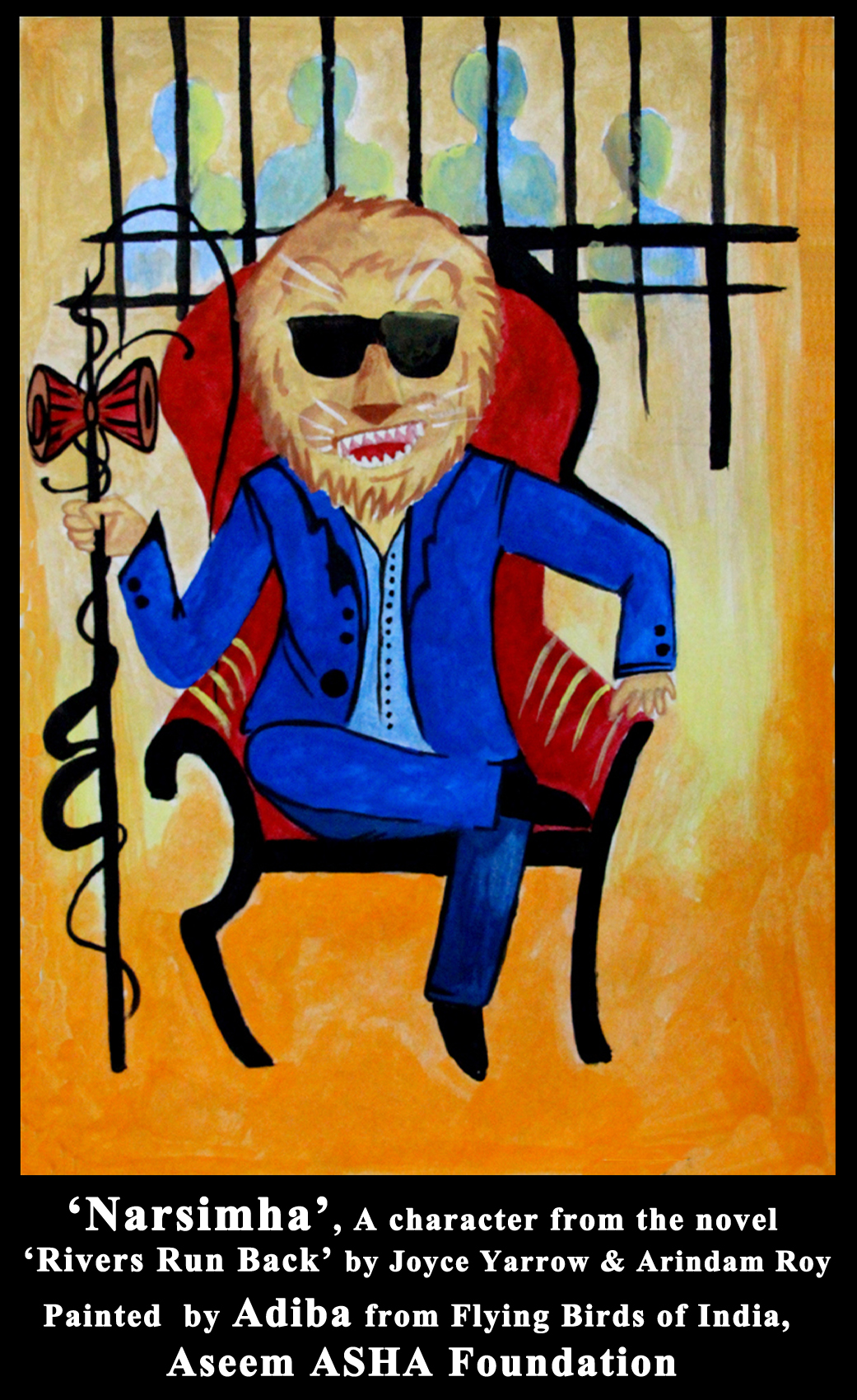 This is a story that sweeps across cultures, time, and spirit, a story that Ganga and its mysterious qualities runs all through. It is a story of the eventual outcome of will and the triumph of spirit. It is, however, even more: it is about about chance and change and who lives and who dies. The part of it that is a murder mystery is fairly minor, because it illuminates a number of different beings, beginning in India, 1960, which in itself surprised me–although not much–because the event that triggered all the rest, the birth of an illegitimate child, was set in the context of an entrenched Brahmin family for whom such an occurrence was quite unacceptable. The baby born was Narsimha, meaning Lion, and he grew into a force that seeded growth and tragedy both:
There was no naming-ceremony for the baby, born amidst strangers and unwelcome in the world. On the 12th day after giving birth, his mother gently inserted a betel leaf in his right ear and whispered across it, “Narsimha. You are called Narsimha Sastry. You will survive in spite of everything.” The first name signified man-lion. She wanted him to be fierce. The surname meant brave one. The naam-roop— name that shapes character— did its work. His baby cry was ferocious. Tulasi was proud of her baby boy, although his wails and cries forced her to relive the terrible events following the revelation of her pregnancy…. — Joyce Yarrow & Arindam Roy, Rivers Run Back (2015)
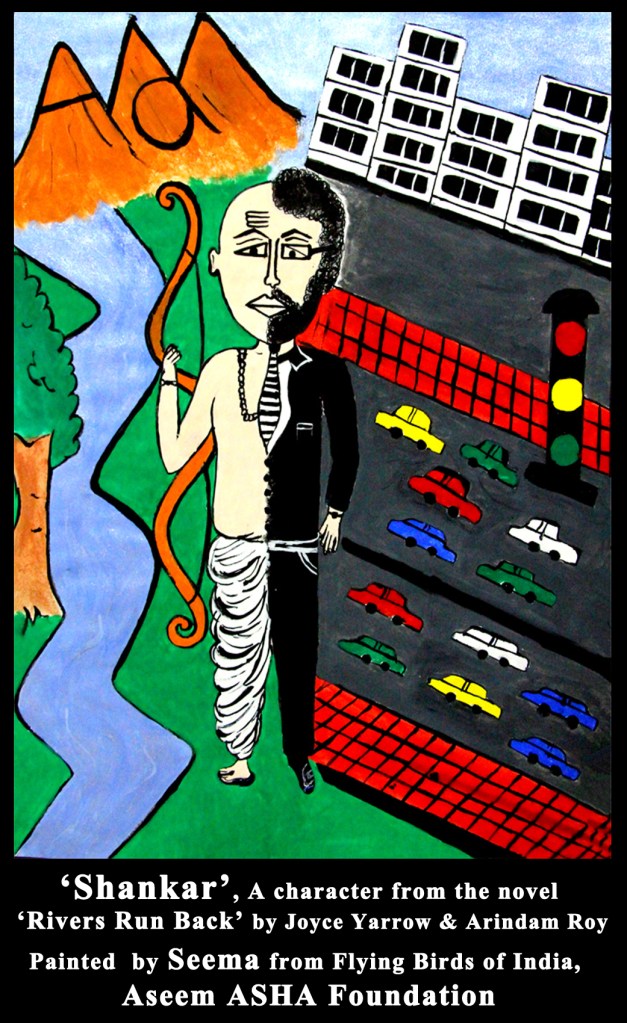 I am determined to write this response to the book without “spoilers,” as you may want to read it too. But let me say that as a psychologist, Narsimha presents a fascinatingly accurate portrait of a developing antisocial personality. On the one hand he has plenty of reason to go wrong, yet at the same time, he could have gone either way. I suspect in this day and age we would say he has an “attachment disorder.”
 As Narsimha is growing up under the cloud of shame and outrage surrounding his birth, so is Shankar,
a boy growing up in wealthy circumstances, loved and cosseted, although with a controlling mother who places certain expectations on her only child. Eventually Shankar escapes to New York City to teach at a university, although he may only have dimly realized that was what he was doing. Shankar presents an interesting picture of a man who is in some way at war internally, a war between intellect (and its ambitions) and spirit.
Seven thousand miles away in New York, Marilyn is growing up in a similarly comfortable family, but one without the spiritual heritage that gives meaning and constriction both to Shankar’s life. Her demons are interior ones, but she has an uncle, Sven, who helps her to develop her talent, support her, and find meaning. However, the events of her life, combined with her own innate constitution, cause her to develop a severe bipolar disorder, a disorder to the point of psychosis. The lack of understanding of her parents, her own loneliness and the resultant lack of self-esteem have caused her to develop an interior “voice” that invariably works to undermine her self-confidence. As might be imagined, she and Shankar find each other, and eventually have two children, Padma and Leela, who constitute the main cast of characters of the book, although one of my favorite characters, Dusty, enters briefly at a later point. Padma, it seems, is her father’s child, an almost too-goo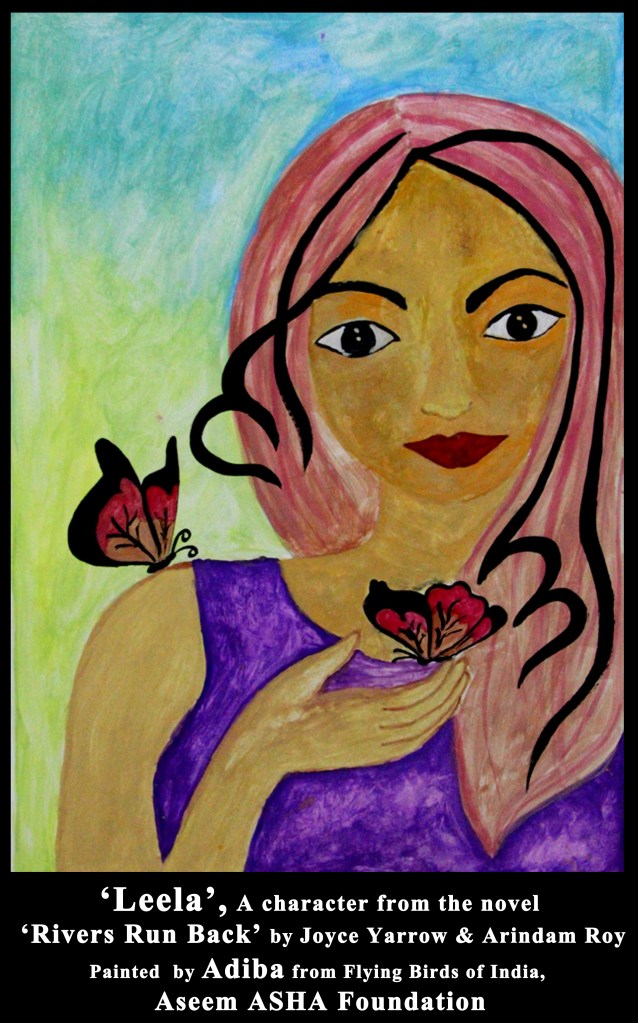 d-to-be-true character, while Leela is more similar to her mother in her inability to sacrifice her own individuality for the greater good of the family.
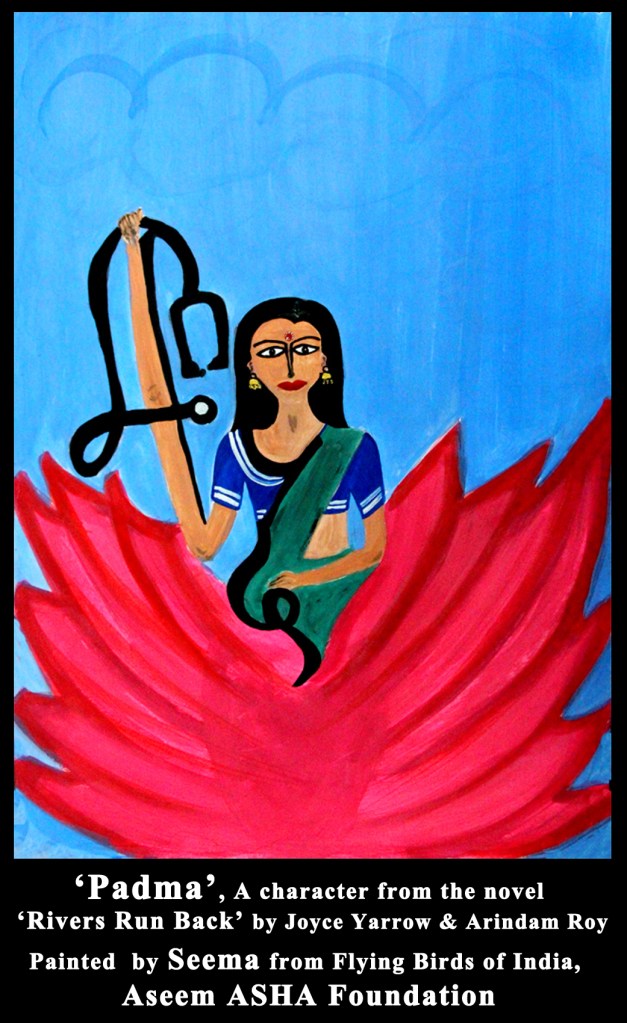 Thus, we have a family growing, both as individuals and a unit, and all the time their nemesis Narsimha, unknown to them, is growing in his own direction. Most of the book is constituted by the thought-provoking development of its characters, only turning into a real detective drama toward the end. It is, I think, far too intelligently written to be confined to that genre. It is a book about the growth of soul. Along the way, who lives and who dies? Or to use a better phrase, who prevails? This is a fascinating read that flows out of its origin–India–to the West and back again, illuminating the development of its characters in the context of their cultures and traditions, on the backdrop of modernity. I keep wanting to tell people: please do read this so we can talk about it!
I just didn’t want it to end when it did. Let me know what you think.
from an anonymous Tibetan
You say you are bombing ISIS/Daesh in Syria:
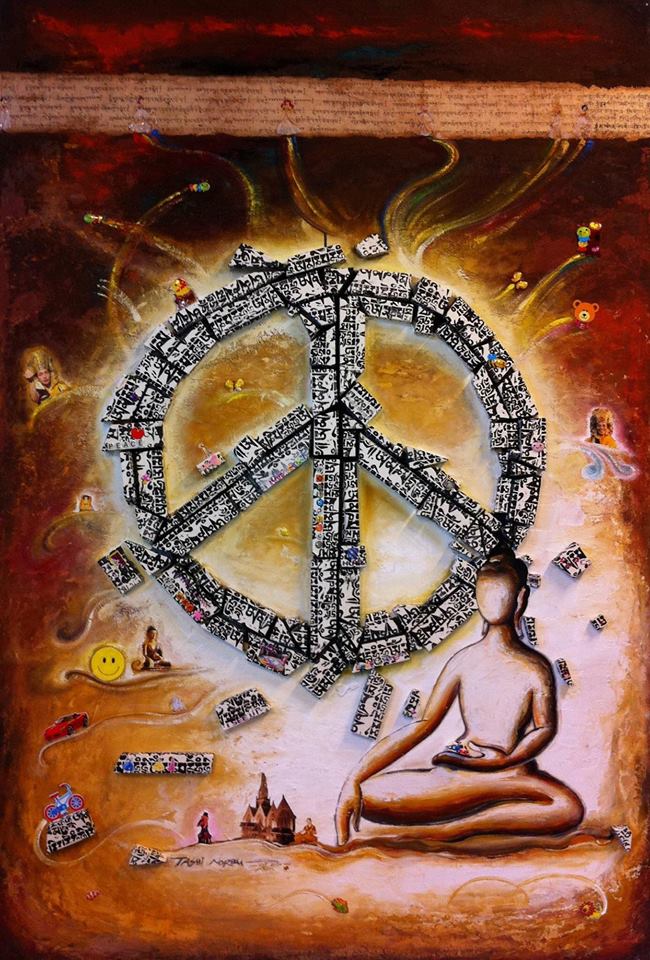
I wonder what ISIS looks like from the sky?
You may be bombing suspicious villages that are already war-torn rubble!
I wonder if there are houses full of children, women, and old menwho could not escape. . .
You say ISIS attacked France
In the name of radical Islam, and you may be right, but what if you’re not?
I wonder what do I call those women, children, and old men in the rubble.
Enemies?
I wonder how I should feel about people who lost their livelihoods, their culture destroyed in days,
People who saw their parents, children, siblings and friends blown to unrecognizable bits.
What happened to Paris is horrific:
Our emotional scars will take a long time to heal.
But how have our retaliations changed the world for the better?
Will Iraqi children, Syrian children, Libyan children, Palestinian children, Afghani children forget everything that happened to their countries and their parents and their siblings and their friends overnight?
I am a refugee.
I wonder what I’d I be if you hadn’t shown your generosity before the so called norm of ignoring me.
If you saw creed, dogma and religion before compassion.
Does compassion see creed, dogma and religion?
Is love in itself a language or does it have to undergo political sanctions?
I wonder
How many us of have died..
How many as we read these lines are dying.
The Howling
Sometimes
If I beg long enough,
Desperately enough,
Loudly enough,
Softly enough,
Prettily enough,
Sometimes if I knock on your door long enough,
Trying my best to convince you to open it,
You open it just a crack, enough to allow
me room to slip through.
The ten thousand things tug at me,
The hungry ghosts howl
and rattle their chains,
Gnash their teeth,
Whine,
Clutch,
Lay guilt trips on me…
Babies cry,
Responsibilities plead,
Clamor for importance.
They reason,
They moan,
They rage.
And I hover on the threshold:
A woman, after all!
I have thousands of children,
And so much dust.
So many details, such an outcry!
Someone is hungry,
Someone is angry,
Everyone needs something.
I am the Mother of the World.
But you beckon me, there on the threshold,
and guiltily, I slip through.
Someday
There will be no door
And no threshold,
And no one to consider what is most important. – Amidha Porter. M.A.
Symptoms
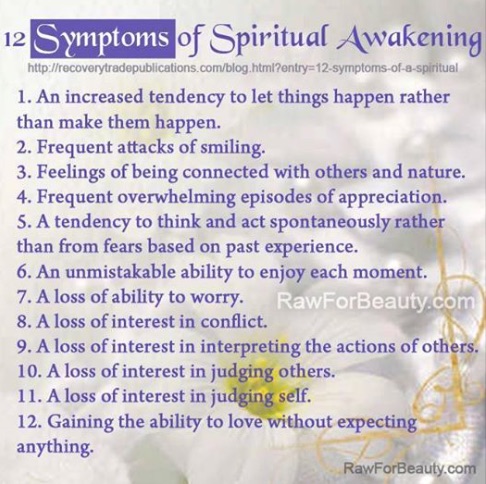 I saw this on my Facebook page this morning, and it took me awhile to figure out why I wasn’t happy with it. It seems to me that all these “symptoms,” while no doubt true of the early stages of awakening, mostly bespeak spiritual narcissism. In Zen parlance, a clinging to these states denotes the “stink of enlightenment,” as a very real experience–awakening– eventually becomes an ego trip, if one does not continue to go forward and clings to the original experience. In reality, life is very hard, and as one climbs the ladder, one increasingly partakes of the broken heart of humanity as God weeps for its creation. Those who knew the Inayat Khan family, for instance, spoke of the deep feeling of sadness that often emanated from Murshid, and the feelings of grief and depression in his and his wife’s quarters. The Begum often suffered from depression and grief, and Murshid was often made sad by the behavior of his students and the misery of the world.
” In our everyday life there are times when a sadness comes, and it seems as if everything in the world, even the voices of beasts and birds, cause sadness. Then again comes the hour of profound joy. At that time the sun helps to give joy, and the clouds covering the sun also give joy. The cold, the heat, the friend, the enemy, all help to give joy.” — Inayat Khan.
Then again:
“The attitude of looking at everything with a smile is the sign of the saintly soul. A smile given to a friend, a smile given even to an enemy will win him over in the end; for this is the key to the heart of man. As the sunshine from without lights the whole world, so the sunshine from within, if it were raised up, would illuminate the whole life, in spite of all the seeming wrongs and in spite of all limitations. God is happiness, the soul is happiness, the spirit is happiness. There is no place for sadness in the kingdom of God. That which deprives man of happiness deprives him of God and of truth.” — Inayat Khan.
Yet again:
“If sorrow and sadness have no reality, why then did Christ say, ‘My soul is exceeding sorrowful?’ We must distinguish between the human side of the Master’s life and the divine side. If the human side were not human, then what would be human? Why does God send His message to humanity by. a man and not by angels? Because only a human being knows human beings. He knows them from having experienced human limitation.
That he felt sadness is the most beautiful side of the Master’s life. If he had not, how could he have sympathized with those who are sorrowful? If we were all born perfect there would be no purpose in human life. The purpose of life is that we grow towards perfection; from the greatest limitation we grow towards perfection. Its beauty is in acquiring wisdom, in living at the cost of all our failures, our mistakes. It is all worth while, and it all accomplishes the purpose of our coming to the earth. –Inayat Khan.
There is a hidden quality, and there is a quality which is manifest. What is manifest we recognize; what is hidden we do not see. There is going forward and there is going backward, there is success and there is failure, there is light and there is darkness, there is joy and there is sadness, there is birth and there is death. All things that we can know, feel, and perceive have their opposites. It is the opposite quality which brings about balance. The world would not exist if there were not both water and earth. Every thing and every being needs these two opposite qualities in order to exist, to act, and to fulfill the purpose of life; for each quality is incomplete without the other. — Inayat Khan
We don’t want to be sad. We want to believe that spiritual awakening will relieve us of the pain of our lives. Yet eventually we come to see that we are here to struggle and win, to struggle and lose, to be angry and to weep, to laugh, to dance. The ego, like the poor, in the words of Christ, will always be with us, and sadness is as inevitable as joy. As C.G. Jung says in speaking of the Shadow archetype, it is the source of our growth and creativity, and the creator of our sadness, and ultimately, our joy. Yet the soul’s birthright is joy.
The Last Alaska Chronicle
Have been thinking, lately, about the place that still seems like home, and thought I’d “reblog” this. . .


(We lived up in Alaska for some seven years, and I heard and told a lot of stories, many of which made their way into group emails to friends and family. It has always been my intention to turn these into a book, and they’re on their way, after several incarnations as research papers and dissertation segments, and I believe they’ll make it, but not yet. I came across this one tonight, though, and it remains in its original state; and it made my heart turn over with love and pain. I’m pasting it in here “as is”…)
Dear Friends,
I’m sure that some of you read the “subject” of this message with a smile, remembering the series of “chronicles” I sent when our family began this Alaskan adventure some six years ago. Others of you are new friends discovered along the way, and may fit into one or more categories…
View original post 3,939 more words
Gaslighting
And now for a brief retreat to more mainstream psychological issues, I would like to recommend an excellent essay shared with me, this moring, by someone who ought to know. I never thought of this term–Gaslighting–for this particular syndrome, but it’s in there with other “dysfunctional family” issues, as well as individual ones such as borderline syndrome, narcissism, and even antisocial personality syndromes. I recommend it if you feel that you may identify with any of these, or love someone who does:
Your gaslighter does not see you. You are a shadow standing to the side, trying not to attract attention, while he showers his image of you with love and attention. And no matter how much your mind is in knots, you know this to be true.

Here’s where to find the rest: https://medium.com/@sheaemmafett/10-things-i-wish-i-d-known-about-gaslighting-22234cb5e407
How Do We Forgive Our Fathers? by Dick Lourie*
Recently I learned that I can only “reblog” things once, and only after I deleted something I’d “reblogged;” but I’m going to do this one anyway, for it is, again, Father’s Day, and well….read below. Some clever person posted the trailer from the film, “Smoke Signals,” that it was recited in, so do check that out, too . . . And see the film! It is wonderful!
How do we forgive our Fathers?
Maybe in a dream
Do we forgive our Fathers for leaving us too often or forever
when we were little?Maybe for scaring us with unexpected rage
or making us nervous
because there never seemed to be any rage there at all.Do we forgive our Fathers for marrying or not marrying our Mothers?
For Divorcing or not divorcing our Mothers?And shall we forgive them for their excesses of warmth or coldness?
Shall we forgive them for pushing or leaning
for shutting doors
for speaking through walls
or never speaking
or never being silent?Do we forgive our Fathers in our age or in theirs
or their deaths
saying it to them or not saying it?If we forgive our Fathers what is left?
* This poem is read during the last scene in Smoke Signals. It was
originally published in a…
View original post 65 more words
Happy Father’s Day!
Love lies in service. Only that which is done, not for fame or name, nor for the appreciation or thanks of those for whom it is done, is love’s service.
The lover shows kindness and beneficence to the beloved. He does whatever he can for the beloved in the way of help, service, sacrifice, kindness, or rescue, and hides it from the world and even from the beloved. If the beloved does anything for him he exaggerates it, idealizes it, makes it into a mountain from a molehill. He takes poison from the hands of the beloved as sugar, and love’s pain in the wound of his heart is his only joy. By magnifying and idealizing whatever the beloved does for him and by diminishing and forgetting whatever he himself does for the beloved, he first develops his own gratitude, which creates all goodness in his life. — Inayat Khan.
Happy Father’s Day to all fathers everywhere and to David especially, who gave me all good things in life, and never stopped giving….
A Memory, a Presence
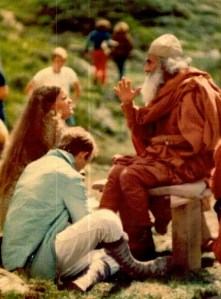 I am a little late acknowledging the Urs (anniversary of the death of a great teacher) of my best friend and spiritual father, Pir Vilayat Inayat Khan. Traditionally, the Urs is a celebration of the “wedding” of what the Hindus would call the maha-samadhi, a term I use simply because it popped up in my head, residue of my days in various Yogic groups in my twenties, while I was waiting for my teacher to find me. He found me pretty early, as it happens, because I was age sixteen when I first saw him, but it was awhile before I met him; and that is another story for another time. As to the maha-samadhi term, it is meant to describe the final, conscious departure of one from her or his body, with the accent on the word conscious. . . and although I wasn’t there when Pir, as most of us called him, left his body, my impression is that he made a pretty conscious exit, and I do know that he managed to visit many of his students as he departed, including me.
It has come to my deepest attention, lately, that teachers and the organizations that form around them become, ultimately, traps that keep the seeker from a full awakening, and I find myself in a conundrum, because I give my own acknowledged teacher the credit for saving my life and bringing me to God. He was a deeply flawed personality and vastly awakened soul who by his own admission made many mistakes, but never gave up. The only explanation I can give for these competing awarenesses of mine is that perhaps when one is younger–both spiritually and chronologically–the teacher-disciple relationship acts as a sort of jump-start to awakening, but ultimately may become a trap if the teacher fails to set the student free. My teacher never, in my experience, held onto his students or their understanding in any way.
The thing that Pir Vilayat gave his students that stands out most for me was that he made us aware that we could do anything we wanted to do. We trailed after him into numerous natural settings such as the French Alps and the New Mexican desert, and we read what his father, Inayat Khan, called the sacred manuscript of nature, often in the pouring rain or unbearably hot sun. I personally slept in a cold, wet sleeping bag in a flooded tent or nestled among boulders in excruciating pain. I wept the tears of understanding and of rage, and I made a complete fool of myself on many occasions. I will tell you a little story that is connected to the photo here, a very bad one from the era of disposable cameras, that depicts one of my finest moments as a fool, “the fool on the Hill” of Beatles fame.

For many years, Pir Vilayat held a multi-lingual alchemical retreat in the French Alps, way up past the treeline, a gathering in the hardest of physical conditions and the greatest natural beauty and majesty. It may have been about 1975, when I became determined to climb the mountain, become fully enlightened, and thus have no more pain in my life. I was married to my first husband at the time, but without a thought for him or anyone else, I somehow found the money to fly to Geneva and then take the train to Chamonix, and I struggled up the mountain with far too many personal possessions, material and immaterial both, and once there, I finagled and maneuvered and somehow got possession of THE RETREAT HUT, way up on the mountain where all the big shots had done their retreats…all the big guns who some of us believed could take us where we wanted to go (and that is yet another story). I don’t even remember who most of them were now, but it sure seemed like a big deal to me, age 24, that I was going to get to make my retreat in the footsteps of the great, sleeping on the same floor they’d slept on. So my plan was to climb up to that hut and stay there until I died to myself (that was a phrase we used a lot in those days), and then I, or so I assumed, would be a changed person and I would never be in pain again. Pir Vilayat said, when I announced this (in the picture above), “Well, I don’t think you’re quite ready.” That clipped Oxford accent… I was devastated.
I threw as much of a fit as I dared throw in his presence, but he wouldn’t give in and let me straggle up the mountain alone. He said I should go on his group retreat first, and then we’d see. The problem was, his retreat was on another mountain peak, way across the valley where the main camp was held. But I wasn’t about to give up possesion of that hut. It was a tiny, cinderblock shepherd’s hut, about a half hour’s climb from the main camp. I was determined to go up there and fast until I died and became reborn.
But he said I had to go on his (group) retreat first. So, with all my stereotypical ideas of obedience and dedication to the guru’s wishes, I got up at dawn on the first day of the group retreat and, fasting, I set out from my hut, and hiked down the mountain and across the valley. It took me about three hours; there was no path, and the way was mostly rocks, and I had no experience whatsoever at hiking in such a setting. Somewhere along the way, I turned my ankle, and from then on, I could barely walk. But I made it, feeling desperate at the prospect of getting back and forth for the next days. I sat and wept all the first morning of his retreat. We were in a setting of the most phenomenal beauty and majesty we could possible be in, but I wept from pain and egotism. When the group broke up, he casually asked me “so what’s the problem?” I wasn’t about to tell him I had a sprained ankle and the walk was too much for me, so I mumbled something about the “power of the process,” and he pretended to buy my excuse and I hobbled back to my hut.
What an ego trip.
So this went on for about three days, and on the third day, when I got back to my hut, I felt desperate. In addition to a sprained ankle, I was not in good physical shape. I just didn’t know how I’d ever be able to do it. I lay down on my sleeping bag on the cement floor (I spent the nights listening for the air to hiss out of my air mattress so I could get up and blow it up again), and later in the afternoon, I heard pounding, and voices on that lonely mountaintop where I was in residence. Down the slope, just in front of my hut, what looked like a large tent, of the circus variety that was always associated with his group retreats in nature, was being pitched. I broke the traditional silence and asked one of the guys working there what was going on, and he told me something about how Pir Vilayat had decided they’d better move the group retreat over to there, because of some problem that didn’t sound like it had much to do with my predicament. I’ll never really know why that retreat was moved over to “my” mountain.
Next morning, and the next, I hobbled down the slope and attended his retreat. I could have died of happiness, it was so easy. Now I could really focus on the work at hand. Two days after that, when the group retreat broke up for that day, I was about to get up and go back to my hut. I was feeling peaceful and accepting of the entire process by then, and it helped a lot that I was in less physical pain. Suddenly, I sensed a presence. I opened my eyes and there was THAT ROBE in front of me, the traditional dervish robe that he always wore. He said to me, “You can just go and be free now, you don’t have to come to the group retreat.” It took me a moment to take that in.
“With your approval?” I asked him.
“Yes.”
In those days, of course, before the alchemical retreat system he developed, a Sufi retreat consisted pretty much of just repeating dhikr thousands of times a day. I believe the prescription, then, was about fourteen thousand, if possible.
So I limped back to my hut and stayed up there for about ten days, and I’m sure I made a very bad retreat, but I stayed there in that glorious setting and said dhikr, and while it was mostly hard and very inexpert work, there were a few sublime moments. There were a few terrifying ones, too: the hut had a glass-windowed door, and one night I woke up to find a very strange-looking man staring in the window at me. I was petrified. There were a lot of tourists going through there, but he was a very odd-looking one. Later, a friend told me that there was this “weird guy” walking around the mountains, and they were worried about me. But I was fine. I saw him a few times, but I felt protected. I called on Pir when I was afraid, and I felt that he was with me.
So that was my first retreat, and that’s what is taking place in that picture up there. Suffice it to say I did not die to myself, become enlightened, or solve all my problems on that retreat, but it was glorious, nevertheless. After I went down, I attended group activities, sacred dances, etc., but mostly I sat on the side of the mountain and wept.
For those who are interested in the retreat process, I read an article about retreats recently, and I thought it described the process rather well, although mostly in terms of American Buddhist retreats. If you would like to read it, go here: http://www.tricycle.com/blog/5-things-about-meditation-retreats-might-surprise-you.
Full moon, where will you be going from here?
“Into a retreat.”
Why do you take a retreat after fullness?
“To make myself an empty vessel in order to be filled again.” Inayat Khan
He was my best friend, my father, the one who picked me up and made me fall so that I could learn to pick myself up again. He took me to the heights, and he helped me explore my own depths. He is still here, and I love him so. May he be eternally blessed.
Nobody Home

NOBODY HOME
This place with its high ceilings and low ones is so empty
and so crowded.
Someone sits here day by day, although it isn’t clear who,
Coming and going, confused and lonely.
Sometimes–but only sometimes–
There’s nobody home and the loneliness goes away.
(Oh, a few friends, fellow hermits, drop by occasionally. . .)
But mostly, there is only a friendly and remote silence while the music plays this person into unity.
The sunlight pours in,
The dogs snore,
And this aging woman waves to herself
from the other shore of Goodbye. – © Amidha K. Porter
If You Meet the Buddha in the Road . . .
A pivotal lesson for me, and a clarification of my impulse:
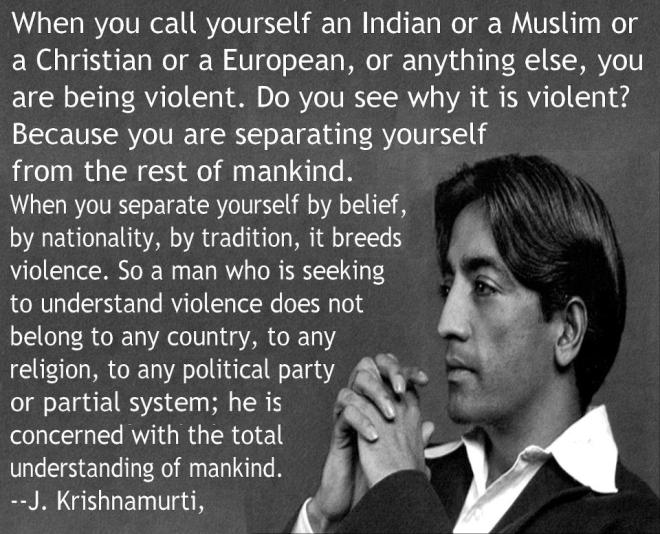 The Renunciation of Jiddu Krishnamurti
As he began to distance himself from Theosophical teachings, he predicted that, “Everyone will give me up.” He began to call his experiences of the Masters “incidents” and described the rites of initiation as completely irrelevant to the search for Truth. “If you would seek the Truth you must go out, far away from the limitations of the human mind and heart and there discover it — and that Truth is within yourself. Is it not much simpler to make Life itself the goal … than to have mediators, gurus, who must inevitably step down the Truth, and hence betray it?”
In 1929 he dissolved the Order of the Star. At this point it numbered 60,000 members, managed huge sums of money, and owned tracts of land throughout the world, many designated for K’s…
View original post 564 more words
Killing the One Who Gives us Rest
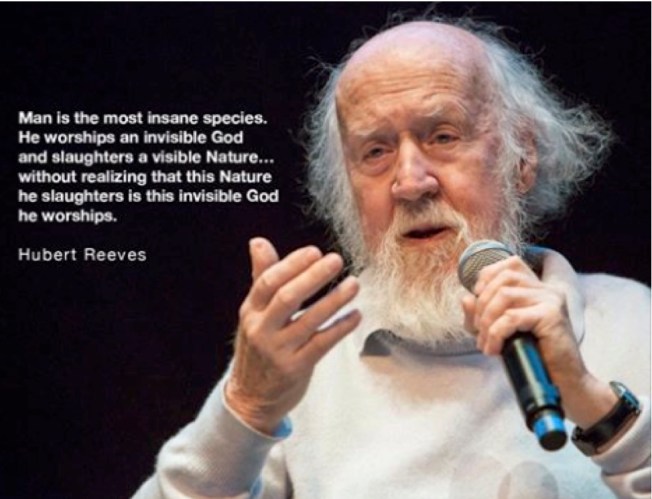
When I read this on my Facebook page this morning, I had a vision of the cosmos as the body of what many call God, and all of us resting on it–or clinging to it–and few of us noticing that we rest on a diety. It’s not an unusual idea, but one that has its roots in ancient belief systems, particularly the Zoroastrian one, which evokes God and God’s archangels and angels as the earth and the moon, the stars and the sun, the elements of earth, air, fire and water… And our dependence on them all. I am torn between the two opposing ideas that on the one hand, we owe all these the greatest consideration, and on the other, that our worst mistakes are God’s mistakes in progress. Where will it all lead us?
Anger
Most of my anger has left me by now. Only a few things and people can still provoke it (if I’m not being sufficiently watchful), and then I realize how debilitating it is. I thought of this post this morning, when I read something an excerpt from Pema Chodron, from her book Practicing Peace in Times of War:
I often wondered why it is that when I get hooked, when I’m resentful for example, and I breathe with it instead of acting out, it feels like I’m sitting in the middle of the fire. I asked Kongtrul Rinpoche about this. He said, “Because by not doing the habitual thing, you’re burning up the seeds of aggression.” As each individual works with it in this way, it’s not just a minor thing. It’s an opportunity we’re given not only to connect with the inexpressible goodness of our minds and our hearts, but also to dissolve aggression in the world.
Eventually one comes to see that all Being is inseparable, and the person who provokes and the one who gets angry are inseparable. Why bother?

No, I am not crying.
I hold my face in my two hands.
To keep my loneliness warm
Two hands, protecting,
Two hands, nourishing,
Two hands preventing
My soul from leaving me in anger.
–Thich Nhat Hanh
So….anger. So many different kinds, so many different uses. Yes, I did say uses. Someone I love told me she’d had a horrible fight with her husband recently, and felt “eviscerated.” That’s a good word, I think; it’s certainly how I feel when I have a fight with my husband, and as I thought about this, I compared it to the difference in “fights.” Or arguments. Anger. I fight with my husband. I fight with my daughter. I argue with some authority figure in my life. Someone does something unfair, and sometimes I can do something about it–or I tell myself I can–and sometimes I can’t. Carol Tavris, in “Anger, the Misunderstood Emotion,”…
View original post 292 more words
Krishna Das!
Pretty lazy of me to keep posting stuff I didn’t do, but hey… I always wanted this blog to be a place to put things I didn’t want to get lost.
Lullaby of Two Herons Rising from Still Waters – Terrance Keenan
It is to be with God
before he cried out.
It is to be the light.
Do not be afraid.
There are no others. –Keenan
A Bunny Day
When I took high school French, I remember our class chuckling when we translated the phrase “cette une bonne idée,” which means “that’s a good idea.” The translation sounds like the title of this blog post, “a bunny day.” Cute. And apropos of this morning.
Our little Westie pup is, as some might know, bred to be a “ratter.” In other words, he kept those cold, Scottish castles, from which he originated, free of vermin of all kinds. Our little guy, nicknamed Spud, is simply thrilled with his first mature Springtime (he was a newborn last Spring), and the proliferation of bunnies on our property. If he gets half a chance, we are well aware that he will sieze one by the throat and make bunny mincemeat out of it, but we have a large portion of our yard securely fenced for our dogs, and hopefully he will never get to act out that particular fantasy. But he is definitely enthralled by the idea, and the bunnies seem to realize he cannot get to them, because they hop near the fence while he stands there, tail wagging, and barks his head off (fortunately we live in the country, and there are no neighbors nearby to complain about this). He tells that bunny in no uncertain terms what his plans are for it if he gets half a chance, and the bunny laughs in his face, saying “Come on! Show me what you got! Make my bunny day!” A bunne idée. By the way, he gets a good bit of practice with our cat, Sita, who loves nothing more than to taunt him at a much closer range, knowing that even if they are approximately the same size, she is one who is faster than he. Spud simply loves this, but he knows that if he goes too far, she has twenty sharp ways to defend herself.

Meantime, by the time I got out to the porch for my second round of porch-rocking of the morning, the dogs were frolicking together, and in-between Spud bringing the ball to me to throw (and then snatching it out of my grasp… he just doesn’t get it!), I looked out over my “view,” which includes a fenced pasture with too few trees (we’re working on that, but may not be around long enough to appreciate the resulting shade), the shed that needs work and the distant trees and pond that edge our property. I have to admit it: sometimes I do not appreciate this view. I am distracted by all the work the shed needs (and the house), I think that it is time to pick up dog poop, and that the grass needs mowing (all husbandly chores, I am grateful to say). But this morning, the light of the sun took my attention, as it always will if my ego is not out of proportion, and there were enough luminous clouds to filter the light between my lashes as I was taught to do on my retreat with Pir Vilayat many years ago, in the French Alps, so as not to burn my retina. Now THERE was a view. But this is about my own homely view, and this morning I saw that the same sky that is over my head is the same sky that was in those mountains, or by the ocean which is my all-time favorite view. I breathe the same air, however polluted, as the rishis in the Himalayas breathe, or the whales spouting in whatever sea we care to consider. If I look deeply enough into the core elements of any phenomena, there is the same perfection of Being, right there gift-wrapped and ready to be opened, ready to be assimilated.
Today, I have the good sense to be grateful.
P.S.
The following is not my Westie, but I was prompted to do a search in Google Images, where I often steal photos, of Westies chasing bunnies. Hopefully the proud owner of this Westie and her or his bunny will not mind my sharing it. I’m not sure I’d have the nerve to let Spud get this close to a bunny, but obviously this Westie has a special relationship with this rabbit.
Mind is just a shadow….

Mind is just a shadow.
Attempts to catch it and control it are futile.
They are just shadows chasing shadows.
You can’t control or eliminate a shadow by chasing it or by putting a shadow hand on it.
These are just children’s games.
Ram Tirtha once told a story about a small boy who ran down the street, trying to catch up with the head of his shadow.
He never managed because no matter how fast he ran, the shadow of his head was always a few feet ahead of him.
His mother, who was watching him and laughing, called out, ‘Put your hand on your head!’
When the boy followed this instruction, the shadow hand caught up with the shadow head.
This was enough to satisfy the boy.
This kind of advice may be enough to keep children happy, but it won’t produce satisfactory results in the realm of sadhana and meditation.
Don’t chase your shadow thoughts and your shadow mind with mind-control techniques because these techniques are also shadows.
Instead, go back to the source of the shadow-mind and stay there.
When you abide in that place, you will be happy, and the desire to go chasing after shadow thoughts will no longer be there.
Bhagavan (Ramana Maharshi) often told the story of a man who tried to get rid of his shadow by burying it in a pit.
This man dug a hole and then stood on the edge of it in such a way that his shadow was cast on the bottom of the hole he had just made.
After lining it up in this way, he started throwing soil on the shadow in an attempt to bury it.
Of course, no matter how much soil he put in the hole, the shadow still remained on top of it.
Your mind is an insubstantial shadow that will follow you around wherever you go.
Attempts to eliminate or control it cannot succeed while there is still a belief that the mind is real, and that it is something that can be controlled by physical or mental activity.
~ Annamalai Swami
Final talks
From a Great Man – Jimmy Carter

Women and girls have been discriminated against for too long in a twisted interpretation of the word of God.
I HAVE been a practising Christian all my life and a deacon and Bible teacher for many years. My faith is a source of strength and comfort to me, as religious beliefs are to hundreds of millions of people around the world. So my decision to sever my ties with the Southern Baptist Convention, after six decades, was painful and difficult. It was, however, an unavoidable decision when the convention’s leaders, quoting a few carefully selected Bible verses and claiming that Eve was created second to Adam and was responsible for original sin, ordained that women must be “subservient” to their husbands and prohibited from serving as deacons, pastors or chaplains in the military service.
This view that women are somehow inferior to men is not restricted to one religion or belief. Women are prevented from playing a full and equal role in many faiths. Nor, tragically, does its influence stop at the walls of the church, mosque, synagogue or temple. This discrimination, unjustifiably attributed to a Higher Authority, has provided a reason or excuse for the deprivation of women’s equal rights across the world for centuries.
At its most repugnant, the belief that women must be subjugated to the wishes of men excuses slavery, violence, forced prostitution, genital mutilation and national laws that omit rape as a crime. But it also costs many millions of girls and women control over their own bodies and lives, and continues to deny them fair access to education, health, employment and influence within their own communities.
The impact of these religious beliefs touches every aspect of our lives. They help explain why in many countries boys are educated before girls; why girls are told when and whom they must marry; and why many face enormous and unacceptable risks in pregnancy and childbirth because their basic health needs are not met.
In some Islamic nations, women are restricted in their movements, punished for permitting the exposure of an arm or ankle, deprived of education, prohibited from driving a car or competing with men for a job. If a woman is raped, she is often most severely punished as the guilty party in the crime.
The same discriminatory thinking lies behind the continuing gender gap in pay and why there are still so few women in office in the West. The root of this prejudice lies deep in our histories, but its impact is felt every day. It is not women and girls alone who suffer. It damages all of us. The evidence shows that investing in women and girls delivers major benefits for society. An educated woman has healthier children. She is more likely to send them to school. She earns more and invests what she earns in her family.
It is simply self-defeating for any community to discriminate against half its population. We need to challenge these self-serving and outdated attitudes and practices – as we are seeing in Iran where women are at the forefront of the battle for democracy and freedom.
I understand, however, why many political leaders can be reluctant about stepping into this minefield. Religion, and tradition, are powerful and sensitive areas to challenge. But my fellow Elders and I, who come from many faiths and backgrounds, no longer need to worry about winning votes or avoiding controversy – and we are deeply committed to challenging injustice wherever we see it.
The Elders are an independent group of eminent global leaders, brought together by former South African president Nelson Mandela, who offer their influence and experience to support peace building, help address major causes of human suffering and promote the shared interests of humanity. We have decided to draw particular attention to the responsibility of religious and traditional leaders in ensuring equality and human rights and have recently published a statement that declares: “The justification of discrimination against women and girls on grounds of religion or tradition, as if it were prescribed by a Higher Authority, is unacceptable.”
We are calling on all leaders to challenge and change the harmful teachings and practices, no matter how ingrained, which justify discrimination against women. We ask, in particular, that leaders of all religions have the courage to acknowledge and emphasise the positive messages of dignity and equality that all the world’s major faiths share.
The carefully selected verses found in the Holy Scriptures to justify the superiority of men owe more to time and place – and the determination of male leaders to hold onto their influence – than eternal truths. Similar biblical excerpts could be found to support the approval of slavery and the timid acquiescence to oppressive rulers.
I am also familiar with vivid descriptions in the same Scriptures in which women are revered as pre-eminent leaders. During the years of the early Christian church women served as deacons, priests, bishops, apostles, teachers and prophets. It wasn’t until the fourth century that dominant Christian leaders, all men, twisted and distorted Holy Scriptures to perpetuate their ascendant positions within the religious hierarchy.
The truth is that male religious leaders have had – and still have – an option to interpret holy teachings either to exalt or subjugate women. They have, for their own selfish ends, overwhelmingly chosen the latter. Their continuing choice provides the foundation or justification for much of the pervasive persecution and abuse of women throughout the world. This is in clear violation not just of the Universal Declaration of Human Rights but also the teachings of Jesus Christ, the Apostle Paul, Moses and the prophets, Muhammad, and founders of other great religions – all of whom have called for proper and equitable treatment of all the children of God. It is time we had the courage to challenge these views.
Jimmy Carter was president of the United States from 1977 to 1981.
from The Age
http://www.theage.com.au/federal-politics/losing-my-religion-for-equality-20090714-dk0v.html?stb=fb
Jimmy Carter was president of the United States from 1977 to 1981.
Always Endings
Also needs reblogging….

Eventually, all things merge into one, and a river runs through it. –Normal Maclean
Each one of us here today will at one time in our lives look upon a loved one who is in need and ask the same question: we are willing help, Lord, but what, if anything, is needed? For it is true we can seldom help those closest to us. Either we don’t know what part of ourselves to give or, more often than not, the part we have to give is not wanted. And so it is those we live with and should know who elude us. But we can still love them: we can love completely without complete understanding. –The Reverend Maclean in “A River Runs Through It”
There is a person in my life who I have tried to love for many years. She is a beautiful, creative, wonderful person who sees things…
View original post 2,566 more words
Living Forgiveness
Can’t think of much to add to this, except that I will reblog it for as long as I need to….
Love manifests towards those whom we like as love; towards those whom we do not like as forgiveness. –Bowl of Saki, by Hazrat Inayat Khan
Recently, I have been working with feelings of resentment and anger, arising from the situation I write about below (“Always Endings”). I am steeped in modern psychologies, and it has been tempting to “allow” myself to feel and express the natural anger and pain I am experiencing after giving the major part of my adult life to a young woman who could not receive my love, and finally deciding (in great agony) to walk away from the relationship, which by now included her child, a little person I have grown to love greatly. I find myself going through the classic stages of grief, yet my tendency has always been to mask my grief with anger, which to me seems more manageable. And after all, I…
View original post 1,024 more words
The Gathering
Blessed is she who sees the star of her soul
as the light that is seen in the port from the sea. — Inayat Khan
I hold you at arm’s length until I think I will die for wanting you,
And all that while, they are gathering.
I hear their whispers as they cluster around, crowding into this space, waiting for our time to begin.
They wait patiently, but I always worry that they will become tired of my messiness and hesitation and slip away,
looking for a place to gather that is more consistent
(and certainly one who is more punctual):
Despite all that, you always come.

You settle in like fog seeping in from the sea.
The ten thousand things recede,
and sounds come through this fog like the sound of a ship’s bell.
Eventually,
I wash up on your shore and, leaning back, I look up at the tower where I know you are waiting for me.
I walk this island’s cold, rocky shore around and around, in and out of the waves that rise and recede,
getting closer to your winding stone stairway all the time:
Yet still hesitant.
How do you stand me?
You always wait patiently, and I always come, but I am afraid of that fog,
Afraid of getting lost and never returning, afraid of leaving my loved ones:
Yet isn’t that what I’ve bargained for?
That stony climb, those dangerous stairs . . .
Knowing you are waiting for me,
I cannot thank You enough.
(But who are these ones who gather?
Are they there for me, or am I there for them?
I feel I know, but I am shy,
And that is why I keep them waiting. That
and hoping I will be adequate.)
Amidha Porter
 Rays
Rays 